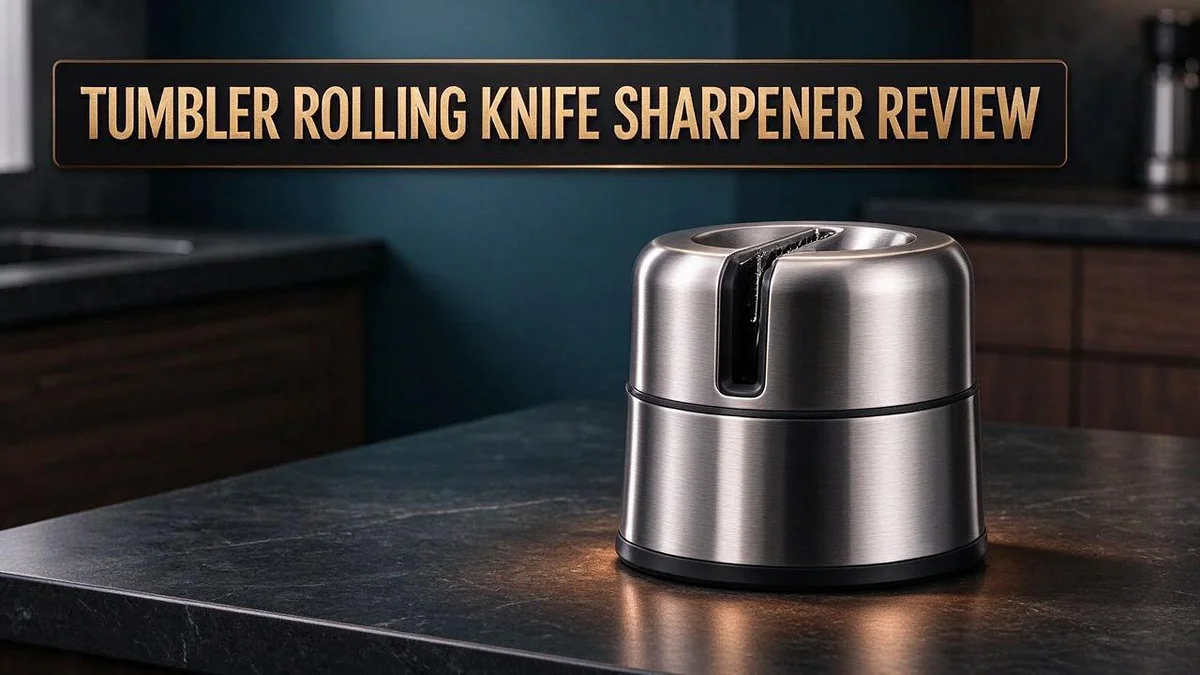
Tumbler Rolling Knife Sharpener Review 2026
Dull knives slow you down. A good sharpener fixes that fast. The Tumbler Rolling Knife Sharpener aims to make sharpening simple for everyone.
Many home cooks and hunters want an easy path to a sharp edge. This tool offers two sharpening angles, 15 and 20 degrees. The Pro model includes removable diamond and whetstone disks, so you can pick the right surface.
Reviewers often say it is easy to use. One reviewer even says you cannot mess it up. Still, very dull knives may need several passes.
Is it worth your counter space? Let’s look at what works, what does not, and how it compares to other rolling sharpeners on the market.
In a Nutshell
- Two sharpening angles: The tumbler offers 15 and 20 degree settings. You can pick the angle that fits your knife and your cooking habits.
- Removable disks on the Pro model: The Pro version uses diamond and whetstone disks that you can swap out. A diamond disk upgrade is also available for people who want faster cutting.
- A speed claim to test: Video titles promise a sharp edge in 15 seconds. Treat that number as a marketing claim, not a tested result. Your results will depend on how dull the blade is.
- Expect a few passes: Very dull blades may need several rounds on the tumbler. Plan to check the edge after each round so you do not over sharpen.
- Watch the rolling action over time: One Reddit user reported that the unit began catching instead of rolling smoothly after about four weeks. Inspect the rollers often and clean them after each use.
- Magnets have limits: Outdoor Life found that the magnets do not always hold small knives well. Paring knives may need extra care while you work.
- Compare the alternatives: Work Sharp, HONE, Meinesqis, and HORL models are popular choices. Each one serves a different type of user, so compare features before you decide.
Build and Materials

- Precise & Long-Lasting Sharpness: The Original Tumbler rolling knife sharpener restores...
- Powered by Diamonds: Unlike basic pull-through sharpeners, Tumbler uses a premium diamond-plated...
Last update on 2026-11-01 / Affiliate links / Images from Amazon Product Advertising API Some of the links on this website are affiliate links, which means that at no additional cost to you, I earn a commission if you click through and make a purchase. I only recommend products and services that I believe will add value to my readers. Thank you for your support!
A tumbler rolling knife sharpener depends on its parts. A solid frame keeps the unit steady on your counter. Good parts also help it roll smoothly for years.
Start with the disks. The Pro model uses diamond and whetstone disks that you can swap out. This lets you pick the surface that fits your knife. Diamond disks usually cut faster, while whetstone disks give a finer finish.
Some owners also consider the diamond disk upgrade. It is an option you can add later if you want more cutting power. Check what comes in the box before you buy.
The magnets play a big role too. They hold the knife in place while the tumbler rolls. However, magnets have limits. Outdoor Life found that they are not quite enough to hold small knives. If you own many paring knives, keep this in mind.
The research does not list the exact body material. Check the product page for frame details before you decide.
Wear is another part of the build story. One Reddit user reported that the unit began catching instead of rolling smoothly after about four weeks. That suggests the rolling parts need a closer look over time.
Keep it clean. Rinse off metal dust after each session so grit does not build up. This simple habit helps protect the moving parts.
Look for the basics. Pick a sharpener with clear disk labels, a stable base, and parts you can replace. A good build means fewer repairs and less frustration. Think about how often you sharpen, too.
Sharpening Angles and Versatility
Angle matters more than many people think. A lower angle creates a thinner edge that slices well. A higher angle gives the blade more support for tougher jobs.
Choose the angle based on the knife in your hand. Thin chef knives and paring knives usually suit the lower setting. Hunting knives and heavy kitchen blades often handle the higher setting better.
Versatility comes from the range of tools you can sharpen. Most home cooks use the same few knives every day. A single tumbler can keep those favorites ready without extra steps.
Think about the edge you want after each session. Some people want a keen edge for slicing tomatoes. Others want a sturdier edge for chopping bones or cutting through rough camp food.
Your grip also changes the result. The tumbler does the rolling, so you only guide the blade into the slot. Keep the blade straight and the motion steady. Small changes in hand position can shift how the edge forms.
Consistency is another advantage. Once you pick an angle, you can repeat it each time. That habit helps you track how fast your blades dull.
Keep a note of the angle you used. Write it on a card near the unit. This small step saves time on later visits. You will know which setting fits each blade.
Ask yourself a simple question before buying. Do you need one setting for every knife, or several? A tumbler with two options gives you room to adjust without needing a second tool.
Check your results with a quick paper test. Slice a sheet of paper after sharpening. Clean cuts show the edge works well. Ragged cuts mean you should try another round or switch angles.
Sharpening Performance
Good sharpening performance depends on more than the tool. The way you load the knife matters just as much. Set the blade on the magnets with the spine centered, then roll with a light, even pace.
Pushing hard does not make the edge faster. Let the weight of the tumbler do most of the work. A gentle hand keeps the process smooth and steady.
Track your results over time. Notice whether the edge bites through tomato skin or slips off. Small changes tell you a lot about the setup.
If the knife feels dull after one session, check the blade position before changing anything else.
Beginners often feel nervous at first. That is normal. Start with a knife you do not use every day. This gives you room to practice without stress on your main kitchen blade. Patience is the key skill here.
Regular sharpeners can build a simple routine. Try the same number of rolls for each side. Write down what you did. A notebook works well for this. Over time, you will spot patterns that make your edge more repeatable.
Your knife type also shapes the outcome. Thin kitchen knives respond well to careful rolls. Thicker blades may need extra passes and patience. Adjust your approach for each blade in your drawer.
Bottom line: the tumbler can deliver a useful edge for everyday cooking. Results depend on your technique, your blade, and your patience. Treat it as a practice tool, and your sharpening skills will grow.
Top 3 Alternatives
Looking for other ways to sharpen your blades? These three options are worth a look. Each one suits a different type of user.
Work Sharp Knife Sharpener

- NEW & IMPROVED: The Mk.2 has all the capabilities of the MK, but for tools and sharpening every...
- EXTRA BELTS INCLUDED: The belts conform to the edge of any blade and can be used as a grinding blade...
Last update on 2026-11-01 / Affiliate links / Images from Amazon Product Advertising API Some of the links on this website are affiliate links, which means that at no additional cost to you, I earn a commission if you click through and make a purchase. I only recommend products and services that I believe will add value to my readers. Thank you for your support!
The Work Sharp is a powerful electric option for home cooks and outdoor fans. It uses belts that grind and polish the edge.
Beginners often find it easy to learn. Its guides help you set the right angle every time. You can use it on kitchen knives, axes, and scissors.
Spyderco Sharpmaker

- Spyderco Tri-Angle Premium Sharpmaker Set with DVD and Two Sets of Alumina Ceramic Stones - 204MF...
Last update on 2026-11-01 / Affiliate links / Images from Amazon Product Advertising API Some of the links on this website are affiliate links, which means that at no additional cost to you, I earn a commission if you click through and make a purchase. I only recommend products and services that I believe will add value to my readers. Thank you for your support!
The Spyderco Sharpmaker uses two sets of ceramic rods. You hold the blade still and slide it along the rods. This stand-up design keeps the angle steady.
It works well on both kitchen and pocket knives. Many people like its simple setup. It also lasts for years with basic care.
Lansky Quad Sharpener

- Four sharpening angles: 17, 20, 25, and 30
- Carbide slots sharpen in 3-4 strokes
Last update on 2026-11-01 / Affiliate links / Images from Amazon Product Advertising API Some of the links on this website are affiliate links, which means that at no additional cost to you, I earn a commission if you click through and make a purchase. I only recommend products and services that I believe will add value to my readers. Thank you for your support!
The Lansky Quad Sharpener holds four stones in one clamp. Each stone offers a different grit level. You can move from coarse to fine in just a few passes.
This tool suits people who want precise angles. It is a good pick for anyone who prefers a manual method.
Ease of Use and Learning Curve
Most people find the tumbler rolling knife sharpener simple to start. Reviewers often describe it as easy to use. One reviewer even says you cannot mess it up. That kind of praise matters for anyone new to sharpening.
The learning curve stays short for most users. You set the knife on the tumbler, then roll it across the disks. Many people feel comfortable after a short practice period.
Your first session teaches the most. Pay attention to how the cylinder moves under light pressure. Those small details guide every later session. Slow passes help you build a steady rhythm.
Setup takes very little time. Place the tumbler on a flat surface. Check that the disks sit securely before you start. This quick routine saves frustration later.
Working height makes a difference. Stand or sit at a counter that feels comfortable. Your arms should stay relaxed during each pass. Comfort helps you stay patient with the process.
Pick a practice knife first. Choose a blade you do not mind testing on. Learn the steps on that knife before moving to your favorite one.
Ease of use suits busy home cooks well. The tool asks for little setup and little experience. Most users can build skill with patience and steady practice.
Clear instructions shorten the learning time. Read the guide before your first use. Look at each disk and its role. Small steps prevent guesswork and wasted blades.
Final thoughts for new users. The tool suits people who want a simple start. Give it several sessions before you judge the results. Your skill will grow with each pass. Patience pays off over time.
Durability and Long-Term Use
Daily use puts the tumbler under real stress. Each pass rolls the cylinder across the disks, and the moving parts carry that load every time.
One Reddit user reported that the unit began catching after about four weeks. The cylinder stopped rolling smoothly, which shows that early checks matter. Early checks can catch problems before they grow.
Smooth movement is the first sign of health. A healthy tumbler glides with little resistance. If it drags or jumps, stop and inspect it before the next session.
Disks wear down slowly with use. Over several months, the feel of each pass can change. Note any shift in speed or sound, since it often signals wear.
Small knives need extra attention. Outdoor Life found that the magnets are not quite enough to hold small blades. A loose knife can shift mid pass, so support it with your fingers and check the result often.
Storage also protects the tool over time. Keep it in a dry drawer or on a shelf. Away from moisture and loose metal, the moving parts stay clean and move freely.
Replacement disks keep the edge steady. When a disk shows heavy wear, swap it instead of forcing more passes. This habit protects the edge and keeps the tool useful for years.
Early signs often show up as small changes. A slight drag or a faint noise can warn you. Address these issues quickly, and the tool will last much longer than owners expect.
Bottom line for owners who keep using it: check the roll, watch the disks, and support small blades. These simple habits help the tumbler perform season after season.
Value and Upgrade Options
Upgrades can extend what your tumbler does. The Pro model uses removable disks, so you can swap them when needed. A diamond disk upgrade is also available for people who want that option.
Think about your next step before you add parts. Start with the stock setup and learn how it works. Then decide whether a diamond disk fits how often you cook.
Compare the alternatives too. The Work Sharp Rolling Knife Sharpener earned the Best Overall pick from Outdoor Life. HONE suits anyone who wants the most versatile option. Meinesqis gives new users a simple starter choice.
Advanced models bring different features. The HORL 3 Pro suits cooks who want a fuller feature set. The HORL 2 and copycat rolling sharpeners appear in a Chef Panko comparison, so read that review before you choose.
Pick the upgrade that matches your kitchen. Heavy home use may favor a model with replaceable disks. Light use may only need one good disk and a steady routine.
Compare each option against your knife collection and your goals. Think about how often you sharpen each week. Small upgrades can make a big difference over time.
Read several reviews before you commit. Different sites test the tools in different ways. Look for real use results that match your skill level and your typical knives. Pay attention to how each review handles the upgrade parts.
Plan ahead for replacement parts. Write down which disk you use and when you bought it. Keep the model number nearby too.
A simple note helps you reorder the right part at the right time. This habit keeps your upgrades simple and organized.
Pros and Cons
Pros
- Two sharpening angles let you match each knife.
- The Pro model includes removable diamond and whetstone disks.
- A diamond disk upgrade is available for later.
- Reviewers say you cannot mess it up as a beginner.
- Busy cooks can sharpen several knives in one sitting.
Cons
- Dull knives may need several tries before they feel sharp.
- The 15 second sharpness claim comes from video titles, not tested results.
- Removable disks appear only on the Pro model.
Who Should Buy It
Not every home cook needs the same sharpening tool. This tumbler fits a few clear types of buyers best.
Hobby cooks who want to learn should consider this option. A steady routine builds real skill over time. Each session shows how your knife responds to every pass. You also start to notice small changes in your edges.
Busy households with shared knives gain a lot from it. Families and roommates often own a mix of blades. One simple routine can keep most of them in working shape. Everyone in the house can learn the same steps.
Cooks with one daily blade benefit most. A chef knife gets used almost every day, so keeping it sharp matters. The tumbler handles that job without much fuss. You can finish a quick session before dinner.
Shoppers who dislike mailing blades away may appreciate the convenience. Sending knives to a service means waiting days or weeks. Keeping a tool at home lets you sharpen whenever you need to. Your knives stay close and ready.
Cooks who prefer frequent light touches make great owners. Small, regular sessions keep an edge close to its best. Waiting until a knife feels hopeless makes the job much harder. Short sessions often work better than one long effort.
People who expect instant miracles may feel let down. Marketing videos promise fast results, but real knives need patience. Badly chipped blades may need repair before any tumbler can help. Set realistic goals before you start.
Owners of prized collectible blades may want another path. Antique or delicate pieces often need careful hands and specialized care. A professional service may suit those knives better.
Before you buy, picture your kitchen routine. Ask yourself how often you cook and how patient you feel. Your answers will show whether this tool fits your daily life.
Final Verdict
Our final take is simple. The Tumbler gives everyday cooks a practical way to keep kitchen knives in good shape. It handles straight blades well when they roll smoothly across the surface.
Think about the blades you use most. Chef knives and santoku knives usually fit the design best. Small paring knives may slip, so check your collection before you buy.
Results depend on your patience. A few gentle passes can refine an edge. A badly worn blade needs more time and care. Treat the tool as a regular maintenance step, not a rescue tool.
Be honest about your goals. If you want a fast fix for a blade that has lost its bite, another sharpener may serve you better. Professional sharpening services also remain a good option for damaged edges.
Your own testing matters most. Sharpen one older knife first. Notice how it cuts before and after. This simple check shows whether the tool fits your routine.
Keep your expectations grounded. The Tumbler will not transform every blade overnight. It can, however, help you stay consistent over months of cooking. That steady care often matters more than one big session.
Consider how often you cook, too. Frequent home cooks will notice the benefits sooner. Occasional cooks may prefer to sharpen only when a knife starts to feel dull.
Final thought: choose it if you value consistency and simplicity. Skip it if you need to restore heavily damaged edges. Your kitchen habits will show you the right answer.
Frequently Asked Questions
What problem did one Reddit owner report?
A Reddit user said the unit began catching instead of rolling smoothly after about four weeks. Check the rolling action often so you spot wear early. Stop using the unit if the motion feels rough.
Will the magnets hold small knives?
Not always. Outdoor Life found that the magnets are not quite enough to hold small knives. Test your smallest blade first before you rely on it. A firm grip helps you keep the knife steady during each pass.
How does it compare with Work Sharp?
Outdoor Life named the Work Sharp Rolling Knife Sharpener its best overall pick. HONE earns praise for being the most versatile option in the group. Compare each model with the blades in your drawer. Choose the one that fits your daily cooking.
Which rolling sharpeners are closest to the Tumbler?
The HORL 2 and several copycat rolling sharpeners appear in Chef Panko’s comparison. The HORL 3 Pro is another name to know. Look at how each design holds the blade before you decide. Small differences in feel can matter a lot over time.

Hi, I’m Greta Monroe, and I’m passionate about making every kitchen a place of creativity and efficiency. I’ve spent years exploring and testing kitchen gadgets, tools, and devices to help home cooks find exactly what they need. At ChefKit Blog, I share honest Amazon product reviews and practical insights on kitchen essentials that actually make a difference. From must-have basics to innovative new devices, I break down what works and what doesn’t. My mission is simple: to help you build a kitchen that inspires delicious possibilities every single day.