HORL 3 Cruise Rolling Knife Sharpener Review: Buy or Pass?
Dull knives make cooking harder and more dangerous. A sharp blade slices cleanly, saves time, and makes every meal more enjoyable. Still, many home cooks avoid sharpening because it feels messy or confusing. That is where the HORL 3 Cruise Rolling Knife Sharpener comes in.
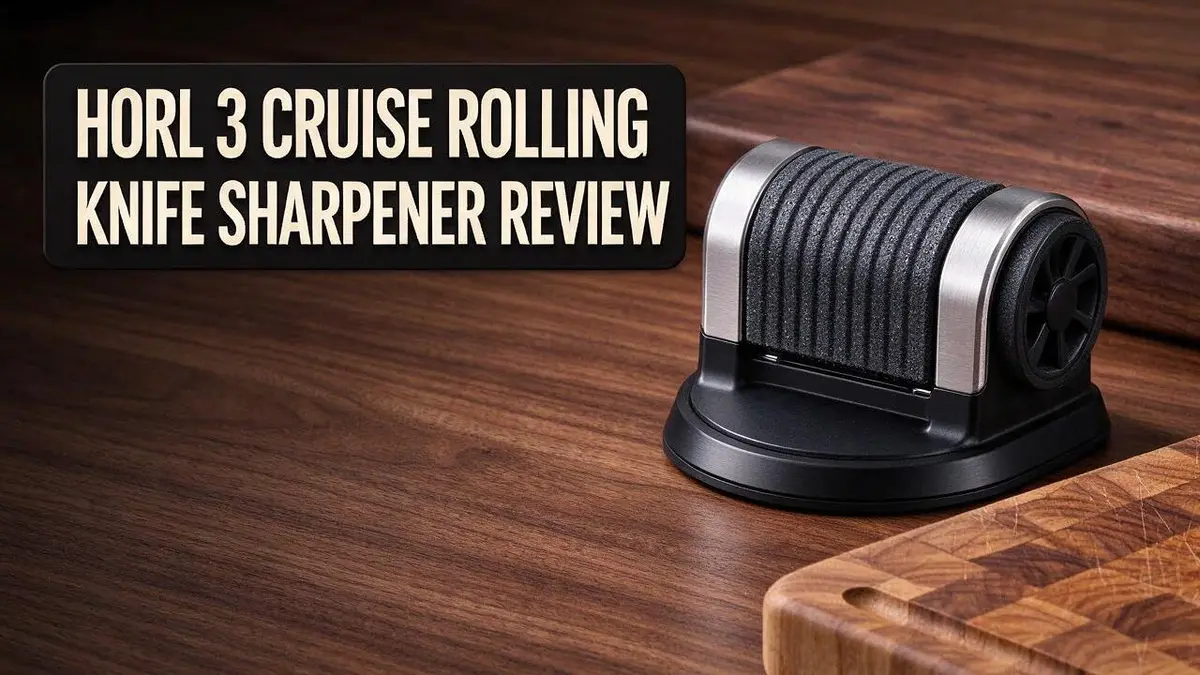
This tool takes the guesswork out of sharpening. It uses two permanently fitted discs, so you can refresh a blade without soaking stones or learning complex techniques. You get two grinding angles, 15 degrees and 20 degrees, plus a magnetic angle guide that keeps your strokes steady.
Looking for an easier way to keep your kitchen and outdoor knives ready? Read on to see how this entry-level HORL model works, what it does well, and where it falls short.
In a Nutshell
-
Two angle choices: You can sharpen at 15 or 20 degrees. Pick the angle that matches the knife in your hand. A lower angle suits thin blades, while a higher angle suits thicker, tougher edges.
-
Magnet and rubber feet: A magnet holds the angle guide in place. Small rubber feet keep the tool steady on the counter, so you can focus on the blade instead of the base.
-
No soaking needed: You can start sharpening right away. Skip the bowl of water and the messy cleanup that a whetstone often needs.
-
Recycled material: The body uses ocean bound plastic. This gives plastic waste a second life while still giving you a useful kitchen tool.
-
Extra care for flexible blades: Flexible knives need more hand support. Keep your free hand on the blade to stop it from bending as you pull it through the discs.
-
Fixed plates limit upgrades: The Cruise model does not let you change grit levels. If you want more control, the HORL 3 Pro or HORL 2 may suit you better.
Build and Materials

- The HORL3 Cruise rolling knife sharpener combines a permanently fixed diamond disc with a stainless...
- Securely fixed on the magnetic angle support with maximum grip: The HORL Grip Pad on the magnetic...
Last update on 2026-10-29 / Affiliate links / Images from Amazon Product Advertising API Some of the links on this website are affiliate links, which means that at no additional cost to you, I earn a commission if you click through and make a purchase. I only recommend products and services that I believe will add value to my readers. Thank you for your support!
The build of this sharpener feels simple and practical. Most of the body is plastic, so the tool stays light in your hand.
The grinding discs do the real work. Sources differ on the exact disc material. Some list diamond, while others mention steel or ceramic. Either way, the discs stay fixed in place, which keeps the setup simple.
Fixed discs mean fewer parts to manage. You do not need to swap or tighten anything during normal use. The design stays easy to follow, even for a beginner.
Your grip matters more than you might think. Hold the body firmly while you pull the blade through. A steady hand gives you more even results.
Light weight has a trade off. A lighter tool can slide if you press too hard. Keep your pressure gentle and controlled.
The plastic body wipes clean with a damp cloth. Dust and tiny metal bits can collect near the discs. Rinse the tool after each session and let it dry fully.
Plastic can crack on hard floors. Store your sharpener in a drawer or box. This simple habit protects the body and keeps it looking new.
Materials affect how the tool feels. A plastic body feels warmer and lighter than metal. Some users prefer that comfort during longer sessions. Others want more weight for stability, so think about your own needs before you decide.
The design also suits outdoor use. You can toss it in a bag without worrying about rust. Plastic does not rust the way steel can.
Build quality supports daily use in most kitchens. If you sharpen often, the simple design should hold up well. Keep an eye on the discs over time. If they wear down, you may need a new unit.
Overall, the build keeps things simple and practical.
Sharpening Performance and Edge Quality
A sharp blade is only as good as its edge. Edge quality shows up in how cleanly a knife slices a ripe tomato or a crusty loaf. You can check the result with a few simple tests.
The paper test is quick and easy. Hold a sheet of printer paper and slice downward with a light, smooth pull. A clean cut means the edge is working well. If the paper tears or snags, the blade needs a few more passes.
Look for a burr too. A burr is a thin strip of metal that forms along the edge during sharpening. Tilt the blade under good light to spot a tiny shine along the cutting line. Remove that burr with a few light passes, and the edge will feel smoother.
Steel type also changes the outcome. Softer steel gets sharp fast but loses its keenness sooner. Harder steel takes more time to shape, yet it often holds an edge for longer. Patience pays off with harder knives.
Consistency matters most of all. Keep the same pressure and stroke speed on every pass. Uneven strokes can leave a wavy edge that drags or cuts unevenly.
The starting condition of your knife also matters. A badly worn blade needs more time to reach a clean edge. Light touch-ups every few weeks keep a knife sharp with less effort.
Most home cooks will notice a clean, crisp bite on vegetables and meat after sharpening. The edge may feel slightly keen at first. This feeling is normal and fades a little with regular use.
Check the edge after every few passes. Stop as soon as the knife cuts cleanly. Overgrinding removes more metal than needed and can shorten the life of your knife.
Angle Settings and Ease of Use
Choosing the right angle makes a real difference. Most people pick the setting based on the knife type.
Thinner blades often suit the lower 15 degree setting. Sturdier kitchen knives can handle 20 degrees.
Think about how you use the knife. A paring knife for detailed slicing benefits from a finer edge. A chef knife used for chopping tough squash can take the wider angle without trouble.
Setting the angle takes only seconds. You do not need a ruler, a protractor, or guesswork. Lay the blade into the guide and let the magnet pull it into place.
Ease of use improves with practice. Your first few passes may feel slow and careful. After a short time, the motion becomes smooth and natural in your hand.
The rolling motion does most of the work. You roll the sharpener forward and back along the edge. Light pressure is enough, so your arm stays relaxed.
Compared with a whetstone, the setup feels simpler. Many cooks skip the constant angle checks and the water mess.
Keep the same speed on each side. Uneven rolling can round the edge over time.
Mark the edge to track progress. A marker line on the blade shows where the discs make contact. When the ink fades evenly, you know the metal is being removed across the full edge.
Check both sides before you finish. Use the same number of rolls on each side to keep the edge balanced.
Beginners can still get good results. The simple layout helps new users learn the basics quickly.
Patience matters more than speed. Rushing often leaves a weak edge, while slow rolls give cleaner results.
Finish with gentle passes. Lighter rolls smooth the edge before you test the knife on a tomato.
Sharpen when the knife starts to drag. Let the feel of the blade guide you, not a fixed schedule.
Top 3 Alternatives
Looking for a HORL 3 alternative? These three options also deliver sharp results. Each one fits a different style of cooking and daily life.
Work Sharp Culinary E5

- RESTORE AND REFINE ALL IN ONE MACHINE Sharpen a dull edge and then hone it keen in the same unit...
- HANDLES YOUR FULL CUTLERY LINEUP Chef, santoku, paring, and utility knives all get a consistent...
Last update on 2026-10-29 / Affiliate links / Images from Amazon Product Advertising API Some of the links on this website are affiliate links, which means that at no additional cost to you, I earn a commission if you click through and make a purchase. I only recommend products and services that I believe will add value to my readers. Thank you for your support!
This electric sharpener guides your blade for you. It uses diamond abrasives to bring back a sharp edge fast. It works well for home cooks who want consistent results. The guides keep the angle steady on every pass. It handles straight and serrated knives, so you can sharpen most kitchen blades in one place. Clean up is simple, and the compact body fits on most counters.
Chef’sChoice 315

- 2-stages: combines the strength of the double-bevel edge with the flawless, ultra-sharp 5XV edge...
- Ideal for sharpening contemporary double-bevel and traditional single-bevel Asian style knives
Last update on 2026-10-29 / Affiliate links / Images from Amazon Product Advertising API Some of the links on this website are affiliate links, which means that at no additional cost to you, I earn a commission if you click through and make a purchase. I only recommend products and services that I believe will add value to my readers. Thank you for your support!
This electric model uses three stages to shape and polish each edge. The first stage sets the angle, and the final stage adds a fine finish. It is a great pick for people who want a simple process. Its slots guide the blade, so beginners can get a clean edge with little practice. Many home cooks trust it for everyday knives. Each stage helps build a sharper, longer-lasting edge over time.
Smith’s Pocket Pal

- HANDHELD KNIFE SHARPENER – Smith’s “Pocket Pal” Knife Sharpener features a fold-out...
- 2 STAGE – The pull-through coarse carbide slot provides a quick edge on dull or damaged knives...
Last update on 2026-10-29 / Affiliate links / Images from Amazon Product Advertising API Some of the links on this website are affiliate links, which means that at no additional cost to you, I earn a commission if you click through and make a purchase. I only recommend products and services that I believe will add value to my readers. Thank you for your support!
This small, handheld tool fits in a pocket or a drawer. It uses tapered slots with carbide and ceramic surfaces. Keep it in your bag for camping, hunting, or quick touch-ups at work. It weighs very little, so it slides into any pack. It takes just a few strokes to restore a basic edge, which makes it ideal for people on the move.
Knife Compatibility and Hand Support
Check your blade shape first. Straight edges suit this sharpener best. The rolling motion needs a flat stretch of edge to follow.
Curved blades need more care. A deep belly can tip the sharpener off balance. Keep the discs centered on the part you work.
Serrated knives do not belong here. The discs cannot follow the scalloped teeth. Use a different tool for those blades.
Outdoor knives often suit this tool well. Thick spines and rugged handles fit the design. Hold the handle firmly during every pass.
Pick the right knife for your first session. A medium chef’s knife with a flat edge is a good start. It gives you room to build the habit.
Use your free hand as a brace. Rest the fingers of your other hand on the spine near the tip. This keeps the blade from sliding across the counter.
Place a damp towel under the knife. The towel grips the surface and stops small shifts. A rubber mat also works well.
Keep your fingers away from the discs. The plates sit close to the edge. Slide your fingers toward the handle as you roll.
Tall handles give your palm more room. Short handles can feel cramped during longer sessions. Choose the position that feels natural to you.
Left handed cooks can work from either side of the knife. Test the grip on a spare blade first. Adjust your stance until the motion feels smooth.
Set your counter to a comfortable height. A relaxed elbow gives you steadier control. Low counters can strain your back after a few minutes.
Wipe the blade before each session. Removing oil and dust helps the discs grip the knife. Dry hands also make the tool easier to hold.
Practice on an old knife before your favorite one. A spare blade lets you learn the hand position without risk. Confidence grows with each session.
Maintenance and Upgrade Path
Good care keeps your HORL 3 Cruise working well for years.
Rinse the sharpener under running water after every session. Metal dust can build up on the discs and dull your next pass.
Dry all parts fully before you store the tool. Trapped moisture can cause rust on the frame and metal parts.
Wipe the magnetic guide with a soft cloth every few weeks. Tiny grit can stick to it and throw off your angle. A clean guide helps the sharpener sit flat.
Store the sharpener in a dry drawer or a small box. Keep it away from other tools so the discs stay clean.
Check the rubber feet every few months. Worn feet can slide on the counter and cause uneven strokes.
Sharpen only when your knife truly needs it. Overuse wears the discs faster than necessary.
Think about upgrades before you buy.
The Cruise uses fixed plates, so you cannot swap in a finer grit later. The standard HORL 3 allows grit upgrades, which gives you more room to grow.
If your needs grow, the HORL 3 Pro is the next step in the same brand. Its planetary gear system is claimed to sharpen up to three times faster.
The HORL 2 is another option in the range. Compare the features and pick the model that suits your kitchen.
Start with the Cruise for simple kitchen knives and outdoor blades. Move up when you need faster results or more control over grit.
Be careful with unbranded copies sold online. Lookalike designs may use plates that wear quickly or sit poorly on the blade.
Buy from a trusted seller so you get the genuine design and build. Genuine models give you the most reliable results over time.
Pros and Cons
Pros
– Two grinding angles suit many kitchen and outdoor knives
– No soaking is needed before you begin
– A stable grip keeps the tool steady on the blade
– Made from recycled plastic bound for the sea
– A beginner-friendly model for first-time sharpeners
Cons
– Flexible blades can bend under pressure
– Only two angles may not fit every knife
– Sharpening a very dull blade takes more passes
– Your fingers must stay clear of the discs
Who Should Buy It
This sharpener suits a specific kind of owner. Think about how you cook and store your knives before you decide.
Home cooks with a small knife set gain the most. One tool can keep four or five everyday knives sharp.
Busy people also benefit from the simple routine. A few minutes at the counter can restore a tired edge.
Campers and hikers form another strong group. The compact body fits in a bag or a camp kitchen drawer.
A folding knife cuts cleanly after a quick touch up. Each trip feels easier when your tools work well.
Shared households can benefit too. Several people can learn the same method and keep the knives in good shape for everyone.
Students and renters with small kitchens often appreciate the light footprint. It stores easily in a crowded cabinet.
Anyone who feels nervous about sharpening will find the process less intimidating than it looks. The steps stay clear from start to finish.
Lovers of learning a new skill may enjoy the slow, steady pace. Each stroke teaches a little more about edge angles.
Gift shoppers should consider this model too. Someone who cooks often will notice the difference fast.
Skip this tool if you want razor sharpness on premium Japanese steel. Serious enthusiasts may want more control over each pass.
People who prefer an electric option should look elsewhere. This tool still relies on steady manual work from start to finish.
Think of it as a reliable everyday partner. It fits people who value dependable results over complex gear.
Match your habits to this profile before you make a final choice. A clear match leads to a happier long term owner.
Final Verdict
The HORL 3 Cruise suits people who want a calm, hands-on way to refresh a blade. It does not try to do everything. That focus is why many owners feel happy with it.
Think of this tool as a maintenance helper rather than a repair shop. A knife that has lost its edge after a long season may need more work first. Regular light touch ups keep your everyday blades in good shape.
Pair the sharpener with a simple honing habit. A few light passes on a honing rod between sessions can keep the edge aligned for longer. This small step can stretch the time between full sharpening sessions.
Who should look elsewhere? Someone with a collection of very dull or damaged knives may find the process slow. Chefs who sharpen every day for long shifts may want faster gear. Be honest about your routine before you commit.
A quick test helps. Pick one everyday knife and sharpen it three times over two weeks. Notice how the edge feels when you slice a tomato or cut through paper. If the result pleases you, the tool fits your habits. If you feel frustrated, another method may serve you better.
Confidence grows with practice. Many first-time users feel clumsy in the first session. By the third or fourth session, most find a steady rhythm. Slow strokes and even pressure matter more than speed. Patience turns a shaky start into a reliable skill.
Keep your expectations realistic. This sharpener restores a working edge. It will not turn a badly chipped heirloom into a surgical blade. Still, for weekly kitchen use and camping trips, it delivers dependable results.
In short, the HORL 3 Cruise earns a place for anyone who values a simple routine and a clear result. Try it with one knife first. Your next cut will show you if it is the right fit.
Frequently Asked Questions
How often should I sharpen with the HORL 3 Cruise?
Most people do not need to sharpen every week. A light pass every few weeks keeps daily knives ready. Watch for signs of dullness. If a blade slips on a tomato or tears herbs, it is time to sharpen.
Can the HORL 3 Cruise sharpen serrated knives?
No, it works best on straight edges. Serrated blades need a tool made for their small scallops. Using this sharpener on them wastes time and can dull the teeth.
Does the magnetic guide help first timers?
Yes, the magnetic guide helps you find the right angle. Keep the guide in place during each pass. Slow and even strokes give the cleanest result.
Should I clean the knife after sharpening?
Yes, always rinse and dry the blade. Tiny metal bits can cling to the edge. Wiping the knife clean keeps your food free from grit.
How long does one knife take?
Many people finish one knife in a few minutes. Your first attempt may take longer. Speed improves over time.

Hi, I’m Greta Monroe, and I’m passionate about making every kitchen a place of creativity and efficiency. I’ve spent years exploring and testing kitchen gadgets, tools, and devices to help home cooks find exactly what they need. At ChefKit Blog, I share honest Amazon product reviews and practical insights on kitchen essentials that actually make a difference. From must-have basics to innovative new devices, I break down what works and what doesn’t. My mission is simple: to help you build a kitchen that inspires delicious possibilities every single day.