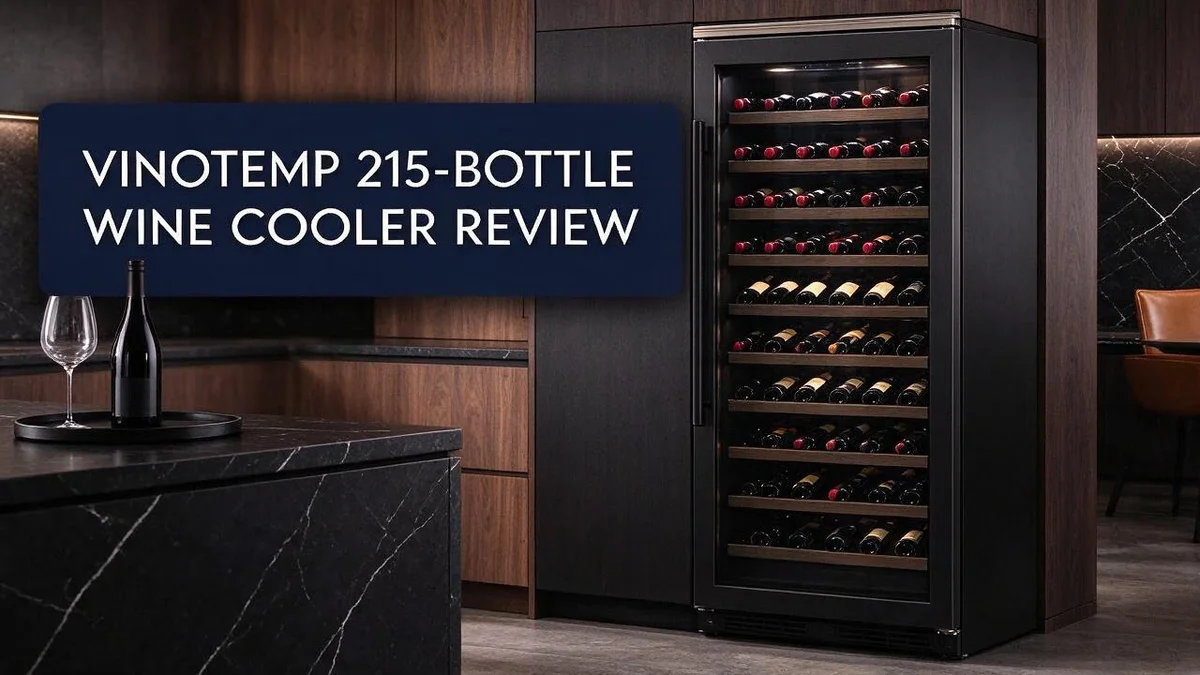
Vinotemp 215-Bottle Wine Cooler Review: Buyer’s Guide
Are you ready to give your wine collection a proper home? The Vinotemp 215 Bottle Wine Cooler might be the answer you need. It keeps your bottles safe, cool, and ready to serve.
Many wine lovers struggle with storage. Bottles sit on kitchen counters, get too warm, and slowly lose their flavor. This unit solves that problem with steady cooling and smart shelving.
Wine needs the right conditions to age well. A large cooler gives you room to grow your collection without crowding your space.
In this review, we look at the design, temperature control, and daily use. You will learn if this cooler fits your home and your lifestyle. Let’s dig in.
In a Nutshell
This summary covers the practical side of owning this cooler.
-
Think about where it will sit. A cooler needs open airflow around it to work well. Leave some space at the sides and back. This helps the unit stay efficient and keep a steady temperature in your home.
-
Light can harm your bottles. UV rays can fade labels and slowly affect the wine inside. A cooler with a solid or tinted door protects your collection from sunlight. Keep it away from windows for the best results.
-
Quiet operation fits living spaces. Many people place a cooler in a kitchen, dining room, or den. A low hum blends into everyday life, so you can enjoy your space without constant background noise.
-
Look for easy access. Sliding shelves let you reach bottles without moving the rest of your collection. This saves time when you pick a bottle for dinner or a special occasion.
-
Plan for regular cleaning. Dust and spills can build up inside over the months. A quick wipe every so often keeps the interior fresh and the shelves looking clean.
-
Check your power setup. Plug the cooler into its own outlet when you can. Steady power helps the unit hold its set temperature and protects your bottles from sudden changes.
Capacity and Storage Layout

- CAPACITY: Holds approximately 173 750 mL Bordeaux bottles and may include bulk storage
- APPLICATION: Front exhaust for built-in or freestanding installations
Last update on 2026-10-26 / Affiliate links / Images from Amazon Product Advertising API Some of the links on this website are affiliate links, which means that at no additional cost to you, I earn a commission if you click through and make a purchase. I only recommend products and services that I believe will add value to my readers. Thank you for your support!
Think about how you will sort your bottles. Grouping wines by type makes life easier. Keep reds on one side and whites on the other. Sparkling wine often fits well near the top.
Shelf height also matters. Bottles you plan to drink soon can sit at eye level for easy picking. Bottles meant for long aging can rest lower, where the cooler holds its steady conditions.
Plan for odd sizes. Some bottles are taller or wider than standard ones. Champagne and magnums may need extra room. Test a few bottles on the shelves before you load the whole cooler.
Turn labels to the front so you can read them without pulling bottles out. A simple list on your phone can track what you own and where each bottle sits.
Leave a few gaps on purpose. Packed shelves make it harder to slide a hand between bottles. Open space also makes it easier to rotate stock without knocking over neighbors.
Use a first in first out habit. Move older bottles to the front of their zone. Place new arrivals at the back. This simple routine keeps your collection moving and stops forgotten bottles from aging past their best.
Map out your zones before you start. Write down how many bottles fit each style you own. This gives you a clear picture of how the space will fill up over time. It also shows you exactly where extra room remains.
Think about your buying habits too. If you add six bottles each month, plan a zone for that flow. Some owners keep a small section open for trials and gifts. That habit keeps the layout flexible for years.
Keep your layout simple. A clear plan beats a crowded shelf every time. Start small, then expand zone by zone. Your cooler will feel calm and easy to use.
Temperature Control and Zones
Temperature control makes or breaks any wine cooler. Wine ages best when it stays steady. Sudden swings can push bottles to age too quickly and dull their flavor. This model lets you set the exact temperature on a clear digital display.
Two zones let you store reds and whites apart. Red wines usually rest best near 55 to 65 degrees Fahrenheit. White wines and sparkling bottles prefer something cooler, often around 45 to 50 degrees. Separate zones keep both groups happy.
Each zone holds its own setting without affecting the other. Solid insulation between the two sides helps each one keep its own temperature. You do not need a second appliance to manage two styles of wine. One unit handles both needs.
Frequent door openings can cause temperature spikes. Every time you open the door, cool air escapes. Try to grab what you need in one quick visit. Shorter visits help the unit recover faster and keep your bottles calm.
Let new bottles rest before you enjoy them. Bottles from a store or warehouse often arrive warm. Give them a day inside the cooler so the temperature evens out. This small step protects the flavor of every bottle you add.
Test the real temperature with a separate thermometer. Built-in displays can read a few degrees off. A simple standalone thermometer placed in the middle of a shelf gives you a clearer picture. Compare the two readings and adjust your setting if needed.
Keep the setting steady through the seasons. Room temperature shifts with summer heat and winter cold. A cooler near a sunny window or a heater may work harder than expected. Make small changes only when needed, and give each change a few hours to take effect.
Build Quality and Design
The outer shell sets the tone for the whole unit. Look closely at the finish before you decide. A sleek black front fits modern rooms well, while a lighter tone can suit a cozy space.
Check the glass door next. A thick, clear panel keeps your bottles visible. Run your fingers along the edges to feel for rough spots or sharp seams.
The door seal deserves extra attention. A soft, flexible gasket should press firmly against the frame all the way around. Gaps here let cold air slip out, and the cooler then works harder than it should.
Hinges reveal a lot about daily use. Smooth hinges open the door without a jolt and hold their position well. Stiff or wobbly hinges often wear out faster over time, so test them by opening and closing the door a few times.
The handle needs a solid grip. Test it with one hand, as you would during a busy evening. A loose handle can frustrate you after hundreds of openings.
Feet and leveling matter more than many buyers expect. Adjustable feet let you set the cooler flat on uneven floors. A flat base keeps the door closing evenly and reduces strain on the hinges.
Weight plays a role in setup. Full cabinets get heavy fast, so plan for two people to move the unit into place. Confirm that the floor can support the load before you start.
Lighting adds a quiet touch of style. Soft interior lights show off your collection at night. Choose lights that stay cool to the touch and use little energy.
Lock options give extra peace of mind. A key lock keeps curious guests or children from opening the door. This feature suits homes with busy households or frequent visitors.
Finally, inspect the cabinet corners and trim. Clean lines show careful assembly. Loose panels or uneven gaps may cause rattling over time, which can become annoying in a shared living area.
Overall, the design balances looks and function. A solid cooler should feel like furniture, not a cheap appliance. It should handle daily opening, closing, and cleaning for years without losing its shape or charm.
Top 3 Alternatives
NewAir Wine Cooler

- REFINED STORAGE FOR 28 BOTTLES – This stainless steel freestanding wine fridge brings...
- DUAL-ZONE TEMPERATURE PRECISION – Preserve reds and whites at their ideal conditions with two...

Last update on 2026-10-26 / Affiliate links / Images from Amazon Product Advertising API Some of the links on this website are affiliate links, which means that at no additional cost to you, I earn a commission if you click through and make a purchase. I only recommend products and services that I believe will add value to my readers. Thank you for your support!
The NewAir Wine Cooler is a great pick for people who want quiet, steady cooling. It uses a compressor that keeps bottles at a stable temperature. Many owners also like its sleek look and easy touch controls. It runs with low noise, so it fits well in open living spaces.
Best for: Buyers who want a smaller footprint in a home kitchen or bar area.
Whynter Wine Cooler

- Measures: 20.5" Long x 15.79" Wide x 22" High
- Capacity: 20 standard wine bottles
Last update on 2026-10-26 / Affiliate links / Images from Amazon Product Advertising API Some of the links on this website are affiliate links, which means that at no additional cost to you, I earn a commission if you click through and make a purchase. I only recommend products and services that I believe will add value to my readers. Thank you for your support!
The Whynter Wine Cooler stands out for its dual temperature zones. You can store red wines at one temperature and white wines at another. Each zone has its own control, so you can set the right level for each bottle type. This makes it a smart choice for collectors with mixed tastes.
Best for: Wine lovers who keep both reds and whites on hand.
Ivation Wine Cooler
No products found.
The Ivation Wine Cooler offers a simple design with a clear glass door. Its UV protected glass helps shield bottles from harmful light. Many people choose it for a quick setup in a living room or dining area. Its shelves are sturdy, and the layout keeps bottles easy to reach. It works well for people who want a basic, reliable option.
Best for: Beginners who want an easy and clean look.
Noise and Vibration Levels
Noise is one of the first things people notice. A wine cooler runs quietly most of the day, but you may still hear it. Knowing what to expect helps you choose the right spot.
The compressor creates most of the sound. It switches on and off as it keeps the inside cool. Many owners describe this as a soft, steady hum.
Vibration matters too. Small shakes can travel through the floor and into the bottles. Over time, constant movement may disturb sediment in older reds.
Where you place the unit changes everything. A hard floor or thin shelf can carry sound further. A solid, level surface usually keeps the noise lower.
Think about the room next. A kitchen with loud appliances hides the hum well. A bedroom or home office may feel quieter, so the cooler stands out more.
Keep the cooler away from walls on every side. Air needs room to move around the back. Blocked airflow makes the compressor work harder, and that often means more noise.
Check the feet every few months. Loose or uneven feet can rattle. Tightening them or adding a small rubber pad often stops the buzzing.
Avoid placing the unit on carpet. Soft flooring traps vibration and can shift over time. A sturdy platform helps the cooler stay steady.
Listen during the first few days. Some new units sound louder at startup. The noise often drops once the interior reaches its set temperature.
Night time can feel different. The house gets quiet, so even a gentle hum may seem louder. Many people place the cooler in a utility area if they want more peace.
If the sound bothers you, try a few simple fixes. Close the door gently each time. Keep the unit clear of nearby walls. Small changes can make a big difference.
Sound is a personal thing. Some people barely notice it. Others prefer a spot farther from living spaces. Test a few locations before you settle on a final place.
Energy Use and Running Costs
Power use matters more than most buyers think. Every wine cooler pulls electricity all day long. Knowing how the unit uses power helps you plan ahead.
The compressor does most of the work. It turns on and off to hold your chosen setting. When the room feels warm, it runs longer.
Room temperature plays a big role. A cooler in a hot kitchen works harder than one in a cool basement. Check the room readings during summer months.
Nearby appliances also add heat. Ovens, dishwashers, and radiators make the unit work harder. Move it away from them when you can.
Sunlight can push the unit to work harder too. Direct rays heat the glass door and the sides. Close blinds or move the cooler out of the sun.
Dust is a quiet energy thief. It builds up on the vents and the back panel over time. A soft brush or vacuum attachment once each season keeps airflow strong.
Fill the shelves when possible. A full cooler holds its cool air better than an empty one. Bottles act as a thermal buffer. Still, avoid cramming so tightly that air cannot move.
Set the temperature with purpose. Lower settings ask the compressor for more work. Choose the warmest setting that suits your reds and whites.
Plug the unit into a grounded outlet of its own. Shared power strips can cause trouble. Also check the power cord for heat or damage.
Watch for changes over time. If the unit starts running nonstop, something may be wrong. Fans, vents, or the compressor may need a look.
Finally, track your usage for a week or two. Patterns show what needs attention. Note how the unit behaves during hot afternoons and cool nights.
Small habits add up over the year. Interior lights draw a small amount of power, so switch them off when you are not browsing.
Pros and Cons
Pros
- Holds a large collection in one single unit
- Keeps a growing collection neatly organized
- Suits many bottle shapes and sizes on the shelves
- Lets you store wine for months or years
- Reduces trips to a basement or outside storage area
Cons
- Takes up a lot of floor space
- Needs a spot with room for airflow
- Can feel too big for small apartments or kitchens
- Full loads can make moving the unit harder
Who Should Buy It
This cooler suits people who already love wine. Many buyers have favorite bottles they want to keep at the right temperature. A dedicated unit makes that goal much easier to reach.
Collectors who buy by the case will appreciate the setup. They can add new bottles without shifting the older ones around. Each addition feels simple and calm.
Home hosts also gain a lot from it. They plan dinners, parties, and holiday visits. Having a range of bottles ready makes planning easier. Guests often notice when the wine is served at just the right temperature.
Wine club members often make a strong match. Shipments tend to arrive all at once. A large unit gives those boxes a safe place to rest right away.
New wine drinkers may enjoy learning with it. Trying one bottle from each batch helps you notice different flavors. Over time, you will discover which styles you like most.
Renters should consider the freedom it offers. A freestanding unit does not need built in cabinets or major wiring changes. You can take it along when you move to a new place.
Some people should wait before buying. If you drink only a bottle or two each month, you may not need this much room. A smaller model could match your habits better and fit your space more easily.
Careful shoppers should compare sizes first. Measure the spot you have in mind, including the door swing and nearby outlets. Then compare that space with the cooler dimensions listed on the product page.
Final thought: match the cooler to your habits. Ask yourself how often you drink, host, and collect. Your honest answers will show whether this model fits your home and your lifestyle.
Final Verdict
Here is our final take on this Vinotemp model. It earns a strong place on our list for wine lovers who want order. Still, the best choice depends on your daily habits.
Think about how often you open the door. Each visit lets warm air in. A calm routine helps the unit hold steady temperatures and keeps your bottles happy.
Consider the floor under the cooler. A firm and level surface keeps the unit steady. Wood or tile floors can carry small vibrations, so check the legs before you start storing bottles.
Plan your bottle rotation from day one. Label each shelf by style or region. You will find wines faster, and you will open fewer doors to search.
Think about the long game. Your taste will shift as you learn more. This cooler lets you explore new styles without rearranging your whole kitchen.
Our bottom line is simple. This unit fits a home that treats wine as a steady hobby. Buyers who want a calm, organized spot for their bottles will find it a sound pick.
Before you commit, run a quick check. Ask yourself where it will sit, who will open it, and how often you plan to use it. Honest answers make the decision much easier.
Keep the seal in good shape. Wipe the door gasket every few months. A clean seal helps the cooler hold moisture and cool air where it belongs.
Plan for the day it needs service. Save the manual and note the model number. Keep your receipt in a folder so support teams can help you quickly.
Enjoy the calm of a dedicated space. Many owners say the quiet glow of the shelves feels like a small reward. Your wine deserves that kind of care every single day.
Small habits add up over time, so start them now and enjoy the results.
Frequently Asked Questions
Can I store red and white wine together?
Yes, you can. Many collectors keep both styles in the same unit. Group them on separate shelves so you can grab the right bottle fast. This setup also makes it easier to track what you have on hand.
How long should I wait before loading bottles?
Give the unit time to settle first. Let it run for a few hours so the inside reaches your set temperature. Then add your wine slowly, one shelf at a time.
Should I keep the cooler away from sunlight?
Yes, direct light matters. Sunlight can heat the glass and fade labels over time. Even indirect light over many months can cause problems, so a shaded corner works best.
Can I chill bottles for serving here?
You can, but plan ahead. Chilling a warm bottle takes longer than simply storing it. Use the cooler to hold wine at serving temperature, not to chill bottles quickly. Move a bottle to the fridge or an ice bath if you need it fast.
How do I clean the inside?
Unplug the unit first. Wipe the shelves with a soft cloth and warm water. A mild cleaner works well on stubborn spots. Avoid harsh chemicals that can leave odors behind. Dry everything well before you plug it back in.

Hi, I’m Greta Monroe, and I’m passionate about making every kitchen a place of creativity and efficiency. I’ve spent years exploring and testing kitchen gadgets, tools, and devices to help home cooks find exactly what they need. At ChefKit Blog, I share honest Amazon product reviews and practical insights on kitchen essentials that actually make a difference. From must-have basics to innovative new devices, I break down what works and what doesn’t. My mission is simple: to help you build a kitchen that inspires delicious possibilities every single day.