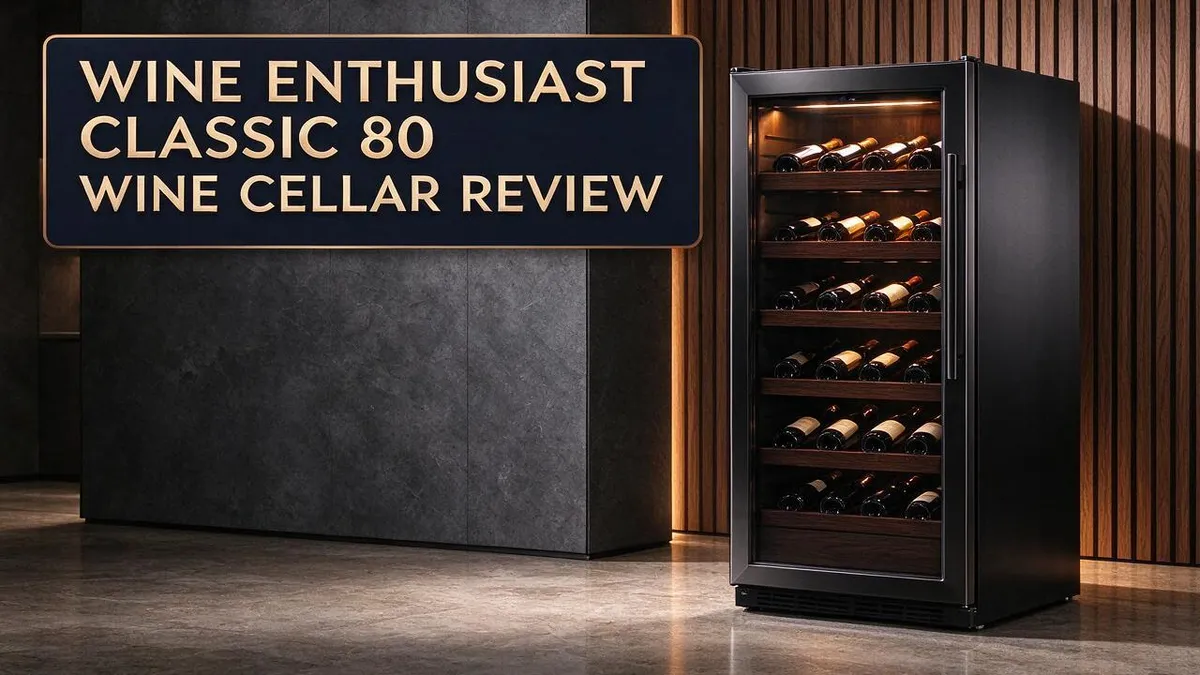
Wine Enthusiast Classic 80 Wine Cellar Review: Buyer’s Guide
Storing wine at home can feel like a guessing game. Bottles need a cool, steady spot to age well. That is where a dedicated wine cellar comes in handy.
The Wine Enthusiast Classic 80 is a popular pick for new collectors. Wine Enthusiast named it Best Starter Wine Cooler in October 2023. Its clean look also suits many home styles.
Capacity is the big question. The brand claims it holds 80 bottles, with nine Bordeaux bottles per shelf. One Reddit user, however, reports fitting only about five per shelf. So real-world space may differ from the listing.
In this review, we look at what the cellar offers, where it shines, and where it may fall short. Keep reading to see if it suits your collection.
In a Nutshell
- Big bottle count: The brand claims this cellar holds 80 bottles, which gives you plenty of room for a growing collection.
- Shelf space check: The brand says each shelf fits 9 Bordeaux bottles. One Reddit user reported fitting only about 5 per shelf, so measure your own bottles before you decide.
- Starter pick praise: Wine Enthusiast named it a “Best Starter Wine Cooler” in October 2023. This award appeared in the brand’s own publication, so keep that source in mind.
- Media claim to verify: The brand’s Instagram says the New York Times called it a “Best Wine Fridge.” We could not confirm this claim from an independent source.
- Protection and style: The brand says the cellar shields bottles from outside elements. It also says the design fits any home décor, which many buyers will appreciate.
- Missing details: Our research did not confirm the dimensions, cooling type, temperature range, or weight. Look for these specs in the product listing before you commit.
Capacity and Shelf Layout

- Compressor Cooling - Wine Enthusiast's wine refrigerator utilizes state-of-the-art compressor...
- Sleek & Efficient Design - Discover an affordable form-and-function solution with the features of...
Last update on 2026-10-26 / Affiliate links / Images from Amazon Product Advertising API Some of the links on this website are affiliate links, which means that at no additional cost to you, I earn a commission if you click through and make a purchase. I only recommend products and services that I believe will add value to my readers. Thank you for your support!
Shelf layout often decides how much your cellar holds. Many buyers focus only on the total bottle count. Smart planning starts with the shelves themselves.
Start with your own bottles. Gather the wines you already own. Lay them on a table and compare their shapes. Most Bordeaux bottles have broad shoulders, so they take more room than slimmer bottles.
Sparkling wine and larger formats need extra care. A magnum or a Champagne bottle may not slide into a space that holds standard bottles well. Check each shelf before you stack your favorites.
Leave some open space on every shelf. Packed shelves make it hard to reach one bottle without moving others. Easy access helps protect your collection from bumps and jostling.
Consider how your collection will grow. A cellar that feels roomy today may feel tight after a year of new purchases. Keep a few empty slots so you can add bottles without rearranging everything.
The Reddit report is a useful reminder. One owner says the shelves hold about five Bordeaux bottles each, not nine. That is a single account, so it does not prove the claim is wrong. Still, it shows why testing matters.
Test before you commit. Measure the shelf width and depth with a tape measure. Then fill one shelf with your bottles and count how many fit comfortably. Repeat the test on each shelf, since shelves can differ slightly.
Think about how you want to organize the wines. Some people group reds by region. Others group whites by serving temperature or by how soon they plan to open them. Labels should face forward so you can read them fast.
A good layout keeps frequently opened bottles near the front. Save the bottles you want to age for lower or back spots. This approach saves time and limits how often you handle your best wines.
In short, the capacity number is only a starting point. Your shelf layout decides how much you can really store. Measure, test, and plan before you fill the cellar.
Build and Exterior Design
The outside of a wine cellar shapes how it feels in your home. Many buyers look at the front first. Your room matters just as much.
Pick a spot with steady conditions. Keep the unit away from windows, radiators, ovens, and heating vents. Direct sun and heat can make the inside work harder.
Leave room for airflow. Most cabinets need open space around the sides and back to release heat. Push the unit flush against a wall and warm air may get trapped. Check the product guide before you slide it into a tight nook.
Think about the door next. A glass front shows off your labels. A solid door hides bottles and blocks light.
Our research did not confirm which door type this model uses. Check photos or the seller listing closely.
Consider how the cellar opens. Check the door swing and handle position.
A door that opens toward a wall or narrow walkway slows every bottle grab. Stand in front of the unit and picture your daily routine.
Finish and cleaning deserve a look too. Smooth surfaces wipe clean fast, while textured finishes can hold dust.
Our sources did not describe materials or finish options. Ask the seller for those details before you choose.
Households with kids or pets need extra thought. Place the cellar where curious hands cannot tip it or pull the door open. A stable floor and a level base help too.
Match the cellar to your style. Think about whether it will sit in a living room, a home bar, or a basement. The right look helps the cellar feel like part of the room rather than an afterthought.
In short, a good exterior fits your room, keeps airflow steady, and makes daily use easy. Take a few minutes to plan the spot before the cellar arrives.
Temperature Control and Bottle Protection
Steady temperature matters more than a perfect number. Wine ages slowly when conditions stay calm. Sudden swings push corks and speed up aging in ways you cannot see.
Temperature swings come from more than the room itself. Each time the door opens, cool air escapes and the cooling system works harder. Think about how often you plan to reach in for a bottle.
Vibration is another quiet threat. Constant shaking can disturb sediment in older reds. Heavy appliances and busy hallways can add shaking over time. Set the cellar on a solid floor, away from washing machines and speakers.
Humidity keeps corks moist. Dry air can shrink corks over time, which lets oxygen seep into the bottle. Our research did not confirm how this model handles humidity, so ask the brand directly.
Light also harms wine. Strong sunlight and some indoor bulbs carry UV rays that can change flavor, especially in lighter whites and sparkling wines. Check whether the glass blocks light, or choose a spot where daylight never reaches it.
Run a simple test at home. Place a basic thermometer on the top, middle, and bottom shelves. Read the numbers each week for a month, since warm air often rises and settles near the top.
Power cuts also deserve a plan. Most wine coolers need time to return to their set conditions after an outage. Keep a cool closet ready as a short-term backup for your favorite bottles.
Store bottles on their sides so corks stay in contact with the wine. Never stack loose bottles on top of each other, because glass can crack and labels can tear. Careful handling protects every bottle you own.
Think about your daily routine too. If you open the cellar often, choose a model with quick recovery. If you rarely visit, a steady setting matters more than frequent access. Match the cellar to how you actually use it.
Top 3 Alternatives
NewAir Wine Cooler

- REFINED STORAGE FOR 28 BOTTLES – This stainless steel freestanding wine fridge brings...
- DUAL-ZONE TEMPERATURE PRECISION – Preserve reds and whites at their ideal conditions with two...

Last update on 2026-10-26 / Affiliate links / Images from Amazon Product Advertising API Some of the links on this website are affiliate links, which means that at no additional cost to you, I earn a commission if you click through and make a purchase. I only recommend products and services that I believe will add value to my readers. Thank you for your support!
The NewAir Wine Cooler suits people who want a clean, modern look. It holds a good number of bottles and keeps them at steady temperatures. Many owners like its quiet operation, so it works well in a kitchen or living room.
Its dual zones let you store reds and whites at different temperatures. Smooth glass doors also show off your favorite bottles. This model fits well in small spaces.
Ivation Wine Cooler

- TEMPERATURE STABILITY - Ivation wine coolers’ compressor technology ensures temperature is not...
- PRESERVE WINE’S FULLEST FLAVOR & AROMA - Set the temperature and let the wine cooler do the rest...
Last update on 2026-10-26 / Affiliate links / Images from Amazon Product Advertising API Some of the links on this website are affiliate links, which means that at no additional cost to you, I earn a commission if you click through and make a purchase. I only recommend products and services that I believe will add value to my readers. Thank you for your support!
The Ivation Wine Cooler offers a simple setup for new collectors. Its compact body fits under a counter or in a corner. Users often praise its easy touch controls and clear display.
Ivation models use thermoelectric cooling, which runs quietly. Vibration stays low, so wine ages more gently. Its simple dial makes temperature changes quick. This makes it a handy choice for everyday drinkers.
Whynter Wine Cooler

- Measures: 20.5" Long x 15.79" Wide x 22" High
- Capacity: 20 standard wine bottles
Last update on 2026-10-26 / Affiliate links / Images from Amazon Product Advertising API Some of the links on this website are affiliate links, which means that at no additional cost to you, I earn a commission if you click through and make a purchase. I only recommend products and services that I believe will add value to my readers. Thank you for your support!
The Whynter Wine Cooler stands out for its larger capacity. It works well for people who own many bottles and want space to grow. Its sturdy shelves pull out smoothly for easy access.
Whynter units often include a UV protected glass door. This helps block light that can harm wine flavor. Many buyers say it keeps a steady temperature during hot summer months. Overall, it suits serious collectors.
Setup and Placement
Setup starts with the path. Measure every doorway, hallway, and corner the unit must pass. A tight turn can scratch the finish or damage the shelves.
Check the floor before you place the unit. A level floor keeps the cabinet steady and helps the door seal well.
Let it rest before plugging in. A short wait after moving gives the cooling parts time to settle. Skipping this step may stress the system during its first run.
Find a grounded outlet of its own. Avoid extension cords, since they can overheat. A dedicated outlet also keeps the cellar from sharing power with other appliances.
Keep cords out of reach of kids and pets. Run them behind the unit and along the wall so nobody trips.
Think about sound. Many cooling systems hum when they run. A bedroom, home office, or media room may feel that noise more than a garage.
Mind the space above. Check that the top of the unit clears any cabinets or shelves. Extra room makes it easier to reach the top shelf.
Plan for reach height. Place your most used bottles between chest and eye level. Heavier bottles belong on lower shelves for safer lifting.
Keep the unit clear of the kitchen sink and stove. Steam and grease can cling to the outside and make it harder to keep clean.
Protect your floor. A sturdy mat under the feet can guard wood or tile from dents. Choose a wall and floor that can handle a full load.
Bring a small level. Check the shelves after placement so bottles rest flat. Flat shelves keep bottles stable and reduce rattling.
Think about everyone who uses it. Guests and family may need to open the door without help. Pick a spot that feels easy for all of them.
Write down your setup. Note the outlet location, the chosen spot, and the date you plugged it in. This record helps you troubleshoot later.
Finish with a simple checklist. Confirm the floor is level, the outlet works, and the cords stay hidden. Then load your bottles slowly.
Pros and Cons
Pros
- Named a “Best Starter Wine Cooler” by Wine Enthusiast in October 2023.
- Called a Best Wine Fridge by the New York Times, according to the brand’s Instagram.
- Marketed to protect bottles from outside elements.
- Fits many decor styles, so it blends into most rooms.
- Holds 80 bottles according to the manufacturer.
Cons
- A Reddit user reports about 5 Bordeaux bottles per shelf, not 9.
- The capacity claim may mislead buyers who need full shelf space.
- The shelf count rests on one anecdotal source.
- Key specs like dimensions and temperature range were not confirmed.
Who Should Buy It
This cooler suits people who are just starting their wine journey. New collectors often own a handful of bottles. They want one simple spot to keep them.
Apartment renters may also find it useful. Many renters cannot change their space much. A standalone unit lets them store wine without major remodeling.
Casual drinkers who enjoy a few glasses each week often do well with a small unit. They can rotate bottles without storing a large stock.
Gift shoppers can use it as a thoughtful present. It pairs well with a few favorite bottles. The recipient gets a home for their new collection right away.
Hosts who serve wine often want bottles ready when guests arrive. This model works well for dinner parties and weekend gatherings.
Buyers who care about looks may like the design. The brand says it fits many décor styles. It can sit in a living room, dining area, or kitchen nook.
Couples who share tastes may like a compact space for both red and white bottles. Keeping both types in one place makes choices easier at dinner.
Short term storage is another good fit. People who buy wine for the next few months rarely need a long aging plan. A simple cooler handles that job well.
Home office workers may enjoy a unit near their desk for an evening glass after work. It adds a small touch of ritual to the day.
Some people should look elsewhere. Owners of large collections need more space than a single cooler offers. They should count their bottles before they buy. Collectors who love rare or old bottles also need steady conditions for years, so they should explore other options.
A quick check of your needs helps with the decision. Ask how often you drink, how many bottles you own, and where the unit will sit.
Bottom line: choose this cooler if you want a simple start with a clean look. Skip it if you plan to age a big collection for many years.
Final Verdict
The Classic 80 makes sense as a first wine cooler. It suits someone who wants a simple place for everyday bottles. Its size works well for a starter collection.
Think about how you will use it first. A cooler works best when it matches your habits. If you open a bottle every few nights, the space will likely serve you well for a long time.
Test the capacity with your own bottles. Since the shelf count is in doubt, line up your favorite bottles before you decide. Count how many fit on one shelf. This quick check gives you a clear answer.
Plan for growth before you buy. Many people start with a few bottles and then add more. Ask yourself whether you will want more room in a year. If so, a larger unit may save you from upgrading too soon.
Ask a few questions before you commit. Does the unit fit your space? Do you have a spot away from direct heat? Will you store red and white bottles together? Clear answers help you avoid surprises later.
Keep your expectations realistic. This cooler works best for bottles you plan to drink within a few months or a couple of years. It serves as a practical tool for daily enjoyment rather than a long-term aging vault.
Who should consider something else? Serious collectors with large libraries will likely outgrow this unit quickly. Anyone who plans to age wines for many years should compare other models first.
Our overall view is positive but careful. The Classic 80 offers a friendly start for new wine lovers. Confirm the shelf space and measurements yourself, and it can become a reliable part of your home.
Frequently Asked Questions
Is this cooler a good first step into wine storage?
Yes, it can be. The Classic 80 suits people who want a simple place for everyday bottles. Start with a small group of favorites so you learn how the unit fits your routine.
Where should you place the cooler in your home?
Pick a spot away from sunlight and heat sources. Keep the unit on a level floor so the bottles rest steadily. Leave some open space around the back and sides so air can move freely.
How can you check the unit before you buy?
Ask the seller for the full measurements and temperature range. Compare those numbers with your space. Measure your doorway too, so the cooler can reach its final spot without trouble.
What should you do before the first use?
Let the unit run for several hours before you add bottles. Wipe the inside with a soft, dry cloth. Then load bottles slowly so the inside can settle into a steady state.
Can this cooler help when you host guests?
It can. Load bottles a day or two before your guests arrive. This way, your wine is chilled and ready when people walk through the door.

Hi, I’m Greta Monroe, and I’m passionate about making every kitchen a place of creativity and efficiency. I’ve spent years exploring and testing kitchen gadgets, tools, and devices to help home cooks find exactly what they need. At ChefKit Blog, I share honest Amazon product reviews and practical insights on kitchen essentials that actually make a difference. From must-have basics to innovative new devices, I break down what works and what doesn’t. My mission is simple: to help you build a kitchen that inspires delicious possibilities every single day.