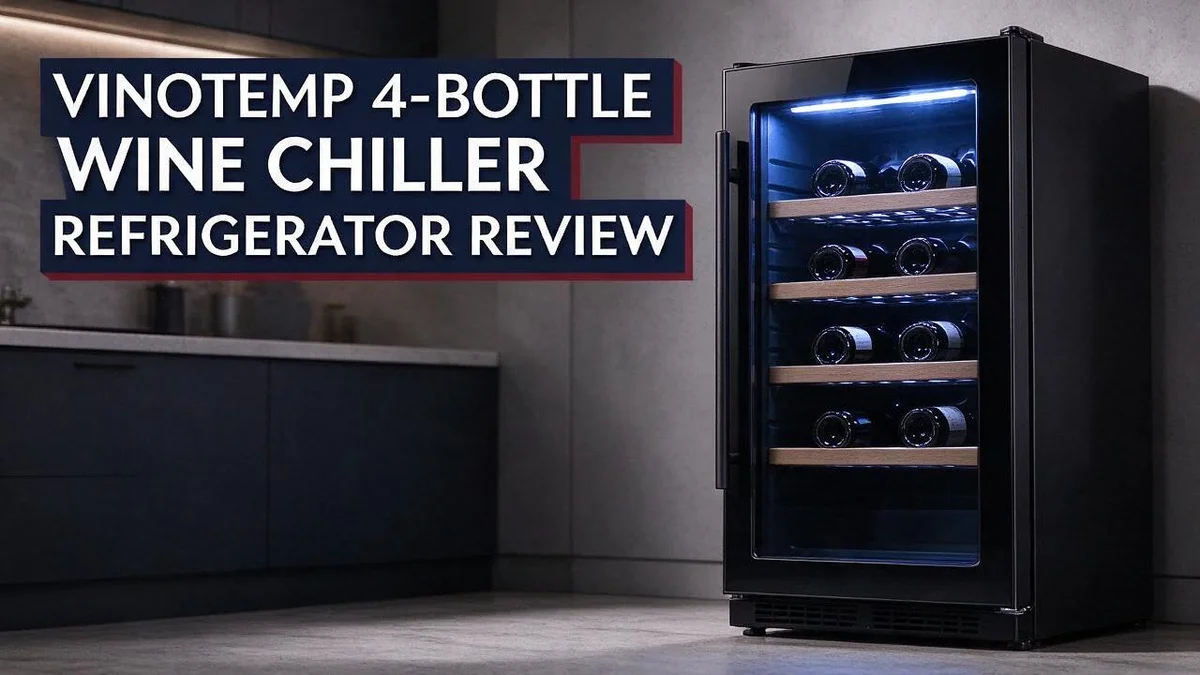
Vinotemp 4-Bottle Wine Chiller Review: Worth Buying?
Looking for a compact way to keep wine at the right temperature? A small wine chiller can make a big difference in your kitchen or living room.
Vinotemp makes many wine cooling units, and the four bottle model suits people with limited space. But does it live up to the hype? Let’s take a closer look.
Reviews from real owners give a mixed picture. Consumer Reports praised a Vinotemp single zone model for its very good temperature control. Still, some shoppers report trouble after several years of use.
Before you buy, it helps to know what to expect. This guide covers the main strengths, common complaints, and who this chiller suits best. You will also learn what to check before you decide.
In a Nutshell
-
Capacity that holds up: Reddit owners say the stated capacity fits even Burgundy bottles, which are wider than most wine bottles. This makes the unit useful for mixed collections.
-
Self contained design: Vinotemp cabinet systems usually run on their own. You can place the unit in a spot like a kitchen corner or a home bar without extra setup.
-
Build quality concerns: Some Trustpilot reviewers mention workmanship problems with the metal case. Look closely at the finish and seams when you inspect a unit.
-
Lifespan questions: One reported unit failed after five years. Long term reliability is a fair question for any wine chiller, so plan for future repairs.
-
Cooling changes over time: A Reddit user described a dual zone model that began overcooling after several years. Check the temperature with a separate thermometer now and then to catch drift early.
-
Forum warnings: Posts from 2015 and 2022 advise readers to avoid the brand. Read recent owner reviews so you see how the product performs today.
-
Bottom line: This chiller may suit light, everyday wine storage. Weigh the mixed feedback carefully before you decide.
Build Quality and Cabinet Durability

- 7 BOTTLE STORAGE: This wine cooler comfortably houses up to 7 bottles of your favorite wines...
- PRECISE TEMPERATURE SETTINGS: Enjoy the convenience of the digital temperature control display...
Last update on 2026-10-26 / Affiliate links / Images from Amazon Product Advertising API Some of the links on this website are affiliate links, which means that at no additional cost to you, I earn a commission if you click through and make a purchase. I only recommend products and services that I believe will add value to my readers. Thank you for your support!
Good build quality shapes how well a wine chiller holds up over time. A solid case protects the cooling parts from bumps and daily wear.
Start by checking the door. Look at the rubber gasket around the door. A tight seal keeps cold air inside and eases strain on the cooling system.
Next, test the hinges and handle. Loose parts often point to weak assembly. Tighten what you can and contact the seller about the rest.
Glass doors vary in insulation. A double layer helps in humid rooms, where a single layer may sweat.
Airflow matters as much as the case itself. Most units need open space at the back and sides. Blocked vents force the compressor to work harder.
Place the unit on a level, firm floor. An uneven base can cause rattling and stress the frame. Adjustable feet make leveling much easier.
Keep the unit away from heaters and direct sunlight. Heat around the case forces the system to run longer. Long runs can wear parts faster.
Listen to the unit after setup. A steady hum is normal for most chillers. Sharp banging or buzzing deserves a closer look.
Dust builds up on the condenser coils over time. Wipe them every few months with a soft brush. Clean coils release heat better and help the cabinet last.
Open the door only when you need to. Frequent opening strains the seal and lets warm air in. A standalone thermometer also helps you confirm the real temperature.
Inspect the carton when it arrives. Dents outside may signal damage inside. Photograph any problems before the delivery driver leaves.
Read the warranty before setup. Check the coverage length for the cabinet and the cooling parts. Keep your receipt and model number in one safe place.
Simple checks and steady care protect your wine and your unit. Good habits help any chiller stay reliable for longer.
Capacity and Bottle Fit
Bottle fit matters more than most buyers expect. A four bottle unit can look roomy on paper. Your real fit depends on the shape and size of the bottles you own.
Start by measuring your tallest bottle. Add a few inches for the neck and cork. Sparkling wine bottles often run taller than standard red bottles, so measure those too if you plan to store them.
Next, check the width of your widest bottles. Bordeaux bottles have straight shoulders that pack neatly. Champagne bottles are heavier and take up more room on each shelf.
Test the fit with real bottles before you commit. Place your bottles on a table in the same layout the shelves will hold. This quick test shows you how much space is left over.
Leave room to grab each bottle. Your fingers need space behind the neck. Tight packing makes labels scrape and bottles hard to lift without bumping neighbors.
Shelf depth also matters. Deep bottles may press against the glass door. Close the door gently after loading and confirm that nothing rubs or pushes against the glass.
Think about future needs too. Many people start with a few bottles and then add more over time. A unit that fits four bottles today may feel cramped after a few months of regular buying.
Measure first, then compare the numbers with your collection. This simple habit prevents frustration after delivery. It also helps you choose a chiller that stays useful for years.
Temperature Control and Cooling Performance
Steady temperature decides how wine tastes over time. Wine needs cool air that stays consistent, not sudden swings.
Most wine chillers use one main dial for the whole cabinet. Red wines usually taste best between 55 and 65 degrees Fahrenheit. Whites and sparkling wines prefer cooler settings, often 45 to 55 degrees.
Run the unit empty for a full day before loading bottles. This lets the cabinet reach its set point.
Use a separate thermometer to check the real temperature. Built in displays may read a few degrees off.
Start near the middle of the dial. Adjust the setting slowly over several days instead of jumping to the coldest point.
Cooling speed depends a lot on room temperature. A warm kitchen forces the cooling system to work harder.
Keep the vents clear so air can move freely. Blocked vents create warm spots that can affect bottles near the back.
A fuller cabinet holds cold air better. Filling empty spaces with water bottles can help the unit recover faster after the door opens.
Frequent door openings cause temperature spikes. Load bottles in one trip and close the door quickly.
Consumer Reports praised very good temperature control on a 60 bottle Vinotemp model. Every unit performs differently, so test your own.
Listen to the unit after setup. A steady hum is normal, but loud clicking or long running cycles may signal a problem.
Vibration can also disturb sediment in older red wines. Place the unit away from washers, speakers, and other machines.
Many chillers do not track humidity closely. Long term storage may need extra care for corks.
Sensitive bottles belong in the coolest zone. This is usually the lower shelves, where cold air settles.
Check the temperature every few weeks. Adjust the setting when seasons change, since summer heat affects cooling.
Small changes make a big difference. Once you learn how your unit behaves, you can keep wine at its best with very little effort.
Top 3 Alternatives
Ivation Wine Cooler

- TEMPERATURE STABILITY - Ivation wine coolers’ compressor technology ensures temperature is not...
- PRESERVE WINE’S FULLEST FLAVOR & AROMA - Set the temperature and let the wine cooler do the rest...

Last update on 2026-10-26 / Affiliate links / Images from Amazon Product Advertising API Some of the links on this website are affiliate links, which means that at no additional cost to you, I earn a commission if you click through and make a purchase. I only recommend products and services that I believe will add value to my readers. Thank you for your support!
Looking for a simple way to store your bottles? The Ivation Wine Cooler fits well in small spaces. It keeps your wine at a steady temperature, so each bottle stays in good shape. Many people like its clean look and quiet operation. It works nicely on a kitchen counter or in a home bar.
Why people pick it: It holds a good number of bottles without taking up much room. The controls are easy to use. You can set the temperature and get started fast.
Whynter Wine Refrigerator

- Collector Scale Wine Storage: The Whynter Wine Refrigerator holds 100 bottles at one precisely held...
- UV Protected Glass Door: Double-pane tempered glass with superior UV isolation keeps light off...
Last update on 2026-10-26 / Affiliate links / Images from Amazon Product Advertising API Some of the links on this website are affiliate links, which means that at no additional cost to you, I earn a commission if you click through and make a purchase. I only recommend products and services that I believe will add value to my readers. Thank you for your support!
Want more space for your collection? The Whynter Wine Refrigerator offers a larger interior for storing bottles. It helps you keep both red and white wines at the right temperature. The glass door shows off your favorite labels while keeping the inside cool.
Good to know: This unit needs open air around it to run well. Leave some room at the back and sides so air can flow freely.
Koolatron Wine Chiller

- FREESTANDING CONVENIENCE - The Koolatron 6 Bottle wine fridge can be placed anywhere with a power...
- UV PROTECTIVE GLASS DOOR - The double-paned mirrored glass door protects wine from damaging UV rays...
Last update on 2026-10-26 / Affiliate links / Images from Amazon Product Advertising API Some of the links on this website are affiliate links, which means that at no additional cost to you, I earn a commission if you click through and make a purchase. I only recommend products and services that I believe will add value to my readers. Thank you for your support!
Need something light and easy to move? The Koolatron Wine Chiller is a compact choice for chilling a bottle or two. It works well for picnics, small dorm rooms, or a quick chill before dinner. You simply plug it in and let it do the work.
Keep in mind: This chiller cools well, but it may struggle in very hot rooms. Plan your use around that, and it will serve you well for everyday needs.
Noise and Vibration
Noise is one thing you will hear every day. A wine chiller often sits in a kitchen, dining room, or living area. Quiet operation matters more than many buyers expect.
Most units use a compressor. The compressor cycles on and off to hold the set temperature. You may hear a low hum when it runs. You may also hear a soft click when it starts or stops.
Expect some sound. No cooling unit runs in total silence. The goal is a steady, low sound that fades into the background.
Vibration works differently. A unit that shakes can send sound through the floor and cabinets. Owners often notice this more at night.
If the unit sits in a bedroom, sound matters even more. A low hum can feel loud when the house is quiet.
Here is a simple way to test the unit. Set it up on a hard floor first. Then stand nearby with the door closed and listen for a few minutes. Note any buzzing, rattling, or sharp clicks.
Check the fan too. The fan moves air across the cooling parts. A loose fan blade or a blocked grille can create a rattle. Turn off the unit and gently press on the outer panels. If the sound changes, a loose part may be the cause.
Some owners also notice metal panels that ring or hum. Thin metal can carry sound. Place a small rubber pad or a folded towel under the feet to reduce noise. Never block the vents while doing this.
Bottles can add noise too. Glass bottles may tap together when the unit moves. Use a soft liner or cushion between bottles. This simple step keeps the cabinet calm.
Reviews from other buyers show mixed results. Some describe a quiet unit that fits well in a home office. Others mention noise that grows after several years. Check the sound level as the unit ages, not only on day one.
If the noise feels too loud, contact the seller or the brand. Ask about repair options and the warranty terms. Clear answers help you decide faster.
Installation and Placement
Pick the spot before the box arrives. A good location helps the unit run well for years.
Place the cabinet on a firm, level floor. Uneven floors can strain the frame and make the door sit crooked. Adjust the leveling feet until the unit stands straight.
Next, check the wall outlet. The plug should reach it easily without an extension cord. Avoid power strips, because they can overheat under a steady load.
Keep the unit away from direct sunlight. Sun through a window can warm the glass door and the sides. The cooling system then runs longer than it should.
Heat sources matter too. Place the unit away from ovens, dishwashers, and radiators. Nearby heat forces the cooling system to work harder every day.
Think about the room itself. A cool basement or quiet corner often suits a wine chiller well. Garages and sunrooms swing too much in temperature.
Leave some space around the cabinet. Pushing it tightly against cabinets or walls limits airflow at the back and sides. Measure the gap before you slide it into place.
Plan the delivery path early. Measure doorways, hallways, and stairs before delivery day. A cabinet that cannot fit through a door will cause delays and stress.
Let the unit stand upright after it moves. Many manufacturers suggest waiting several hours before plugging it in. This gives any shifted oil time to settle. Check the manual for the exact wait time.
Finally, check the floor under the unit. A full cabinet is heavy. Solid flooring handles the weight well. Wood floors may need a protective mat under the feet.
Think about access too. Pick a spot where you can open the door without bumping chairs or walls. Easy access makes daily use more pleasant.
Take a few minutes to plan. A careful setup saves time and trouble later. Your wine will thank you for the thought.
Pros and Cons
Pros
- Consumer Reports rated a 60 bottle model good overall.
- That same model earned praise for steady temperature control.
- Reddit users say the stated capacity holds even Burgundy bottles.
- Vinotemp offers sizes from a few bottles to nearly 200.
- The brand has a model for small spaces and large collections.
Cons
- One Trustpilot reviewer reported a failure after five years.
- Some buyers criticize the workmanship of the metal case.
- A Reddit user saw a 46 bottle model start overcooling after several years.
- Forum posts from 2015 and 2022 advise buyers to avoid the brand.
Who Should Buy It
This chiller fits some buyers better than others. Start by looking at how you drink wine at home.
If you keep a small rack of favorites, this unit makes sense. It holds four bottles, so you can chill the one you want tonight.
Couples and solo drinkers often fit this profile best. They rarely open more than a bottle or two each week. They also want wine at the right temperature without using the main fridge.
Hosts who serve guests now and then can benefit too. Keep a few whites and sparkling wines ready for surprise visitors. Nobody needs to wait while bottles cool in a freezer.
Fans of crisp white wines and rosé will enjoy this feature most. They can serve each bottle at the ideal temperature without guesswork. Many people skip this step and serve warm wine, which dulls flavor.
First time wine chiller owners may also appreciate the simple setup. You plug it in, set the temperature, and wait. There is no complicated menu to learn.
Renters with limited counter or cabinet space may like the compact footprint. Compare its size with your available space first. Make sure the spot still leaves room for airflow.
Some buyers should look elsewhere. If you store a large cellar, a bigger cabinet will serve you better. Collectors who age wine for years need more capacity and stronger guarantees.
Buyers who want lasting peace of mind may hesitate. Read recent owner feedback before you decide. Look closely at reports from years of use.
Look for a warranty before you commit. A clear warranty shows the seller stands behind the product. Save your receipt and the model number in one place.
Finally, ask yourself one honest question. Do you want a small, dedicated chiller for everyday pours? If yes, this unit could be a good match for your home.
Final Verdict
Our final verdict depends on one key question. Will this chiller meet your needs for years to come? The research gives a mixed picture.
The biggest gap is the missing model data. The research does not list full specs for the 4-bottle unit itself. Check the dimensions and cooling range before you buy.
Reliability deserves the most attention. Owner reports point to build quality concerns over time. One bad experience does not prove a trend.
Still, repeated complaints deserve a close look. Read recent reviews to see if the same issues keep appearing.
Warranty terms tell you a lot. A longer coverage period shows the maker stands behind its product.
Read the return policy too. A clear return window gives you room to test the unit at home.
Maintenance keeps the unit working longer. Dust the cooling area every few months. Clean the door seal so cold air stays inside.
Simple habits can prevent many problems. Listen for odd noises and watch for temperature drift.
The older VT-WINEDISP4 dispenser earned a 2012 review from CNET. Newer buyers should confirm that the current design matches that older model.
Compare other brands before you commit. The research does not name top competitors. Look at a few other wine chillers with similar capacity.
Side by side checks reveal the best fit. Compare warranties, size, and owner feedback.
Who should say yes? Buyers who want a small chiller for everyday bottles may find it useful. Those who need long term dependability should compare more options first.
In short, this chiller works best for light, steady use. Your choice should match your habits, your space, and your comfort with risk.
Frequently Asked Questions
Where should I place this wine chiller?
Pick a cool spot away from sunlight and heat sources. Keep it away from ovens and radiators. Leave a little space around the back so air can flow freely. This helps the unit hold its temperature.
What serving temperature works best?
Whites and rosé taste best when chilled. Reds often taste better a bit warmer than a standard fridge. Set the unit to match the bottle you plan to open. A simple thermometer can confirm the setting.
Can I age wine in this unit?
This chiller suits short term storage best. Long aging needs very steady conditions over many years. Store bottles on their sides so corks stay moist. Use it for wines you plan to drink soon.
What should I check before buying?
Measure your space before you order. Include the height and the clearance at the back. Check that standard bottles fit the racks. Ask the seller for the exact model number so you can confirm the capacity.
Is this chiller quiet enough for a living room?
Most wine chillers hum softly when the cooling system runs. Place it away from your couch or bed if you feel sensitive to sound. Check the noise level on the product page before you decide.

Hi, I’m Greta Monroe, and I’m passionate about making every kitchen a place of creativity and efficiency. I’ve spent years exploring and testing kitchen gadgets, tools, and devices to help home cooks find exactly what they need. At ChefKit Blog, I share honest Amazon product reviews and practical insights on kitchen essentials that actually make a difference. From must-have basics to innovative new devices, I break down what works and what doesn’t. My mission is simple: to help you build a kitchen that inspires delicious possibilities every single day.