Work Sharp Precision Adjust Knife Sharpener Review: Final Verdict
Do you own a dull kitchen knife that needs help? A good sharpener can bring it back to life. The Work Sharp Precision Adjust Knife Sharpener is a popular choice for home cooks and hobbyists.
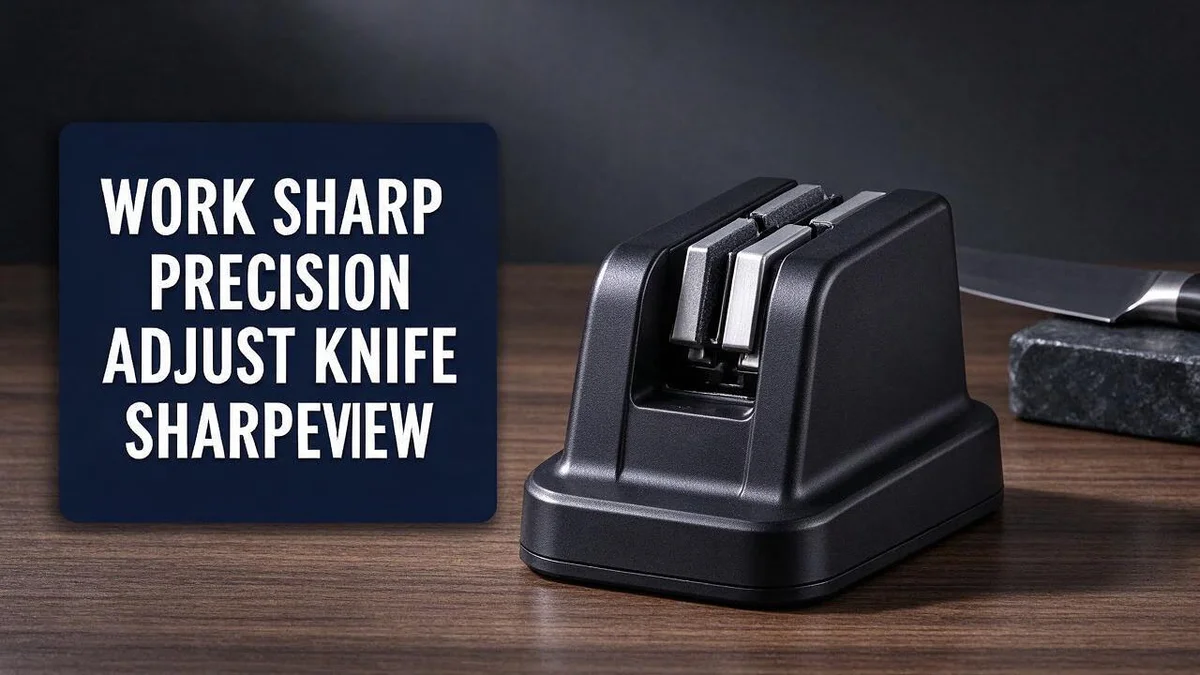
Setting the right edge angle is often the hardest part of sharpening. This model lets you choose any angle from 15 to 30 degrees. A digital angle indicator shows your exact setting, so you never have to guess.
One reviewer said it produced some of the cleanest, sharpest edges among the sharpeners tested. The angle adjustment feels smooth and easy to use. Your technique still plays a big role in the final result.
Some users do report wobble and inconsistent results. One person measured noticeable stone play when resting it on the blade. That matters if you want precise, repeatable edges every time.
In this review, we break down the key features, the pros and cons, and who this sharpener suits best. Keep reading to see if it deserves a spot on your counter.
In a Nutshell
-
Who it suits: This sharpener fits home cooks who want precise control over their edge angle. It also suits people who enjoy learning a hands on skill at their own pace.
-
Digital angle indicator: An inclinometer shows your exact angle on a clear display. You can check your setting before you start sharpening.
-
Top knob control: Turning the top knob moves a threaded rod that sets the angle. This design makes changes quick and simple.
-
Expandable system: It belongs to the Professional Precision Adjust Elite Collection. You can add more accessories as your sharpening skills grow.
-
Solid alternative: The Hapstone RS is a strong rival worth comparing. Buyers who want a different feel in their sharpening tool might prefer it.
-
Different format: The Work Sharp MK2 uses electric power instead of manual strokes. It suits people who want a faster, mostly hands free process.
Build and Materials

- CONSISTENT FACTORY-SHARP EDGES: Fixed-angle guided system removes the guesswork so you grind the...
- DIAL IN ANY ANGLE, 15 TO 30 DEGREES: Precision angle adjustment lets you match the maker's grind on...
Last update on 2026-10-29 / Affiliate links / Images from Amazon Product Advertising API Some of the links on this website are affiliate links, which means that at no additional cost to you, I earn a commission if you click through and make a purchase. I only recommend products and services that I believe will add value to my readers. Thank you for your support!
The build of a sharpener decides how long it will last. The Work Sharp Precision Adjust uses a metal frame. Metal feels solid in your hand. It also handles regular use better than thin plastic parts.
Think about how you hold the tool at the counter. A sturdy frame keeps your hands steady during each pass. This matters most when you sharpen longer blades slowly. Steady support helps you keep the edge even.
The chassis looks neat and clean. Parts sit together with a tidy finish. Few gaps show between the main pieces. That finish suggests the maker paid attention to detail.
Materials matter for daily cleaning too. Metal surfaces wipe down quickly after each session. Remove metal filings and stone dust before you store the tool. A quick wipe keeps the frame working smoothly.
Check the moving parts before each use. Look at the top knob and the rod it turns. Make sure the knob turns without grit or catching. Tighten any loose screws you spot.
Storage also plays a part in long life. Keep the sharpener in a dry drawer or case. Moisture can start rust on exposed steel. A dry spot protects the metal parts from damage.
Stability matters just as much as materials. A firm, flat surface helps the base stay put. Test the stability before you start sharpening. If the sharpener shifts, you may lose control of the angle.
Look at the build in the context of your routine. If you sharpen once a month, a simple frame may feel enough. If you sharpen every week, sturdiness counts for more.
Check the build before you buy. Hold the sharpener and feel for play in the frame. Notice how the parts line up when you adjust the angle. Good alignment signals solid construction.
Overall, the build suits home cooks who value a stable frame. It feels like a tool made for steady use over years. Careful handling and simple care help it last even longer.
Angle Adjustment and Precision
Edge angle drives every sharpening result. Each knife has a factory bevel. Matching that bevel keeps the blade true and cutting well.
Many home cooks guess the angle by eye. This often leads to a dull edge or a rounded tip.
A sharpener with a set angle takes away the guesswork. You can repeat the same bevel every time.
Start with the factory angle. Look at your knife from the side in good light. Find the line where the metal meets the edge.
Many kitchen knives sit at a lower angle than heavy cleavers. Japanese style blades often run lower. Western chef knives usually sit a bit higher.
Test your setting on an old knife first. Practice lets you feel how the stone bites. Scratch marks on the bevel show where the metal is removed.
Try a marker on the bevel. Make a few light passes. If the ink wears off evenly along the edge, your angle is right.
Small changes matter more than you think. Going a few degrees steeper creates a thicker edge. Going shallower creates a thinner edge that can chip.
Write down the angle that works for each knife. Keep a small note near your sharpener. This builds a habit you can trust.
Different tasks call for different edges. A paring knife benefits from a fine edge. A cleaver handles a slightly thicker bevel better.
Patience pays off in the end. Work slowly and keep steady pressure. Rushing often changes the angle without you noticing.
Lighting matters too. Good light shows the bevel clearly.
Hand position also shapes your angle. Keep your wrist firm and let your arm guide the blade.
Left handed cooks can still succeed. Mirror the steps and check the angle from the other side.
Check your work with a simple paper test. A clean slice through paper shows a sharp edge.
Sharpening is a skill. Each session teaches you something new. Keep notes and your results will improve over time.
Mark your progress with photos of the edge under a light. Compare them after each session. You will see the bevel grow more even.
Edge Quality and Sharpening Results
A reviewer found this sharpener left some of the cleanest, sharpest edges in its group. That result matters most when you slice tomatoes or break down a chicken. A clean edge cuts with less force and tears less food.
Edge quality comes down to three things. You need a clean bevel, a small and even burr, and a polished finish. The Work Sharp Precision Adjust helps with all three when you keep your strokes steady.
Fine adjustment makes a real difference. Small shifts in angle change how the edge feels on the cutting board. Many users notice that tiny tweaks bring big gains in sharpness.
Check your results with simple tests. Slide a sheet of paper across the edge and watch for clean cuts. Feel the edge with your thumb, moving across the blade rather than along it. Look for a light, even scratch pattern on the bevel.
Play in the frame can affect consistency. One Reddit user measured about 0.025 inches of movement when the stone rests on the blade. That small gap can shift your angle from one stroke to the next. Some users also report uneven results, so take your time.
Work slowly and count your strokes. Use the same number of passes on each side. Keep even pressure from heel to tip. This habit helps you match the edge on both sides.
Here is a simple routine for the best edge:
- Clean the blade before you start
- Sharpen a few strokes at a time
- Check the burr after each side
- Remove the burr with light strokes
- Finish with a gentle polish on the edge
Burr removal shapes the final cut. A leftover burr can feel sharp at first but dull fast. Light, even strokes remove it and leave a smooth edge that slices well.
Good edges fade with time. Honing between sessions keeps the blade sharp longer. Your knife will reward careful work with clean slices every day.
Top 3 Alternatives
Spyderco Sharpmaker

- Spyderco Tri-Angle Premium Sharpmaker Set with DVD and Two Sets of Alumina Ceramic Stones - 204MF...
Last update on 2026-10-29 / Affiliate links / Images from Amazon Product Advertising API Some of the links on this website are affiliate links, which means that at no additional cost to you, I earn a commission if you click through and make a purchase. I only recommend products and services that I believe will add value to my readers. Thank you for your support!
The Spyderco Sharpmaker gives you a simple way to sharpen knives at home. It uses two ceramic rods set at fixed angles. You hold the rods steady and draw your blade across them. The fixed angles help you keep a consistent edge every time.
It works well for beginners and experienced users alike. Many people like its sturdy build and easy setup. You can use the rods in different positions to shape both fine and coarse edges.
Chef’sChoice 1520

- ANGLESELECT – Applies a traditional 20 degree edge or a finer 15 degree edge for precision slicing
- 100% diamond abrasives for sharpening and honing

Last update on 2026-10-29 / Affiliate links / Images from Amazon Product Advertising API Some of the links on this website are affiliate links, which means that at no additional cost to you, I earn a commission if you click through and make a purchase. I only recommend products and services that I believe will add value to my readers. Thank you for your support!
The Chef’sChoice 1520 is an electric sharpener with three stages. Each stage uses guides that set the right angle for you. You simply pull the blade through the slots, and the machine does the work.
It shapes a fresh edge in just a few pulls. This model suits people who want speed and very little effort. It is a good choice for busy kitchens where knives need regular care.
Lansky Blade Medic

- 4-in-1: Knife sharpeners have one goal - to sharpen knives - and the Blademedic gives you four ways...
- Simplicity: With the Blademedic, you can put a sharp edge back on any knife in moments without a...
Last update on 2026-10-29 / Affiliate links / Images from Amazon Product Advertising API Some of the links on this website are affiliate links, which means that at no additional cost to you, I earn a commission if you click through and make a purchase. I only recommend products and services that I believe will add value to my readers. Thank you for your support!
The Lansky Blade Medic is a manual sharpener with rods set at preset angles. It has several guided slots for different rods. You pull the knife through each slot to sharpen and hone the edge.
It is compact, so it fits in a kitchen drawer or travel bag. It helps people who enjoy a hands-on sharpening process. Take your time with each stroke for the best results.
Stability and Consistency in Use
Stability shows up in every result. Many people judge a sharpener by how it feels during use. Small movement can change the final edge more than you expect.
One Reddit user measured the stone dropping about 0.025 inches when it rests on the blade. That kind of play may explain why some people see uneven results.
Think about what that movement means. A tiny drop might seem minor at first. Over many strokes, though, it can shift the contact point on one side more than the other.
Some owners report inconsistent results from one session to the next. Others say their edges come out clean every time. Both experiences can be true, so your own testing matters most.
Try this simple check after each session. Sharpen one side, then hold the blade under bright light. Repeat the same steps on the other side and compare the shine along the edge.
Keep a count of your strokes too. A written count helps you match each side. Small differences add up over time.
Pressure also plays a role. Heavy pressure can push the stone out of place. Let the stone do the work with light, even contact.
Consistency comes from habit. Use the same grip, the same work surface, and the same stroke length each time. Write down what you changed after each session so you can spot patterns.
Give the setup a quick look before you begin. Make sure the stone sits square on the blade. If the edge feels different from one day to the next, recheck your routine first.
Stability and consistency work together. A firm setup gives you repeatable results. Good habits help you reach the edge you want, every time you sharpen.
Pros and Cons
Pros
– The chassis feels solid during each pass.
– The system can grow as your collection expands.
– New users get a clear and simple setup to start with.
– It suits a range of kitchen and outdoor blades.
– Users gain confidence with each sharpening session.
Cons
– Setup takes some patience before the first good edge.
– It is less suited to quick sharpening with little effort.
– Electric models like the MK2 work faster in busy kitchens.
– Some shoppers may prefer a different style of sharpener.
Who Should Buy It
Some people will get the most from this sharpener. Hobbyists who enjoy learning a craft often like it. They can test angles, note what works, and build skill over time.
Home cooks with a mixed set of knives also benefit. A single setup can handle a chef knife, a paring knife, and a utility blade. Each one needs its own care, and this frame helps keep that work organized.
Outdoor fans might find it useful too. Hunters, campers, and fishing lovers often carry several blades. They can sharpen gear at the kitchen table before a trip.
Parents who teach teens to cook may appreciate it. A clear setup gives young cooks a safe place to learn. They see how each change in angle shifts the edge.
Knife owners who care about sharp tools every day will likely enjoy it too. Those who sharpen often build a steady habit. Over weeks, the process starts to feel natural.
Gift shoppers should also consider this option. It suits a friend who loves cooking and wants to learn. Pair it with a simple guide for a thoughtful present.
People who enjoy routine tasks may enjoy the process. Each session follows the same steps. That rhythm can feel calming after a long day.
Anyone who sharpens for others may see value. Friends and family often bring dull knives to you. A dependable setup makes those favors easier to give.
On the other hand, some readers should look elsewhere. People who need a fast fix between dinner shifts may feel slowed down. Those who dislike hands on work may prefer a different style.
Before you decide, think about your own routine. Ask how often you sharpen and how many blades you own. Your answers will show whether this frame fits your life. Think about where you will work too. A stable table with good light makes every session easier. Take a moment to write down your goals. Your goals will guide the right choice for you.
Final Verdict
The Work Sharp Precision Adjust earns a strong place on the list for careful sharpeners. It rewards patient users with clean, sharp edges.
The reviewer’s praise carries real weight here. Among the sharpeners tested, this model produced the cleanest edges. For many home cooks, that result alone makes it appealing.
Still, the reported play and mixed user results deserve attention. A sharpener should feel dependable every time you use it. This one asks for some care and patience.
Compare it with the main alternatives before you decide. The Hapstone RS is a solid choice, but it needs extra stones.
The Pioneer sharpener gives shoppers another option to check. The Work Sharp MK2 suits people who want electric speed.
Think about your daily habits first. If you enjoy a careful process and want precise edges, this model fits well.
If you want quick results with little effort, look at other styles. Your routine will show you the right answer.
A simple test can confirm your results. Slice a sheet of paper after your final pass. A clean cut shows the edge is ready for daily use.
Keep your expectations realistic. No sharpener turns a dull knife into a razor in one minute. Give yourself time to learn the feel.
Think about how many knives you sharpen each month. Owners of a few favorite blades often see the most benefit. Those with large collections may want a faster method.
This sharpener also suits people who like practical tools. It rewards focus and steady habits. Many users find the process calming once it feels familiar.
Read the full list of pros and cons before you commit. Weigh the clear edge results against the reported inconsistencies. Then decide which compromise suits your kitchen.
Choose this sharpener if precision matters most to you. Practice a few sessions, track your results, and judge the edge yourself.
Frequently Asked Questions
Can beginners use the Work Sharp Precision Adjust?
Yes, beginners can learn it with steady practice. The frame holds the blade at a set angle, so you do not need to guess. Start with a dull, low-value knife to build your feel for the process.
What should I check if my edge looks uneven?
Check the angle setting before every pass. Read the digital indicator and confirm it matches your target. Then wipe the blade and look at the edge under bright light to spot any flat or missed areas.
Does the frame movement affect my results?
Some users noticed a small amount of movement when the stone rests on the blade. Use light, even pressure and keep your hands relaxed. Many people find that a calm grip reduces wobble and gives more consistent strokes.
Can this sharpener fix a badly damaged blade?
It works best on blades that still have a decent edge. Deep chips or heavy damage may need coarser work before fine sharpening. Make light passes and check your progress often so you do not remove too much metal.

Hi, I’m Greta Monroe, and I’m passionate about making every kitchen a place of creativity and efficiency. I’ve spent years exploring and testing kitchen gadgets, tools, and devices to help home cooks find exactly what they need. At ChefKit Blog, I share honest Amazon product reviews and practical insights on kitchen essentials that actually make a difference. From must-have basics to innovative new devices, I break down what works and what doesn’t. My mission is simple: to help you build a kitchen that inspires delicious possibilities every single day.