HORL 3 Walnut Rolling Knife Sharpener Review: Waste of Money?
Dull knives make cooking a chore. Many people want a sharp edge but dread the mess of a whetstone. That is where the HORL 3 Walnut Rolling Knife Sharpener comes in.
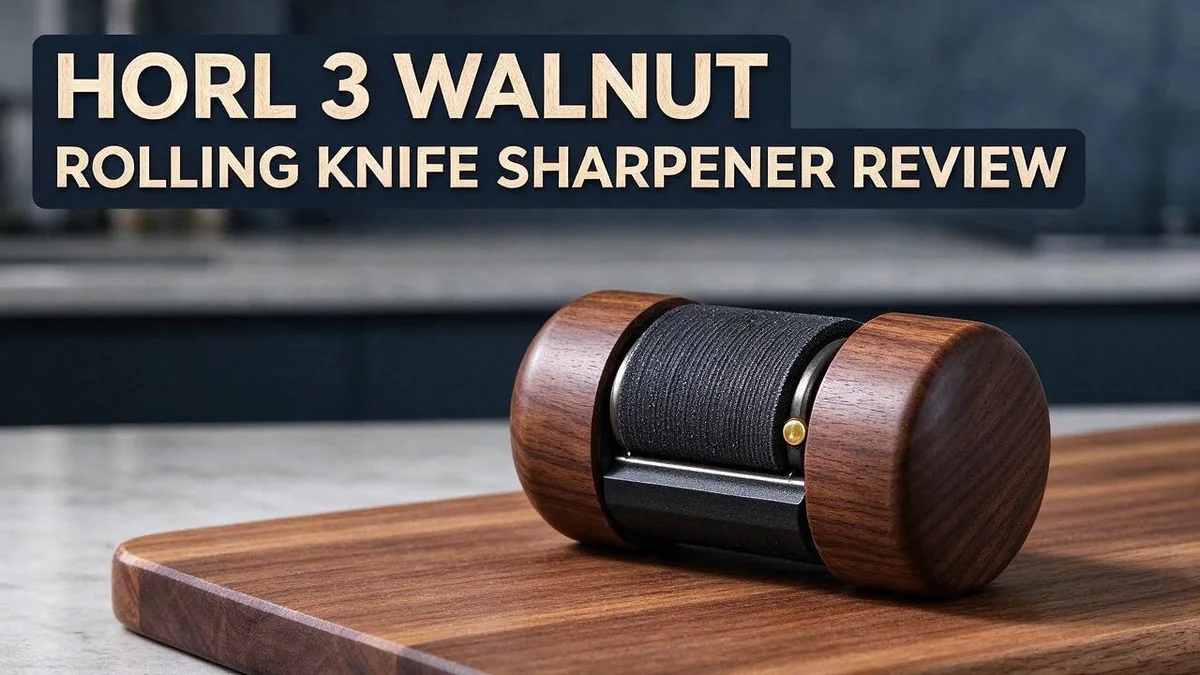
This tool makes sharpening simple. It has a solid walnut body and a wooden rolling cylinder. You roll the blade across a diamond disc, and the edge gets sharper with each pass. There is no soaking and no long setup.
Two grinding angles give you choices. You can pick 15 degrees for a delicate edge or 20 degrees for a solid edge. A magnetic angle guide helps you keep the right position.
In this review, we look at how it works, who it suits, and where it falls short. Keep reading to see if it fits your kitchen.
In a Nutshell
- No soaking needed: Forget messy water baths and long waits. You roll the blade and get back to cooking in minutes.
- Easy for beginners: New cooks can learn this tool fast. The magnetic guide keeps your angle steady from start to finish, so even first timers feel confident quickly.
- Holds small pocket knives: The grip keeps tiny blades in place. You can sharpen them without fighting to hold them still.
- Watch for metal shavings: The diamond disc leaves tiny metal bits behind. Plan a quick wipe or rinse after each session so your kitchen stays clean.
- Support bendy blades by hand: Flexible knives need extra hand support while you roll. Go slow and apply steady pressure for the best results.
- Upgrade for speed: The HORL 3 Pro uses planetary gears and claims three times faster sharpening. The Cruise variant adds a heavy duty angled magnet for extra holding power.
Build and Materials

- The HORL3 Cruise knife sharpener offers best quality and has the flexibility to satisfy chefs...
- The HORL3 Cruise Rolling Knife Sharpener for knives combines a diamond and a steel disc to sharpen...
Last update on 2026-10-29 / Affiliate links / Images from Amazon Product Advertising API Some of the links on this website are affiliate links, which means that at no additional cost to you, I earn a commission if you click through and make a purchase. I only recommend products and services that I believe will add value to my readers. Thank you for your support!
The build feels thoughtful from the first touch. Each part fits together neatly. The wood looks warm on the counter, and the tool sits well in your hand. It feels like a tool made for real kitchens.
The rolling cylinder sits at about two inches across. That size gives your fingers a steady place to rest. You can apply even pressure while you roll the blade.
The disks on each side lock into place. You twist them to remove or swap the grinding surface. Because the parts come apart, you can clean the tool more easily.
Walnut needs a little care over time. Wood reacts to moisture and changes in the air. Keep the tool dry after each use. Store it in a cool spot away from the sink.
The magnetic guide rests on small rubber feet. These feet help it stay put on a flat surface. They also reduce the chance that the guide slides during a session. Your hands can then focus on the knife instead of holding the guide still.
The body feels heavy enough to stay steady. Yet it still feels light enough to carry to the table. Lightweight tools often slide around, so this balance matters.
Daily use will show the wear. Walnut develops a deeper tone over the months. Small marks from the counter may appear. Many owners see these marks as part of the story.
Think about your workspace first. Choose a flat area with good light. Clear away loose papers and cutting boards. A clean space helps you keep control and avoid mistakes.
Who benefits most from this build? Home cooks who want a dependable tool will appreciate the careful design. Hobbyists who collect knives may also enjoy the warm finish. Each detail shows that the maker cared about daily use.
Sharpening Angles and Edge Results
Angle choice shapes how your knife performs after each session. Many people wonder which setting fits their daily tasks best. The answer depends on what you cut most often.
A 15 degree edge feels sharp and light. It slices soft foods with ease. Think of ripe tomatoes, fish fillets, and fresh herbs. The thin edge glides through them without crushing.
A 20 degree edge holds up better under pressure. It handles heavier chores. Chopping squash, cutting through thick roots, or breaking down chicken all feel easier. The sturdier bevel resists chipping and rolling over time.
Switching between angles is simple. You swap the disks on each side. Keep the same angle for every pass, or your edge may look uneven.
Some users start with 20 degrees on a very dull blade. Then they finish with 15 degrees for a polished result. This two step routine gives a clean edge without wasting time.
Check your work with a simple paper test. Hold a sheet of paper and slice downward. A sharp blade cuts cleanly with little resistance. If the paper tears or snags, roll a few more passes.
Edge results also depend on patience. Light pressure works better than force. Let the disk do the cutting, and the metal will come off gradually. Heavy pressure can flatten the edge and make the blade feel dull again.
You may notice the difference right away at dinner time. Less force means less fatigue on your wrist. Clean cuts also keep food looking fresh.
Expect a small burr along the edge after rolling. Many people feel it with a thumb, moving from spine to tip. Remove it with a few gentle passes on the finer side. Then wipe the blade dry before storage.
Final results vary by blade steel. Harder steels take longer to respond. Softer steels sharpen quickly but dull faster. Knowing your knife helps you pick the right angle every time. Test again after each session.
Ease of Use and Knife Compatibility
Using the HORL 3 feels simple once your hands find a rhythm. Most cooks settle into smooth, even strokes after a few tries. Start slowly and let the cylinder do the work instead of pushing hard.
Long chef knives need more counter space than small paring knives. You roll the blade across the cylinder in steady passes, so clear a wide area first.
Wide blades can feel awkward at first. Move the knife in a slow arc so the edge meets the disc from heel to tip. This keeps the bevel even across the full length.
Paring knives and utility knives suit this tool very well. Their short, straight edges sit easily on the cylinder and reach the grind with little fuss.
Curved blades, such as some Japanese styles, need extra focus. Keep the magnetic guide snug against the spine, so the angle stays steady through each pass.
Serrated knives are a poor match for this style of sharpening. The smooth cylinder cannot reach between the teeth well. Use a dedicated tool for those blades instead.
Balance your effort on both sides of the blade. Count the same number of passes on each side, so the edge stays even.
Light pressure works best on most blades. Heavy force can shift the angle and leave uneven spots along the edge.
Label each knife with its ideal angle after a few sessions. Households with several cooks often find this habit saves time. Notes keep everyone on the same page.
Blade thickness also changes how quickly you see progress. Thin blades respond fast, while thicker blades need more passes to show change. Plan your time with that in mind.
Think about who shares your knives. Families often have a mix of steak knives, bread knives, and chef knives. Sort them first, so you only roll blades that suit the tool.
A quick check before each session saves time. Look at the edge under good light and confirm the blade is clean and dry.
Choose knives that match the tool, and your HORL 3 will serve your kitchen well.
Top 3 Alternatives
Looking for another way to keep your blades sharp? These three options are worth a closer look.
Work Sharp Knife Sharpener

- PERFECT FOR HOME COOKS, HUNTERS & KNIFE ENTHUSIASTS - Delivers razor-sharp, professional-quality...
- ADJUSTABLE ANGLES FROM 15° TO 30° - Set the perfect angle for any knife: 15° for Japanese-style...
Last update on 2026-10-29 / Affiliate links / Images from Amazon Product Advertising API Some of the links on this website are affiliate links, which means that at no additional cost to you, I earn a commission if you click through and make a purchase. I only recommend products and services that I believe will add value to my readers. Thank you for your support!
This sharpener makes a great pick for home cooks who want simple results. It uses guided abrasive belts and adjustable angle guides. Users can sharpen kitchen knives with steady, even strokes.
The simple design keeps the process easy to follow, even for beginners. Many owners appreciate how quickly they can get a workable edge without much practice.
Chef’sChoice Knife Sharpener

- CONVERT YOUR KNIVES: Ideal for converting traditional 20-degree factory edges of household knives...
- DIAMONDS: Advanced stropping stage and 100 percent diamond abrasives for sharpening straight edge...

Last update on 2026-10-29 / Affiliate links / Images from Amazon Product Advertising API Some of the links on this website are affiliate links, which means that at no additional cost to you, I earn a commission if you click through and make a purchase. I only recommend products and services that I believe will add value to my readers. Thank you for your support!
This electric option works fast and suits a busy kitchen. It has several stages that shape, sharpen, and polish the edge. Many people like how quick and clean each session feels.
The guides on the slots help you keep a steady angle. It also takes up little counter space, so it fits well in most homes. Just follow the slots and let the machine do the work.
Lansky Blade Medic

- 4-in-1: Knife sharpeners have one goal - to sharpen knives - and the Blademedic gives you four ways...
- Simplicity: With the Blademedic, you can put a sharp edge back on any knife in moments without a...
Last update on 2026-10-29 / Affiliate links / Images from Amazon Product Advertising API Some of the links on this website are affiliate links, which means that at no additional cost to you, I earn a commission if you click through and make a purchase. I only recommend products and services that I believe will add value to my readers. Thank you for your support!
This tool takes a different approach. It is a manual system with clamps and rods that guide the blade. Users can set a precise angle and build a sharp edge step by step.
It suits people who enjoy hands on sharpening and want full control over each stroke. Expect a slower process, but the results can feel very rewarding. It also works well for outdoor blades and hunting knives.
Pick the option that matches your skill level and your daily routine. Each one can keep your blades ready for everyday tasks.
Model Variants: Cruise and HORL 3 Pro
The HORL 3 line includes more than one version. Two options stand out for different types of users. Each one changes the experience in a useful way.
HORL 3 Cruise
The Cruise version puts grip first. It uses a heavy duty angled magnet that holds the guide firmly in place. That extra hold gives many users more confidence during each pass.
A heavier hold also means the guide resists getting knocked loose mid session. Beginners can focus on wrist position and steady strokes instead of constant adjustments. Stability builds good habits early.
Cruise suits people who sharpen on a regular schedule. A firm setup means fewer slips and a calmer rhythm. Steady habits build better results over time.
HORL 3 Pro
The Pro model adds a gear driven system. It uses planetary gears to move the rolling cylinder. The maker claims this design sharpens up to three times faster than the standard model.
Speed matters most for households with a full drawer of knives. A quicker session can fit into a busy weeknight. Still, claimed speed varies with blade steel and edge condition.
Gears can also change how the work feels in the hand. Some users may find longer sessions less tiring. Feel varies from person to person, so try it yourself.
Test the Pro on an older knife first. This shows you how much time your own blades need.
Overall, pick Cruise for a firmer hold and pick Pro for faster turnaround. Both versions use the same core method. Skills you build on one model transfer to the other. Both also share exchangeable discs, so accessories stay easy to find.
Many buyers start with the Cruise, then move up later if speed becomes the main goal. Your kitchen habits should guide the choice. Think about how often you sharpen and how many knives need attention. Either way, practice matters more than the model name.
Pros and Cons
Pros
– No soaking needed, so there is no water mess on the counter.
– Beginners can learn the basics in one short session.
– The guide holds small pocket knives steady in the cylinder.
– The process feels simpler than working on a whetstone.
– Fewer steps mean a quick touch up fits into a busy day.
Cons
– The diamond disc leaves metal shavings that you need to wipe away.
– Bendy knives need a steady hand to support the blade during use.
– The Pro model’s speed claim comes from the maker, not independent tests.
Who Should Buy It
The HORL 3 suits home cooks who want sharp knives without fuss. Busy people often let their kitchen knives dull. This tool helps them keep a good edge.
Home cooks who rely on a few core knives get the most from it. A chef’s knife, a utility knife, and a paring knife handle most daily prep.
Gift buyers also have good reasons to consider it. The walnut body looks warm on a kitchen counter. Many people enjoy a tool that looks as good as it works.
Woodworkers and knife lovers often enjoy hands on tools. This model feels like a small craft piece. Owners may enjoy tuning their edges by feel.
People who use a pull through sharpener may find this a step up. Rolling sharpeners give more control over the angle.
Anyone who enjoys learning a craft should give it a look. Feeling the edge form under your hands builds confidence over time.
Shoppers who want a fully hands free machine may look elsewhere. Electric sharpeners do the work with less effort.
Someone who sharpens only once a year may not need this level of care.
In short, this tool fits patient cooks who enjoy hands on care for their knives. It suits those who want a steady routine.
Hosts who cook large meals often want reliable blades ready on hand. Chopping for a crowd puts extra strain on a dull edge.
Students and new renters may also find it useful. Small kitchens often have little room for bulky gear.
Shoppers should set clear expectations before buying. The tool rewards patience and regular practice. Results improve with each session.
A good fit means you enjoy the process as much as the result. That mindset makes the tool feel rewarding.
Cooks who own good knives will want to keep them in top shape.
Overall, the right buyer enjoys steady practice and wants a clean, sharp edge every time. Those people will likely be happy with it. Give it a try before deciding.
Final Verdict
The HORL 3 Walnut earns a clear recommendation for most home kitchens. It delivers sharp results without a steep learning curve. Still, it fits some users better than others.
Think about your knife collection before you buy. A few favorite knives benefit most. Large sets with many odd shapes may take more time to master.
The walnut body also matters. It looks warm on a counter or shelf. Many people leave it out rather than hiding it in a drawer. That visibility can nudge you to sharpen more often.
Storage is simple too. The tool is small and fits in a utility drawer. It needs no cords, no plug, and no special cabinet space.
Keep your expectations realistic. The HORL 3 restores and maintains an edge. It does not fix chipped blades or badly damaged steel. For heavy repair, a professional service still makes sense.
Your first few sessions may feel slow. Take your time and check the edge often. Speed grows with practice.
Think of this as a skill, not a chore. Many owners find the routine calming after a long day. Teens learning to cook can also practice on a spare knife. The guide teaches steady hands and a consistent angle.
Light passes on a regular schedule keep the edge in shape. Waiting until a knife feels dull often means more work later. Pair it with a honing rod for daily touch ups between sessions. Wipe the walnut body dry after each session to protect the wood.
Overall, the HORL 3 suits anyone who wants steady, hands on control. It rewards patience and practice. Skilled users may outgrow it, while beginners often find it a welcome start.
In short, the HORL 3 Walnut fits a careful, hands on home cook best. Try it on a few trusted knives first, then decide if it fits your routine.
Frequently Asked Questions
Should I choose 15° or 20° for my knives?
The 15° setting gives a delicate edge. The 20° setting gives a more solid edge. Use 15° for thin, fine blades. Use 20° for knives that see heavy daily chopping.
Which HORL 3 model fits my needs?
The standard model works well for most home kitchens. The Cruise version has a heavy-duty angled magnet. The HORL 3 Pro uses planetary gears. Pick the model that matches how you plan to use it.
Can I swap the diamond disc later?
Yes. The discs are exchangeable, so you can change them when you need to. Each disc uses a twist and lock design on the cylinder. This makes the swap quick and simple.
Why does the magnetic guide have rubber feet?
The small rubber feet help the guide stay put on the counter. A steady guide helps you keep the same angle on every pass. Consistent angles lead to a more even edge.

Hi, I’m Greta Monroe, and I’m passionate about making every kitchen a place of creativity and efficiency. I’ve spent years exploring and testing kitchen gadgets, tools, and devices to help home cooks find exactly what they need. At ChefKit Blog, I share honest Amazon product reviews and practical insights on kitchen essentials that actually make a difference. From must-have basics to innovative new devices, I break down what works and what doesn’t. My mission is simple: to help you build a kitchen that inspires delicious possibilities every single day.