Sharpal 162N Whetstone Knife Sharpener Review 2026
Dull knives make cooking feel like a chore. A sharp edge makes every slice cleaner, faster, and safer. That is why so many home cooks search for a simple sharpening tool that actually works.
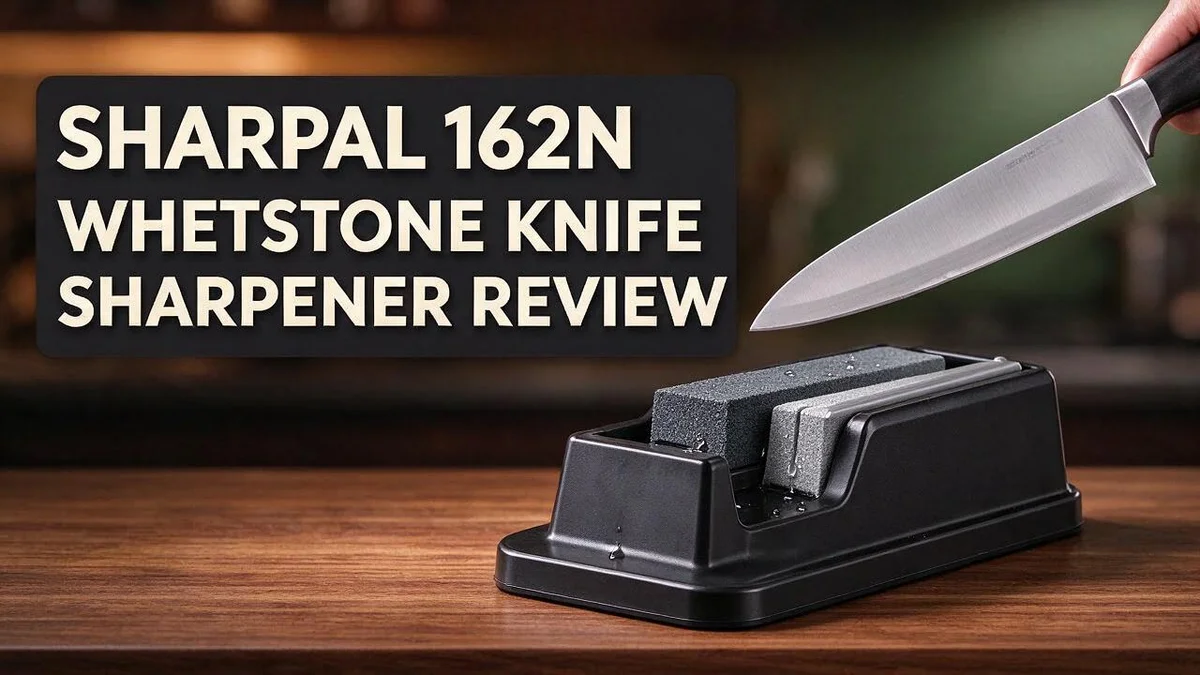
The Sharpal 162N Whetstone Knife Sharpener aims to solve that problem. It is a double sided diamond whetstone that measures 8 x 3 inches.
One side offers 325 grit for setting the edge. The other side offers 1200 grit for honing.
Shoppers seem to like it too. The stone holds a 4.8 out of 5 rating from 11,366 ratings on Amazon AU. In this review, we will look at how it performs, who it suits best, and whether it deserves a spot in your kitchen.
In a Nutshell
- Size to plan around: The stone measures 8 by 3 inches (203 by 76 mm). It gives you enough length for most kitchen knives.
- Storage base included: A storage base comes with the stone. Keep it nearby so the stone stays clean and ready to use.
- Fast edge repair: Many users report quick results when fixing dull edges. Some also say it helps repair small nicks in the blade.
- A speed claim to test: The maker says it sharpens up to 5 times faster than oil or water stones. Your results will depend on your knife and your technique.
- Honest drawbacks: Some users dislike the fine 1200 grit side. Reviewers describe the stone as best for occasional touch ups rather than heavy daily use.
- Strong ratings to compare: Amazon AU shows 4.8 out of 5 from 11,366 ratings. Amazon US lists 4.0 out of 5 from 3,774 ratings.
- Rivals worth comparing: Shapton stones, DMT stones, and the HORL 3 sharpener often come up in comparisons. Look at each option before you choose.
Grit Options and Edge Results

Last update on 2026-11-01 / Affiliate links / Images from Amazon Product Advertising API Some of the links on this website are affiliate links, which means that at no additional cost to you, I earn a commission if you click through and make a purchase. I only recommend products and services that I believe will add value to my readers. Thank you for your support!
Grit is the number that tells you how coarse or fine a stone feels. The Sharpal 162N gives you two very different levels in one block.
The 325 grit side works like a reset button. It removes metal fast, so it helps when a blade has chips or a rolled tip. Expect a rougher feel while you work.
A burr often forms along the edge during this stage. You remove it on the fine side for a clean cutting edge.
Some owners say the coarse side feels smooth, which surprises people who expect grit to feel harsh. Smooth here means the stone cuts evenly without grabbing the steel.
The 1200 grit side handles the final polish. It refines the scratch pattern left by the coarse side. This step creates a keen edge that slices tomatoes cleanly.
Nick repair deserves its own mention. A small notch often fades after a few passes on the coarse side, then a few on the fine side. Deep damage may need more time.
Edge results depend on the steel and your angle. Softer steel responds quickly, while harder blades need patience. Keeping a steady angle matters more than speed.
Here is a simple routine. Start on the 325 side only if the edge feels dull or damaged. Move to the 1200 side for the finish. Test on paper afterward to check the result.
The US listing rating of 4.0 out of 5 suggests mixed experiences. Many buyers praise the results, while others expect more from the fine side. Reading recent reviews helps you match expectations.
Practice builds confidence over time. Try an old kitchen knife first so you learn how each side feels before you work on your best blades.
Wipe the stone clean after each session. A little water helps the stone run smoothly during use.
Diamond Plate Build and Storage Base
A diamond plate works differently from many classic stones. Tiny diamond particles sit bonded to a flat metal surface. This design keeps the plate flat for longer.
Flat surfaces matter for every sharpening session. A flat plate lets the blade meet the abrasive evenly. Your edge then comes out even from heel to tip.
Many diamond plates skip the long soak that water stones need. You can often start sharpening with a light splash of water.
Stability helps your hands. A plate that stays put lets you focus on the angle. Less wobble means fewer slips. Keep your fingers clear of the edge at all times.
Next, think about the base. A good base does more than hold the plate. It keeps the stone from sliding across the counter while you work. It also keeps dust and metal filings off the surface.
Cleaning takes only a minute. Rinse the plate after each session. Metal bits can clog the diamonds and slow your progress. Dry the plate well before you put it away so the base stays dry.
Diamond plates also cut quickly through hard steel. Many premium kitchen knives use harder steel that resists ordinary stones. Diamonds bite through that steel with less effort.
Before each session, take a quick look at the plate surface. This shows whether the diamonds look worn or clogged. A quick check saves time later.
Store the plate flat and dry. Keep it away from damp cabinets and hot windows. This habit helps the plate stay in good shape.
This plate suits quick touch-ups more than heavy daily work. A home cook who sharpens every few weeks will find it easy to keep ready. Keep it on a shelf near your knife block so it stays in use.
Ease of Use and Sharpening Technique
The Sharpal 162N feels approachable for beginners. You can learn the basic motion in one short session. Most people feel comfortable after a few blades.
Your body position matters more than you think. Stand or sit with your elbow close to your side. Keep your wrist firm and let your arm guide the blade.
Try a stroke count to stay consistent. Use the same number of passes on each side of the blade. This habit keeps the edge even from heel to tip.
Pressure should stay light. Heavy force does not speed things up. It can tilt the blade off your angle and round the edge.
Watch the blade rather than the stone. Look for a thin, even line along the edge. That line shows where you still need to work.
The thumb test gives quick feedback. Run your thumb sideways across the edge, never along it. A grabbing feeling means the edge is sharp. A slick feeling means you need more passes.
Wipe the blade between sides. Metal dust can build up and slow your progress. A clean blade shows you the true results of each pass.
Practice on an old kitchen knife first. Mistakes matter less on a blade you do not mind scratching. Once your hands learn the motion, move to your favorite knives.
Many people find the process calming. Slow, steady strokes give you time to focus. Over time, your confidence grows with each knife you sharpen.
Consistency matters more than speed. Short practice sessions beat one long, tiring session. Stop when your arm feels tired.
Try a marker test for better control. Draw a fine marker line along the bevel before you start. The ink shows which areas the stone touches. Wipe it off once the marker fades evenly.
Overall, the learning curve stays gentle. Clear steps help you build good habits from the start.
Top 3 Alternatives
Looking for other options? These three sharpeners each offer something different. Read on to find the one that fits your needs.
Smith’s Pocket Pal

- HANDHELD KNIFE SHARPENER – Smith’s “Pocket Pal” Knife Sharpener features a fold-out...
- 2 STAGE – The pull-through coarse carbide slot provides a quick edge on dull or damaged knives...
Last update on 2026-11-01 / Affiliate links / Images from Amazon Product Advertising API Some of the links on this website are affiliate links, which means that at no additional cost to you, I earn a commission if you click through and make a purchase. I only recommend products and services that I believe will add value to my readers. Thank you for your support!
Smith’s Pocket Pal is a compact sharpener that fits right in your pocket. It has two sharpening slots that handle both coarse and fine edges. Many outdoor fans carry it on hikes and camping trips. It works fast on hunting knives and folding blades. Because it is small, it never takes up much room in your bag.
Work Sharp Knife Sharpener

- PERFECT FOR HOME COOKS, HUNTERS & KNIFE ENTHUSIASTS - Delivers razor-sharp, professional-quality...
- ADJUSTABLE ANGLES FROM 15° TO 30° - Set the perfect angle for any knife: 15° for Japanese-style...
Last update on 2026-11-01 / Affiliate links / Images from Amazon Product Advertising API Some of the links on this website are affiliate links, which means that at no additional cost to you, I earn a commission if you click through and make a purchase. I only recommend products and services that I believe will add value to my readers. Thank you for your support!
The Work Sharp Knife Sharpener offers a more advanced option. It uses guided angles so you can repeat the same edge every time. Beginners often find the guides easy to follow. This model suits people who want a precise, professional finish on kitchen and pocket knives. It also gives you room to grow as your skills improve.
Lansky Blade Medic

- 4-in-1: Knife sharpeners have one goal - to sharpen knives - and the Blademedic gives you four ways...
- Simplicity: With the Blademedic, you can put a sharp edge back on any knife in moments without a...
Last update on 2026-11-01 / Affiliate links / Images from Amazon Product Advertising API Some of the links on this website are affiliate links, which means that at no additional cost to you, I earn a commission if you click through and make a purchase. I only recommend products and services that I believe will add value to my readers. Thank you for your support!
The Lansky Blade Medic brings several sharpening stages together in one simple tool. It uses ceramic and diamond rods to build a clean, sharp edge. Hobbyists like it because they can control each step. Users can sharpen straight blades, serrated edges, and even scissors with the right setup. It makes a handy addition to any toolbox.
Sharpening Speed Compared to Traditional Stones
Speed is where this plate often stands out. Many people compare it with classic oil and water stones. The maker claims it sharpens up to five times faster than those options.
Traditional stones ask for more upkeep. Their surfaces wear unevenly, so you may need to flatten them often. That extra step can slow every session.
Less upkeep means more time at the blade. With a diamond plate, you can start sharpening sooner and stay focused on the edge. Shorter prep helps busy cooks who want a quick result.
Owners often describe edges coming back quickly. This feedback matches the speed idea, but it comes from people, not a lab test. Your own knives will show the real gain.
Speed still depends on your blade. Each knife in your drawer may behave differently. Test a few before you judge the claim.
Speed also brings a compromise. Some people prefer a slower, more controlled feel when they want a very refined finish. In that case, a second stone can round out your setup.
Competitors offer different balances. Shapton, DMT, and HORL 3 sharpeners all appear as common alternatives. Each one shifts the mix between speed, feel, and hands on control.
Think about how you cook and how often you sharpen. A fast plate suits people who want quick results. A classic stone may suit people who enjoy a slower ritual.
Quick results change how often you sharpen. When a session takes less time, you are more likely to touch up knives before they feel dull. Regular light work keeps the edge steady over weeks.
Keep notes on how each session goes. Write down the number of strokes or the time you spent. Over several sessions, you will see whether the speed claim holds for your setup.
Maintenance and Long-Term Durability
Diamond plates resist wear better than soft stones. Oil and water stones can dish over time. A flat diamond surface keeps its shape for longer.
Check the surface with a straight ruler every few months. Hold the ruler across the plate and look for gaps underneath.
Most owners never need to flatten their plate. Use a lapping stone only if the surface feels uneven or the ruler test shows gaps.
Protect the plate from hard knocks. Avoid dropping it on tile or concrete. Chipped corners can make the edge of the plate uneven.
Keep the plate away from other tools. Loose screws, keys, or knives can scratch the diamond layer. Scratches may reduce cutting power over time.
Brush away metal filings with a soft brush. Dried steel dust can build up in the surface and change how the plate feels under your blade. Skip harsh cleaners because they can leave residue behind.
Store the base with the plate. Keep both pieces in one spot. This habit keeps the set together and ready for the next session.
Keep heat away from the plate and base. Do not leave them on a sunny windowsill or near a hot stove. Extreme heat is hard on almost any tool.
Light use keeps wear low over time. Small touch ups remove less of the diamond layer than long sharpening sessions do.
Keep a simple log of your sharpening dates. Seeing the gaps between sessions helps you spot when the plate needs a check. Look for cracks in the base once in a while, too.
Good habits add years to the plate. A little care after each use goes a long way. Your knives will also stay sharp for longer.
Pros and Cons
Pros
- Repairs small nicks on the blade edge.
- The coarse side at 325 grit sets a new edge.
- The fine side at 1200 grit refines the edge.
- Includes a storage base to keep the stone tidy.
- Rated 4.8/5 by Australian shoppers.
Cons
- Some users dislike the 1200 grit fine side.
- Best for quick touch-ups, not heavy daily use.
- US shoppers rate it lower at 4.0/5.
Who Should Buy It
This sharpener suits a certain kind of home cook. If you own a few good knives and want them ready for daily meals, this plate fits your needs well.
Busy households often face a common problem. A knife slides through a tomato, then struggles with an onion. This plate gives those blades a quick fix before dinner.
New sharpeners can also learn here. Practice on one old blade first. Build a steady hand before you touch your favorite chef knife.
Anyone with limited storage will value a slim plate that slides into a drawer. Less clutter means more room for cooking.
Heavy daily users should look elsewhere. A chef who sharpens a full knife roll every morning may need a faster workflow or a different system.
Perfectionists chasing a mirror edge may feel limited. Test the finish on your own blades before you decide.
Owners of rare or sentimental blades should also take care. Practice on everyday knives first, then move to treasured pieces with confidence.
Home bakers and meal preppers also benefit. Thin, precise cuts matter when you slice vegetables in bulk every weekend.
A quick check before each meal keeps your knives safe to use. A dull blade needs more force, which raises the chance of slips.
Hobbyists who enjoy learning new skills may find this setup rewarding. Each session teaches you more about angles and pressure.
Think about your own habits before you decide. Ask how often you cook and how many knives you own.
Gift buyers for a home cook may also like this choice. It shows care for daily cooking without a large project.
Final Verdict
The Sharpal 162N earns a solid spot in a home kitchen. It offers quick results without a steep learning curve. Most people can restore a dull edge in minutes.
Speed is its strongest trait for small jobs. A few passes on the fine side keep a favorite knife ready for the next meal. Busy cooks will appreciate that simple routine.
The sharpener also builds confidence. Beginners can practice a steady angle on an old blade first. Each session teaches a little more about pressure and motion.
The two grit levels work as a clear pair. The 325 side handles more serious edge work, while the 1200 side polishes the finish. Learning both sides gives the best results.
Knife type matters too. Thin chef knives and paring knives respond well to the fine side. Heavy cleavers may need more time and patience.
Ratings reveal an interesting split. Australian shoppers rate it highly, while US shoppers give it a lower score. Such gaps often reflect different expectations and kitchen habits, so read reviews with your own goals in mind.
Compared with Shapton, DMT, or HORL 3 options, this stone sits in a practical middle ground. It suits owners who want a direct method without extra gadgets. Those who chase a mirror finish may want a different tool.
Some users may miss the feel of a traditional water stone. Others enjoy the firm surface of diamond plates. Try a short session before you commit to a long routine.
Overall, this sharpener suits a home cook who wants quick and reliable touch ups. Pick it if you value simplicity and speed. Skip it if your kitchen demands heavy daily work or a perfect mirror edge.
Frequently Asked Questions
Do I need to soak this stone before use?
Diamond plates do not need long soaks like traditional water stones. A quick splash of water or a light wipe is usually enough. Check the care notes that come with your sharpener for the exact steps.
How can I tell when my knife is sharp enough?
Try the paper test. Hold a sheet of paper and slice down with the blade. A clean cut without snags means the edge is working well. If the paper tears or catches, give the fine side a few more light passes.
Should I still use a honing rod?
A honing rod realigns the edge between sessions. The fine side of this stone also refines the edge, so many home cooks use both. Use the rod for quick checks during the week and the stone when the blade needs more work.
What angle should I hold the blade at?
Most kitchen knives work well at a steady angle of about 15 to 20 degrees. Keep that same angle on every stroke. Consistent movement gives the best results. If your knife has a special edge shape, look up the maker’s guide before you start.

Hi, I’m Greta Monroe, and I’m passionate about making every kitchen a place of creativity and efficiency. I’ve spent years exploring and testing kitchen gadgets, tools, and devices to help home cooks find exactly what they need. At ChefKit Blog, I share honest Amazon product reviews and practical insights on kitchen essentials that actually make a difference. From must-have basics to innovative new devices, I break down what works and what doesn’t. My mission is simple: to help you build a kitchen that inspires delicious possibilities every single day.