
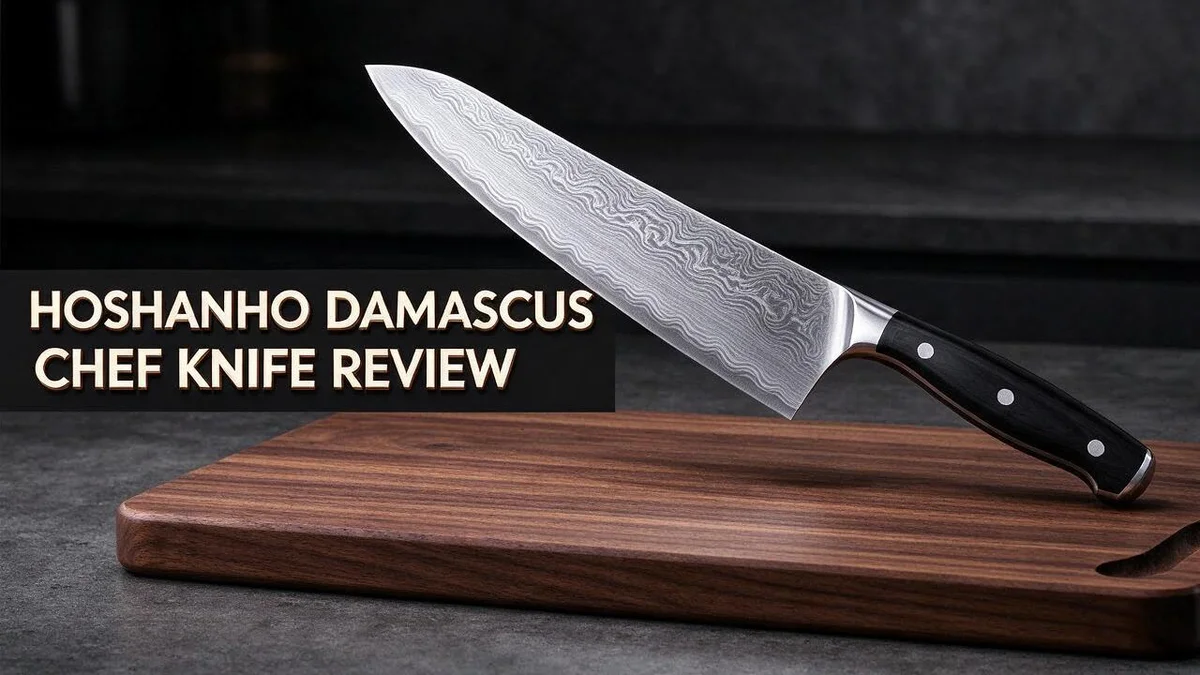
HOSHANHO Damascus Chef Knife Review 2026
Looking for a knife that makes kitchen prep feel easy? The HOSHANHO Damascus Chef Knife might be the tool you need.
It features an 8 inch blade with 67 layers of Damascus steel. Those layers create a striking pattern that catches the eye.
Many home cooks love how sharp this knife feels right out of the box. Users also say it holds its edge well.
The balance feels comfortable in the hand. Long chopping sessions feel less tiring.
Is it the right pick for your kitchen? Let’s find out.
In this review, we look at the blade, the handle, and the overall build. We also compare it with popular options like Shun and Miyabi.
In a Nutshell
- Core steel: A YouTube listing says the blade has a VG 10 core. The layers around it give the knife its patterned look.
- Edge retention: Several users say the edge stays sharp through regular use.
- Santoku option: The 7 inch santoku comes with a sheath. It also has hollow grooves on both sides that help food slide off the blade.
- Handle material: The santoku uses a G10 handle. This material is known for being tough and resisting moisture.
- Fit and finish: One Reddit user called the fit and finish of the AUS10 8 inch model a bit sub par. Check the exact model before you decide.
- Rust resistance: The manufacturer claims strong rust resistance. Still, dry the blade after each wash to keep it in top shape.
Blade Steel and Damascus Construction

- PROFESSIONAL HAND-POLISHED DAMASCUS KNIFE - HOSHANHO blade of japanese chef knife is expertly...
- DURABLE ERGONOMIC OLIVE WOOD HANDLE - Handle of cooking knife is made of olive wood, which is dense...
Last update on 2026-11-01 / Affiliate links / Images from Amazon Product Advertising API Some of the links on this website are affiliate links, which means that at no additional cost to you, I earn a commission if you click through and make a purchase. I only recommend products and services that I believe will add value to my readers. Thank you for your support!
The blade is the heart of any chef knife. Steel quality shapes how it cuts, sharpens, and feels over time. Let’s look at what makes this blade work.
Damascus steel is not one single metal. It is a layered blend of different steels. Smiths fold and forge these layers together. The result is a rippling pattern on the surface.
That pattern does more than look nice. Most Damascus blades wrap a hard central core in softer outer layers. The core does the cutting. The outer layers help protect it from daily wear.
Think of the core as the engine. The layers work like a sturdy shell. A firm core helps the edge stay sharp for longer.
Many cooks wonder if the pattern affects performance. In most cases, the pattern comes from the steel itself. It is not a coating. So wiping the blade will not remove it.
Hardness matters too. Harder steel holds a sharp edge longer. Softer steel is easier to sharpen at home. A good chef knife balances both traits.
Ask yourself how often you want to sharpen. If you enjoy a quick touch up each week, a simpler steel may suit you. If you sharpen rarely, a harder edge might appeal more.
Layer bonding also matters. Tight forging leaves no gaps between steels. Poor bonding can create weak spots over time. Quality shows in how evenly the pattern runs along the edge.
Look for a clean grind along the spine too. Even grinding helps the knife cut straight. Uneven grinds can cause the blade to drift during slicing.
Care keeps the blade looking sharp. Dry the knife after each wash. Store it on a magnetic strip or in a block. Avoid tossing it in a loaded sink.
Damascus blades respond well to gentle cleaning. Use a soft sponge and mild soap. Harsh scrubbing can dull the surface shine over time.
Sharpness and Edge Retention
Sharpness is only half the story. A knife must also stay sharp after weeks of daily chopping. This part looks at how the edge handles real kitchen work and what you can do to protect it.
Honing is the first habit to build. A honing rod realigns the edge between sharpening sessions. Many cooks hone before each big prep session, and it takes only a few light strokes.
Cutting boards matter more than most people think. Hard surfaces like glass or stone dull an edge fast. Wood or soft plastic boards are gentler on the blade and keep the edge true for longer.
Try a simple paper test to check sharpness. Hold a sheet of paper up and slice down through it in one smooth pull. A clean cut means the edge is in good shape. A snag or tear means it is time to hone or sharpen.
A tomato test works well too. A ripe tomato should slide apart with almost no pressure. If the skin drags or the fruit squashes, the edge needs attention soon.
Storage plays a quiet role as well. Tossing the knife loose in a drawer can chip the edge against other utensils. A block, magnetic strip, or blade guard keeps the cutting edge safe.
Technique counts too. Use a smooth rocking or push cut instead of hacking down on bones or frozen food. Keep the blade away from hard items like pits and cans, because one rough hit can nick the edge.
When you do sharpen, match the angle. Many chef knives with a thin edge work well with a whetstone held at a steady angle. Stroke evenly on each side and finish with a light pass to remove any burr.
Keep a short notebook of sharpening dates. Over time, you will see how fast your habits wear the edge. That record helps you decide when to sharpen and when to simply hone.
Pair these habits with good steel and you get strong results. Quality steel holds an edge longer, but careful use makes that edge last even more. A little attention each week keeps the knife cutting cleanly for years.
Handle Ergonomics and Balance
The handle decides how the knife feels. A sharp blade loses its appeal if the grip is uncomfortable. A well shaped handle keeps your hand relaxed from the first cut to the last.
Start by wrapping your fingers around the handle. Check whether any edges press into your palm. A smooth transition from handle to bolster helps your hand rest without pinching.
Many cooks use a pinch grip. They hold the blade near the bolster with their thumb and index finger. Test whether there is enough room for your index finger to rest on the spine.
Balance point changes how hard your wrist works. If the weight sits near the front, the tip dips during slicing. If it leans toward the handle, the tip feels light and harder to control on dense vegetables.
Try a simple test. Rest the spine on one finger just ahead of the handle. A balanced knife stays level, which suggests the weight sits in a comfortable place.
Long sessions reveal problems fast. Dicing onions for twenty minutes can tire a poor grip. Watch for aches in your thumb or forearm after a few rounds. Those signs tell you more than any spec sheet.
The santoku version feels different in the hand. Its shorter blade suits quick, repeated cuts. If you can, hold both shapes, since your hand size matters more than the listing.
Grip texture matters in a wet kitchen too. Smooth handles can slip when your hands get damp from washing produce. Look for a surface that feels secure without feeling rough.
Some reviewers find the handle looks more dramatic than it feels in use. Style is personal. Focus on whether the handle disappears in your hand while you chop.
Finally, match the knife to your habits. If you cook large meals often, comfort should come first. If you prep small amounts, a lighter balance may feel more natural.
Top 3 Alternatives
These three knives are strong alternatives. Each one offers a different feel and style in the kitchen.
Shun Classic Chef Knife

- KITCHEN KNIFE SET: The Shun Classic 6 Piece Block Set includes the 3.5-inch Paring Knife, 7-inch...
- PIONEERING EXCELLENCE: Bring home a piece of the renowned Classic Series - the original Japanese...
Last update on 2026-11-01 / Affiliate links / Images from Amazon Product Advertising API Some of the links on this website are affiliate links, which means that at no additional cost to you, I earn a commission if you click through and make a purchase. I only recommend products and services that I believe will add value to my readers. Thank you for your support!
The Shun Classic is a favorite among home cooks. It has a razor-sharp blade with a traditional Japanese edge. The handle feels light in your hand. Many people love how easily it slices through fresh vegetables and herbs.
Wüsthof Classic Chef Knife

- KITCHEN WORKHORSE – The WÜSTHOF 8” Classic Chef’s Knife is essential for preparing any meal...
- WÜSTHOF CLASSIC SERIES – The Full Tang, Triple Riveted handles of the Classic Line offer the...

Last update on 2026-11-01 / Affiliate links / Images from Amazon Product Advertising API Some of the links on this website are affiliate links, which means that at no additional cost to you, I earn a commission if you click through and make a purchase. I only recommend products and services that I believe will add value to my readers. Thank you for your support!
The Wüsthof Classic is built in Germany. It has a sturdy, full-tang design that feels well balanced. Its heavier weight helps with chopping meat and hard squash. It holds its edge well through daily use.
Global G-2 Chef Knife

- Lightweight, precisely balanced 8-inch or 20cm chef's knife
- Blade made of high-tech molybdenum/vanadium stainless steel
Last update on 2026-11-01 / Affiliate links / Images from Amazon Product Advertising API Some of the links on this website are affiliate links, which means that at no additional cost to you, I earn a commission if you click through and make a purchase. I only recommend products and services that I believe will add value to my readers. Thank you for your support!
The Global G-2 has a sleek, all-steel body. Its lightweight design gives you precise control. Many cooks like its thin blade for fine slicing. The dimpled grip helps keep the knife steady, even when your hands are wet.
Pick the Shun for precise slicing, the Wüsthof for heavy-duty tasks, or the Global for light, controlled cutting.
Care, Cleaning and Rust Resistance
Caring for this knife is simple. Good habits keep the blade looking sharp and clean for years. Most problems come from a few common mistakes.
Wash the blade right after use. Acidic foods like tomato, lemon, and onion can leave marks if they sit on the steel. Rinse the knife with warm water and mild dish soap. Use a soft sponge.
Never put this knife in the dishwasher. Heat and harsh detergent can dull the finish. They can also weaken the handle over time. Hand washing takes less than a minute.
Dry it completely before storing. Water left on the blade invites rust. Pat it dry with a clean towel. Let it air dry for a few minutes after that, then store it.
Rust resistance is a strong feature, but it is not a guarantee. The manufacturer claims good resistance. Still, salt, acid, and water left overnight can cause spots. Treat the blade with care.
Avoid abrasive pads. Steel wool and scouring powder scratch the surface. Scratches can hide the Damascus pattern. They also trap food and moisture.
If a small rust spot appears, act fast. Rub it gently with a paste of baking soda and water. Use a soft cloth. Rinse, dry, then apply a thin layer of food safe mineral oil.
Oil the blade now and then. A light coat protects the steel during long breaks from cooking. Wipe off any extra oil before the next use.
Skip hard foods and bones. Frozen food, bones, and hard squash can chip the edge. Hard impacts can also crack the steel over time. Good care protects both the blade and the time you spend cooking with it.
Check the handle after washing. Wipe the handle dry so it stays firm in your hand. Moisture can wear down handle materials over time.
Make cleaning part of your routine after each meal. A quick wash and a dry towel take only a minute or two.
Pros and Cons
Pros
- Very sharp right out of the box
- Good balance that eases everyday prep work
- Layered Damascus look that stands out on the counter
- The santoku comes with a sheath for safe storage
- Users report that the edge holds up well
Cons
- Fit and finish can feel a bit rough on the AUS10 8 inch model
- The core steel type comes from a video listing, not an official spec sheet
- Toughness and rust resistance rely mostly on the maker’s own claims
- Buyers should check the exact model before they order
Who Should Buy It
This knife suits home cooks who want a clear step up. Many people use the same dull knife for years. This chef knife makes daily chopping, dicing, and slicing feel easier and more controlled.
Weekend cooks and meal preppers will also benefit. Long sessions of chopping vegetables for soups, stir fries, or weekly lunches can tire the hands fast. A knife that feels right in the grip makes those sessions far less tiring.
Beginners who want to build better knife skills can use it as a training tool. A single good chef knife teaches a cook how to rock the blade, pinch the bolster, and guide food with the other hand. Good habits form faster with a knife that responds well.
Gift buyers can also consider this knife. A home cook who already enjoys fresh food will likely appreciate a sharp, eye-catching tool. Pair it with a simple cutting board for a thoughtful present.
Some shoppers should look elsewhere. People who want a fully hands-off cleaning routine may find the upkeep too demanding. Hand washing and quick drying become part of everyday life with this blade.
Buyers who need detailed, verified steel information may prefer another brand. Zwilling Kanren and Shun often publish clear material details, which helps shoppers compare options with confidence. Cooks who want a more traditional Japanese feel may also explore Miyabi.
Some cooks may want a different experience altogether. Knife Japan offers a carbon steel option for those who enjoy sharpening and seasoning their tools. That style suits people who like hands-on maintenance.
In short, this knife fits cooks who chop often and want a striking tool. It works best for people ready to follow simple care habits. If you value that combination, it deserves a place on your shortlist.
Final Verdict
The HOSHANHO Damascus chef knife earns a solid spot in most home kitchens. It cuts cleanly, feels comfortable, and looks striking on the counter. For everyday cooking, it does the job well.
The feel in hand is the strongest point. The handle sits well in the palm. Long prep sessions feel less tiring, so the cook can focus on the food instead of the tool.
Think of it as a dependable daily driver. It may not carry the reputation of older Japanese names. Yet it handles the same tasks, from dicing herbs to slicing roasts, with ease.
A quick hands on test helps most. If you can, hold the knife in a store. Check the weight, the grip, and how the blade rocks on a cutting board before deciding. Try a few slow cuts through a carrot.
The final call comes down to your cooking style. If you cook daily and want a sharp, attractive tool, this knife deserves a place on your shortlist. If you want a long track record, keep comparing other brands.
Overall, HOSHANHO delivers strong daily performance. It gives home cooks a stylish, sharp chef knife that feels good to use. That makes it a smart pick for a practical kitchen.
Pair the knife with the right board. Wood and soft plastic boards are gentle on the edge. Glass and stone surfaces can dull any blade quickly, so avoid them for daily prep.
Think about your next few years. A good knife should serve you for a long time. Ask whether this one will still fit your cooking when your skills grow.
Storage matters for a sharp blade. A magnetic strip or block keeps the edge away from other utensils. Loose drawers can nick the blade over time.
Take one last look at your daily routine. Note how often you chop, slice, and mince. The more you cook, the more a sharp tool helps.
In short, this knife earns a positive verdict for most home kitchens and daily meal prep.
Frequently Asked Questions
Can I put this knife in the dishwasher?
No, you should hand wash it instead. The heat and harsh detergent in most dishwashers can dull the edge and loosen the handle over time. Rinse the blade, dry it right away, and store it in a block or on a magnetic strip. This simple habit keeps the blade looking sharp for years.
How often should I sharpen it?
Use a honing rod every few uses to keep the edge straight between sharpening sessions. Honing realigns the blade, so it does not remove much metal. Save the whetstone for when the blade starts to tear tomatoes instead of slicing them cleanly. Many home cooks only need a full sharpening a few times each year.
Is it safe to cut bones or frozen food?
Avoid it. A chef knife works best on vegetables, fruit, herbs, and boneless meat. Bones and frozen foods can chip the edge or cause the blade to twist. Use a cleaver or a heavier tool for those jobs. Keeping the chef knife for softer tasks protects the blade and helps it last longer.
How does it compare with Shun or Miyabi?
Shun and Miyabi both carry a traditional Japanese feel and a long track record with many cooks. HOSHANHO offers a different look with its layered blade and comfortable handle. Each brand has its own feel, so compare the options side by side before you choose. Your cooking habits will decide which one fits your kitchen best.

Hi, I’m Greta Monroe, and I’m passionate about making every kitchen a place of creativity and efficiency. I’ve spent years exploring and testing kitchen gadgets, tools, and devices to help home cooks find exactly what they need. At ChefKit Blog, I share honest Amazon product reviews and practical insights on kitchen essentials that actually make a difference. From must-have basics to innovative new devices, I break down what works and what doesn’t. My mission is simple: to help you build a kitchen that inspires delicious possibilities every single day.