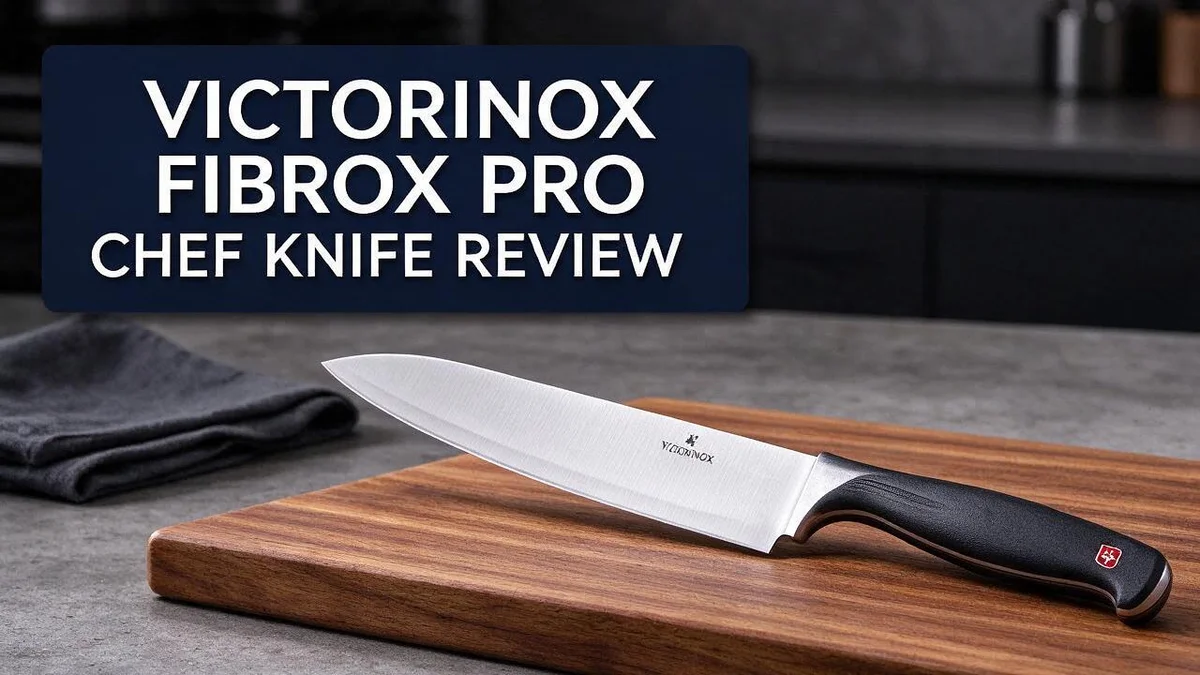
Victorinox Fibrox Pro Chef Knife Review 2026: Real-World Performance
Looking for a chef knife that feels sharp from the first cut? The Victorinox Fibrox Pro Chef Knife might be the one you need. Many home cooks and professional chefs trust this knife every day.
It comes in two sizes, a 5 inch and an 8 inch version. The blade is made from high carbon stainless steel. It arrives razor sharp and holds its edge well.
The handle uses a grippy TPE material called Fibrox. It stays secure even when your hands are wet. The maker also says it is dishwasher safe.
In this review, we will look at how it performs, where it shines, and where it falls short.
You will also see how it compares to popular options like the Tojiro DP and MAC Professional. Keep reading to decide if this knife fits your kitchen.
In a Nutshell
- Best for big jobs: The long blade handles large vegetables, melons, and roasts with ease. You can slice through a whole onion in just a few strokes.
- Built for daily work: Professional cooks rely on this knife during long, busy shifts. Its popularity in commercial kitchens shows that it can handle constant use.
- A softer steel: The blade measures 55 to 56 HRC. German style knives usually reach 57 to 58 HRC, so this knife needs more frequent honing to stay sharp.
- A light feel: Some users find the thin, lightweight build feels flimsy in the hand. Buyers who prefer a heavier knife may need time to adjust.
- Easy cleanup: The manufacturer says the knife is dishwasher safe. Hand washing still helps protect the edge over the long run.
- Good for new cooks: Straight, precise cuts make learning basic knife skills much simpler. Beginners can practice slicing and dicing without fighting a dull or unpredictable blade.
Blade Sizes and Length

- For home chefs & professionals. This Fibro Pro chef's knife has been the top choice of both home...
- Fit for all tasks. Designed to handle kitchen tasks both big and small, This durable knife's razor...

Last update on 2026-11-01 / Affiliate links / Images from Amazon Product Advertising API Some of the links on this website are affiliate links, which means that at no additional cost to you, I earn a commission if you click through and make a purchase. I only recommend products and services that I believe will add value to my readers. Thank you for your support!
Choosing the right length starts with your daily cutting habits. Think about the foods you prepare most often.
The 8 inch blade gives you a long, smooth edge for slicing. It works well for bread loaves, big squash, and whole cabbages.
A longer blade also lets you use a full rocking motion. Each stroke covers more of the board, so you finish faster with less effort.
The 5 inch blade feels more nimble in tight spaces. It suits small jobs like dicing onions, mincing garlic, and trimming herbs.
Shorter knives also feel easier to control. Your fingers stay close to the tip, which helps with fine detail work.
Counter space matters too. A long knife needs room to move without hitting the backsplash or other tools.
Storage can be a factor in a small kitchen. An eight inch blade may not fit in every drawer, so measure first.
Many home cooks choose both sizes. The larger knife handles main prep, while the smaller one covers quick tasks.
Knuckle clearance is another useful check. Hold the knife with your normal grip and tap the board. Your knuckles should clear the surface without hitting it.
Blade length also changes how you hold the knife. Longer blades often rely on a firm grip near the handle. Shorter blades let you pinch the blade lightly for better control.
Your cutting surface also plays a role. Small boards make the long knife awkward to use. Large boards give the eight inch knife room to glide, so it shines there.
Think about your skill level too. Beginners often feel more confident with a shorter blade. Experienced cooks may prefer the reach of the longer version for steady, even strokes.
Steel Hardness and Edge Retention
Steel hardness shapes how a knife performs over time. The Victorinox Fibrox Pro uses a steel that sits a little softer than many German style blades.
German blades often reach 57 to 58 HRC. This knife trades some hardness for a different kind of feel.
Softer steel has a clear upside. It takes a fresh edge with less effort. A few passes on a honing rod can bring back a sharp line.
The downside shows up later. Edge retention means how long a blade stays sharp between sharpenings. Softer steel usually dulls sooner.
Hard foods can push the edge out of line faster. Frozen foods, hard squash, and bones are common examples to watch for.
Regular honing matters more with this knife. A quick session before each use keeps the edge straight.
Your cutting board also affects edge life. Glass, stone, and bamboo boards wear the edge quickly.
Wood or plastic boards are gentler. They help the steel last longer between sharpenings.
Sharpening frequency depends on your habits. Home cooks may only need a touch up every month or two.
Professional cooks who work long shifts may need a fresh edge more often. Steady honing fills the gap.
Softer steel also tends to roll or bend rather than chip. Small mistakes often leave less damage.
That makes this knife forgiving for beginners. It handles accidental contact with hard skins better than brittle steel.
In short, the steel favors easy sharpening and clean cuts. It asks for regular honing and gentle board choices in return.
If you want an edge that lasts longest between sharpenings, a harder German style blade may suit you better.
Handle Ergonomics and Grip
The handle is where your hand meets the knife every second you cut. On the Victorinox Fibrox Pro, that connection feels comfortable and secure.
The handle uses textured TPE Fibrox material. This surface stays slip resistant even when your hands are wet or greasy.
Grip matters most during fast, repetitive cuts. A firm hold keeps the blade under control. Your fingers do not need to clamp down hard.
The handle has a rounded, contoured shape that fits many adult hands. Most cooks find it natural to use a pinch grip or a full handle grip.
Hygiene is another strong point. The smooth surface does not soak up food juices. Wiping it clean takes only a few seconds.
Hand fatigue becomes a real concern during long prep sessions. A handle that sits well in the palm reduces strain on the wrist. Many cooks notice the difference by the end of a shift.
Test the grip before you commit. Hold the knife in your normal hand position. Then mimic a chopping motion on a board. Notice whether your thumb and index finger feel relaxed.
Left handed cooks should check comfort carefully. Handle feel varies from person to person. Your hand size and cutting habits will shape your experience.
Overall, this handle suits cooks who want a secure and easy to clean grip. Comfort depends on your own hands, so trying the knife in person helps most.
Top 3 Alternatives
Mercer Millennia

- QUALITY CONSTRUCTION: Knife is crafted with one-piece high-carbon Japanese steel for easy edge...
- SUPERIOR DESIGN: Built to last ergonomic handle with textured finger points offers a non-slip grip...
Last update on 2026-11-03 / Affiliate links / Images from Amazon Product Advertising API Some of the links on this website are affiliate links, which means that at no additional cost to you, I earn a commission if you click through and make a purchase. I only recommend products and services that I believe will add value to my readers. Thank you for your support!
The Mercer Millennia suits home cooks who want a sharp, lightweight knife. Its blade holds an edge well during daily prep work.
The handle feels comfortable in the hand. Its textured grip stays secure, even when your hands are wet. Many people find it easy to control during long chopping sessions.
The high-carbon steel blade is simple to sharpen. A quick pass on a honing rod keeps it cutting clean between sharpenings.
Wusthof Classic

- KITCHEN WORKHORSE – The WÜSTHOF 8” Classic Chef’s Knife is essential for preparing any meal...
- WÜSTHOF CLASSIC SERIES – The Full Tang, Triple Riveted handles of the Classic Line offer the...
Last update on 2026-11-01 / Affiliate links / Images from Amazon Product Advertising API Some of the links on this website are affiliate links, which means that at no additional cost to you, I earn a commission if you click through and make a purchase. I only recommend products and services that I believe will add value to my readers. Thank you for your support!
The Wusthof Classic is a German chef knife with a heavy, balanced feel. Cooks often reach for it when they need power, like cutting through squash or root vegetables.
Its forged blade offers real strength. The full tang runs through the handle, so the knife feels solid in every cut. Each stroke feels steady and controlled.
It needs regular honing to stay sharp. Hand washing protects the finish and helps it look great for years.
Global G-2

- Lightweight, precisely balanced 8-inch or 20cm chef's knife
- Blade made of high-tech molybdenum/vanadium stainless steel
Last update on 2026-11-01 / Affiliate links / Images from Amazon Product Advertising API Some of the links on this website are affiliate links, which means that at no additional cost to you, I earn a commission if you click through and make a purchase. I only recommend products and services that I believe will add value to my readers. Thank you for your support!
The Global G-2 stands out with its sleek, all-steel design. Its thin blade slices vegetables and boneless meat with ease.
Many cooks love the modern look. The hollow handle is filled with sand, which helps balance the knife. Some people need a short time to adjust to its light weight.
Keep it sharp with a fine whetstone. Gentle care helps this knife last a long time in your kitchen.
Care and Dishwasher Safety
The manufacturer says this knife is dishwasher safe. That label means the knife can handle a machine cycle. It does not mean the dishwasher is the best choice.
Hand washing keeps the blade in top shape. Use warm water and a mild dish soap. Rinse the knife well, then dry it right away with a soft towel.
Dishwashers use very hot water and strong detergents. Over time, this harsh mix can dull the edge and wear down the finish. Simple hand care avoids that wear.
The spray jets can also knock the blade against other dishes. Even a small bump can cause nicks along the cutting edge. Keep the knife in a separate spot when loading.
Never let the knife soak. Long soaks invite rust spots on the blade. They can also loosen the connection where the blade meets the handle.
Wash the knife soon after use. Food that dries on the blade becomes harder to remove. A quick rinse right after cutting saves time later.
Store the knife in a block, on a magnetic strip, or in a sheath. Avoid tossing it loose in a drawer. Loose storage bangs the edge against metal tools and makes it dull faster.
Check the knife after every wash. Look for loose parts, small cracks in the handle, or spots on the blade. Catching problems early keeps the knife safe to use.
Wipe the blade gently, moving away from the sharp edge. Use a soft cloth instead of a scratchy pad. Scratchy pads can leave tiny marks on the steel.
Mild soap is enough for daily use. Save stronger cleaners for stubborn stains, and rinse them off fully. Keep a dry towel nearby while cooking, since a quick wipe between tasks prevents sticky buildup.
A good routine takes less than one minute. Most cooks find it easy to keep up with.
In short, the dishwasher works in a pinch, but hand care wins. A few simple habits help this knife stay sharp and clean for a long time.
Value and Commercial Kitchen Use
The Victorinox Fibrox Pro is a common sight in commercial kitchens. Many chefs choose it for daily prep work. Its clean design fits the fast pace of a busy line.
A long blade helps with big jobs. The 8 inch version slices through large produce with fewer strokes. Cooks can break down a case of onions or a whole head of cabbage quickly.
Consistency matters in a team setting. When everyone uses the same knife model, cuts look and feel alike. Head chefs can train new staff faster because the knife behaves the same way for each person.
Shared kitchens bring extra wear. One knife may pass through many hands in a single shift. Staff should check the edge before each service starts. Simple habits keep the team working safely.
Safety is another practical benefit. A sharp blade needs less force, so the cook controls each cut. Dull knives slip more often, which raises the risk of injury during fast prep.
Home cooks can use this knife for similar tasks. It works well for chopping herbs, dicing vegetables, and portioning proteins. Many people enjoy restaurant style results in their own kitchens.
The knife also suits cooks who move between stations. It handles fruit, vegetables, and meat with equal ease. That flexibility makes it a practical pick for kitchens that need one main knife per cook.
Compare it with other options before you decide. Tojiro DP and MAC Professional knives often appear in the same conversations. Each brand offers a slightly different feel, so handle a few before you commit.
Ongoing use in a professional setting shows how well the knife holds up. Many cooks report steady performance across long weeks of heavy prep. That kind of reliability makes it a smart pick for working chefs.
Pros and Cons
Pros
- The blade is very sharp right out of the box.
- It makes precise and straight cuts.
- The long blade handles large foods with ease.
- Many professional cooks trust it during busy shifts.
- It is available in both 5 inch and 8 inch sizes.
Cons
- The steel is softer than German style knives.
- The softer steel may need sharpening more often.
- Some users feel the thin, lightweight build seems flimsy.
- Cooks who prefer a heavy knife may find it light.
Who Should Buy It
The Victorinox Fibrox Pro fits many kitchens. Still, it works best for certain cooks. Here is who should consider buying it. Each group below has clear reasons to choose it.
New home cooks make up a large group that benefits most. This knife gives them a sharp, dependable tool without a steep learning curve. They can practice basic skills like dicing onions and slicing herbs.
Busy families also gain from this blade. The knife handles everyday meal prep, from chopping vegetables to carving a roast. Its simple design makes it easy for different people in the house to use.
People who want one main knife should look closely. Many cooks reach for the chef knife most often. This model can cover most daily tasks, so a full block may not be necessary.
Hobby sharpeners may enjoy the softer steel. Softer steel responds well to a honing rod and a few minutes on a whetstone. Regular honing keeps the edge sharp between full sharpenings. Those who like to maintain their tools will find the routine rewarding.
Lighter knife fans make another good match. Some cooks tire from heavy blades during long prep sessions. The knife may feel easier on the wrist during extended cutting work.
Readers who want a clear choice should compare options first. Tojiro DP and MAC Professional knives are strong alternatives. Trying the knife in hand helps confirm whether its weight and feel match personal preference.
Gift buyers also find this knife a useful pick. It suits a wide range of skill levels, so most recipients can use it right away. Adding a note about the 5 inch or 8 inch size helps the recipient.
In short, this knife suits beginners, busy households, and hobby sharpeners. Heavy knife fans and cooks seeking harder steel may prefer another option.
Final Verdict
Our final verdict is simple. The Victorinox Fibrox Pro earns a spot in most kitchens. It handles daily prep with ease and feels comfortable over long sessions.
Start with your own cutting habits. Think about how you chop, slice, and dice most days. A quick look at your routine will show whether this knife fits your style.
Hold the knife before you buy it. Balance matters more than many people expect. If the lighter weight feels off in your grip, look at a heavier option instead.
Plan a simple sharpening routine. The steel is softer than German style blades, so honing helps. Keep a honing rod near your cutting board. This small habit makes the edge easier to maintain.
Choose the size that fits your space. The 5 inch model suits small hands and tight counters. The 8 inch model gives you more reach when you work through bigger jobs.
Think about your cleaning routine. The handle grips well even when wet. Dry the blade after each wash so it stays in top condition over time.
Know what this knife does not do. It is not a heavy cleaver, and it will not replace every specialty tool. Pair it with a bread knife or paring knife for a complete setup.
Consider the long term. A knife that stays sharp with regular care saves you time. You spend less effort on maintenance than you might expect.
Final thoughts. This knife rewards careful owners. Keep it clean, dry it right away, and sharpen it on schedule. In return, it delivers clean, precise cuts for years.
Ready to choose? Compare the sizes, test the grip, and decide what fits your kitchen. The right knife feels like a natural extension of your hand.
Frequently Asked Questions
Can you put the Fibrox Pro in the dishwasher?
The manufacturer says this knife is dishwasher safe. Many cooks still prefer hand washing because it protects the edge over time.
How does it compare to Tojiro DP or MAC Professional?
Tojiro DP and MAC Professional are the top rivals in most comparisons. Hold each knife before you choose. Feel and balance differ from brand to brand.
Is the Victorinox Classic the same knife?
One comparison says the Classic line uses the same blade. Read the product details closely, so you get the exact model you want.
Is the handle hygienic for daily use?
Yes. The TPE Fibrox handle is hygienic and easy to wipe clean. This makes it a smart pick for busy kitchens where clean tools matter.

Hi, I’m Greta Monroe, and I’m passionate about making every kitchen a place of creativity and efficiency. I’ve spent years exploring and testing kitchen gadgets, tools, and devices to help home cooks find exactly what they need. At ChefKit Blog, I share honest Amazon product reviews and practical insights on kitchen essentials that actually make a difference. From must-have basics to innovative new devices, I break down what works and what doesn’t. My mission is simple: to help you build a kitchen that inspires delicious possibilities every single day.