
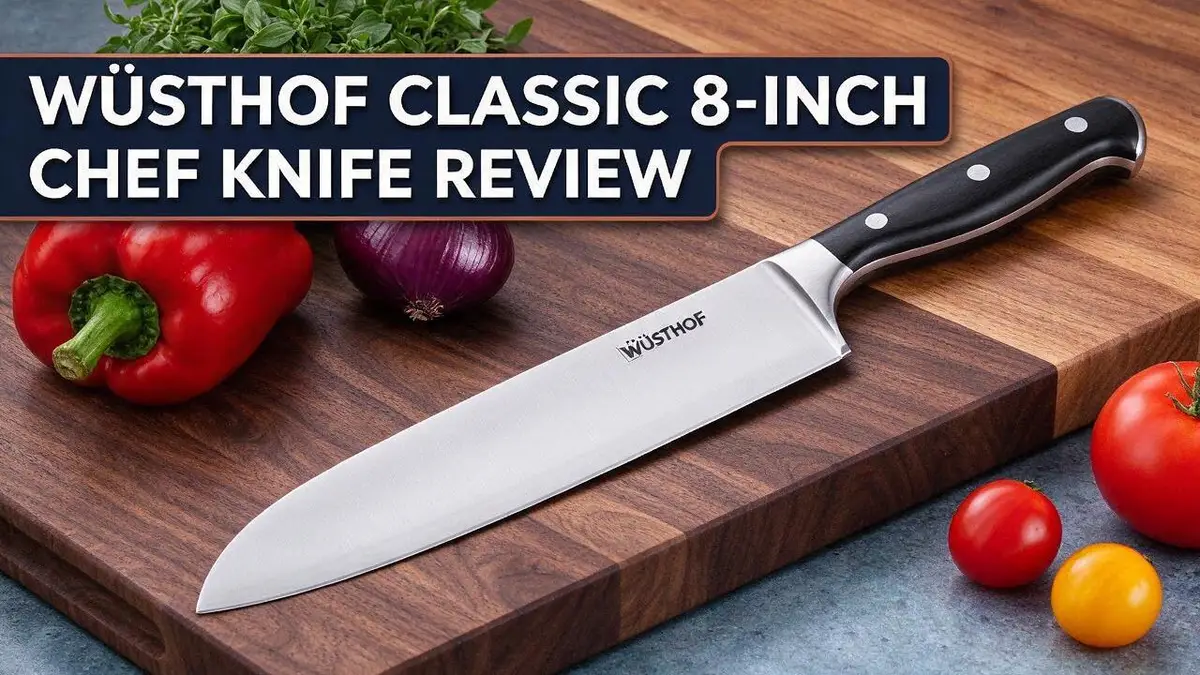
Wüsthof Classic 8-Inch Chef Knife Review: Steel, Balance, Durability and Verdict
Looking for a chef knife that feels like a natural extension of your hand? The Wüsthof Classic 8 inch Chef Knife is a favorite in many home kitchens.
Made in Germany, this knife is precision forged from a single piece of high carbon stainless steel.
Its curved edge suits rocking motion chopping, and its full bolster gives you a secure grip. It also handles herbs, vegetables, and fruit with ease.
Many cooks want a knife that lasts for decades. This one resists rust and holds its edge for longer with regular care.
In this review, we explore its weight, steel hardness, daily performance, and how it compares with top rivals. Let us see if it earns a spot in your kitchen.
In a Nutshell
- Edge retention stands out. The steel measures 58 HRC, so the blade keeps its sharp edge longer between honing sessions. Cooks spend less time sharpening and more time cooking.
- Rust resistance keeps things simple. The blade handles wet prep work and daily washing well, so it stays clean and ready for the next meal.
- The handle feels comfortable. Its ergonomic shape feels natural during long prep sessions, so many home cooks notice less hand fatigue.
- Versatile use fits most tasks. This knife handles herbs, vegetables, and fruit with ease, so you may not need many extra blades in your kitchen.
- A heavier build suits some cooks. Those who like a firm, weighted feel may prefer it over lighter options like the Victorinox. Lighter knives may suit cooks who want quick, nimble cuts.
- Quality checks matter. Some owners report minor issues, and one Reddit user raised quality control concerns with the Classic Ikon version. Buy from a seller with clear return options.
Blade Steel and Edge Retention

- KITCHEN WORKHORSE – The WÜSTHOF 8” Classic Chef’s Knife is essential for preparing any meal...
- WÜSTHOF CLASSIC SERIES – The Full Tang, Triple Riveted handles of the Classic Line offer the...

Last update on 2026-11-04 / Affiliate links / Images from Amazon Product Advertising API Some of the links on this website are affiliate links, which means that at no additional cost to you, I earn a commission if you click through and make a purchase. I only recommend products and services that I believe will add value to my readers. Thank you for your support!
Blade steel shapes how a knife feels in daily use. The steel in this chef knife feels firm and stable on the cutting board. You notice that stability most when you break down a whole squash.
Edge retention works a little differently than many people expect. A harder blade does not mean a sharper blade at every moment. Instead, it means the edge resists rolling and dulling for longer stretches.
Honing and sharpening play separate roles. Honing realigns the edge between uses. It keeps the blade straight without removing much metal. Sharpening removes steel to create a fresh edge. Most cooks only need to sharpen a few times each year.
A steady sharpening angle matters most. Guided sharpeners help beginners hold that angle. Consistent angles keep the edge even from heel to tip.
Cutting surface choice affects edge life too. Wood and plastic boards are gentler on the blade. Glass, stone, and ceramic plates can dull even hard steel quickly. Avoid them whenever possible to protect the edge.
Technique matters as much as steel. Use a smooth push cut or rocking motion rather than hacking. Twisting the blade inside dense foods can chip a hard edge. Keep it away from bones, frozen food, and hard shells.
Storage also protects the sharp edge. A magnetic strip or a knife block keeps the blade from bumping other tools. Loose drawers often cause small nicks that you cannot see. Hand washing and quick drying also protect the steel from dulling and spotting.
Give the knife a quick check after the first week. Run a fingertip gently across the edge to feel for burrs or flat spots. Early care keeps this knife cutting cleanly for years.
Good habits turn steel quality into lasting performance. Your knife rewards careful use every single day.
Handle Design and Grip Comfort
Handle design shapes how a knife feels from the first cut. The Wüsthof Classic gives you a grip that feels solid and steady.
The handle measures 4.5 inches long. That length suits most adult hands. Your fingers rest comfortably without crowding each other.
Three rivets hold the handle in place. This triple riveted design keeps the handle firmly attached to the steel. Loose handles are less likely with this build.
The steel runs all the way through the handle. This full tang design adds strength and helps the knife feel balanced in your palm.
Wet hands test any grip. Rinsing produce or washing a cutting board can make a handle slippery. This knife keeps its hold even when your hands are damp.
Many cooks use a pinch grip with this knife. Your index finger and thumb settle near the blade. This position offers more control for fine cuts like mincing garlic.
Dense vegetables need firm pressure. Squash or a hard sweet potato can resist the blade. A secure handle lets you push down without the knife twisting in your hand. Your grip stays in control from start to finish.
Try the knife in your own hand first. Hold it for a few minutes and mimic your usual chopping motion. Pay attention to any pressure points or tired fingers. Your comfort matters more than any spec sheet.
Hand size changes everything. Cooks with smaller hands may need a few extra minutes to get used to the grip. Taking time to test it helps you decide with confidence.
Dry the handle right after washing. A dry handle stays easy to hold during the next prep session.
Weight and Balance
Weight tells only part of the story. Balance decides how the knife feels in motion. Feel matters as much as numbers.
The full bolster sits where the blade meets the handle. It helps the knife settle between your fingers. This helps the knife feel planted when you chop.
This knife feels fairly even from heel to tip. Many cooks feel that steadiness during long prep sessions.
Weight does some of the work for you. When the blade drops through a carrot, gravity adds momentum. You need less force from your wrist.
Lighter knives can feel quick, but they often need more push. This one rewards a relaxed grip and a steady drop.
Balance also changes by task. For fine work like mincing shallots, a heavier knife may feel less precise. Test a few small cuts first.
Kitchen tasks vary a lot. Dicing onions asks for quick, light taps. Breaking down a whole chicken needs more heft.
Watch the feel during slicing. A smooth pull through tomatoes shows whether the weight suits your style. Some cooks want a nimbler feel for delicate cuts.
Try this test at home. Rest the spine of the blade on one finger, just ahead of the handle.
If the tip dips, the blade feels heavy. If the heel dips, the handle feels heavy. Note where it settles.
Cutting board height matters too. A counter that sits too low can make a weighted knife feel awkward. Adjust your stance or raise the board.
Fatigue deserves attention too. A balanced knife spreads effort across your arm. An unbalanced one pulls at your wrist after many minutes.
Many shoppers skip this step and regret it later. Take time to hold it, rock it, and slice a few items before deciding.
Bottom line: weight and balance shape control. Your hand should feel relaxed, not tired.
Top 3 Alternatives
Victorinox Fibrox Pro

- For home chefs & professionals. This Fibro Pro chef's knife has been the top choice of both home...
- Fit for all tasks. Designed to handle kitchen tasks both big and small, This durable knife's razor...
Last update on 2026-11-04 / Affiliate links / Images from Amazon Product Advertising API Some of the links on this website are affiliate links, which means that at no additional cost to you, I earn a commission if you click through and make a purchase. I only recommend products and services that I believe will add value to my readers. Thank you for your support!
The Victorinox Fibrox Pro is a favorite in busy kitchens. Its grippy handle stays secure, even when wet. Many cooks also love its light weight for quick chopping. The blade feels sharp, and regular honing keeps it that way. Cleanup is simple, so you can move on to the next task fast.
Shun Classic Chef Knife

- KITCHEN KNIFE SET: The Shun Classic 6 Piece Block Set includes the 3.5-inch Paring Knife, 7-inch...
- PIONEERING EXCELLENCE: Bring home a piece of the renowned Classic Series - the original Japanese...
Last update on 2026-11-04 / Affiliate links / Images from Amazon Product Advertising API Some of the links on this website are affiliate links, which means that at no additional cost to you, I earn a commission if you click through and make a purchase. I only recommend products and services that I believe will add value to my readers. Thank you for your support!
The Shun Classic Chef Knife brings a beautiful look to any countertop. Its very sharp edge slices tomatoes with ease. The D-shaped handle fits many hands well. Many home chefs enjoy the balance between weight and control. Slicing meat and chopping vegetables feel smooth and steady with this knife.
Mercer Culinary Genesis

- QUALITY CONSTRUCTION: Knives are precision-forged with high-carbon German steel for better...
- SUPERIOR DESIGN: The finest handles in forged cutlery; built to last ergonomic handle offers comfort...
Last update on 2026-11-04 / Affiliate links / Images from Amazon Product Advertising API Some of the links on this website are affiliate links, which means that at no additional cost to you, I earn a commission if you click through and make a purchase. I only recommend products and services that I believe will add value to my readers. Thank you for your support!
The Mercer Culinary Genesis is a great pick for home cooks. Its high carbon steel blade resists stains and stays keen. The soft handle keeps your grip steady during long prep sessions. The full tang design adds balance and strength. It suits both beginners and experienced chefs who want a reliable everyday knife.
Cutting Versatility and Curved Blade Technique
The curved edge is the star of this knife. It forms a gentle arc from heel to tip. This shape turns the blade into a true rocking tool.
Rocking works best when the tip stays on the board. Lower the handle, then lift it, while the tip acts as a pivot. Move the food slowly under the blade.
Herbs respond especially well to this motion. Gather parsley or basil into a tight pile. Rock the blade across the leaves until they look finely chopped. Gather the pile again and repeat.
Fruit works beautifully too. Slice mango, melon, or pineapple with long, gentle strokes. The belly of the blade glides through soft flesh without crushing it.
Vegetables show the full range of the curve. Onions, bell peppers, and celery all respond well. Start near the tip, then move toward the heel with each pass.
The curve also helps when moving food. Scrape chopped pieces into a bowl with the broad belly of the blade. Your hand stays clear of the edge.
Tip work needs extra care. Use the front third for delicate jobs like scoring mushroom caps or trimming small bits of fat. Keep the motion light and controlled.
The heel handles tougher tasks. Use the back section for cutting through thick celery bunches or cabbage cores. Let the weight of the blade do the work.
Practice builds a natural rhythm. Start slowly and watch the board. Keep your guiding fingers curled back so your knuckles act as a guide.
Every cook develops a personal style. Some prefer a steady rock, while others favor short, quick taps. Both methods work well with this curve, so try each one.
Speed will come with comfort. Give yourself a few sessions with simple vegetables before tackling tougher produce. Smooth motion always beats fast chopping.
Care, Rust Resistance and Long-Term Lifespan
Good care keeps this knife performing well for years. The steel resists rust, yet it still needs simple habits to stay in top shape.
Always hand wash the knife. Use warm water, mild soap, and a soft sponge. Dry it right away with a clean towel. Water left sitting on the blade invites spots and dull patches.
Dishwashers cause trouble. Harsh heat and strong detergent can dull the edge. The blade may also knock against other dishes. Keep this knife out of the dishwasher every time.
Storage matters too. A wood block, a magnetic strip, or a drawer sheath protects the edge. Loose storage beside other utensils causes nicks. Keep the blade away from metal bowls as well.
Choose the right cutting surface. Wood and plastic boards treat the blade gently. Glass, stone, and marble boards dull the edge quickly. Good boards help the knife last longer.
Honing keeps the edge aligned between sharpening sessions. A honing rod used a few times each month makes daily cutting feel easier. Sharpening with a whetstone or a professional service restores a crisp edge when needed.
Lifespan depends on steady habits. Many owners keep the same knife for decades when they clean, dry, and store it well. Even hard steel can chip, so avoid prying, twisting, or cutting through frozen food or bone.
Inspect the knife when it arrives. Some buyers have mentioned quality control concerns with certain versions. Check the finish, the edge, and the bolster. A quick look now prevents frustration later.
With simple care, this knife stays reliable for many meals. Good habits protect the steel and keep every cut smooth.
Pros and Cons
Pros
- Harder steel holds its edge longer.
- Forged from a single blank for a sturdy build.
- Full tang and triple riveted handle add strength.
- Ergonomic grip feels secure during long prep sessions.
- Made in Germany by a well known cutlery maker.
Cons
- Heavier than the Victorinox 8 inch at 8.5 oz versus 5.6 oz.
- Some Classic Ikon owners report quality control concerns.
- One owner noted a small flaw on an Ikon model.
- Softer Victorinox blades feel lighter in the hand.
Who Should Buy It
Home cooks who want one main knife will find this model a strong match. It handles most daily chopping without needing a second blade.
Beginners often feel nervous with sharp tools. This knife offers a steady, confident feel that helps build good habits.
Cooks who like a heavier blade may enjoy the solid feel. Extra weight can push through dense squash, sweet potatoes, and pumpkin with less effort.
Meal prep fans also benefit from this knife. Large batches of onions, carrots, and bell peppers stay manageable because the knife keeps a steady rhythm.
Traditional European knife lovers will feel at home here. The blade shape and sturdy build follow a classic design many professional chefs trust.
Hobby bakers who also chop often find this knife useful. The solid feel suits repeated cutting of nuts, herbs, and chocolate bars.
Gift shoppers can also consider this option. Serious cooks often value a knife that lasts for years and feels good in the hand.
However, this knife may not suit everyone. Someone who wants a light, nimble blade for precise slicing might prefer a thinner option.
Cooks who work mostly with delicate ingredients may want something lighter. Fish fillets and soft cheeses need gentle handling rather than force.
Hand size changes how the grip feels. Holding the knife in person before buying helps confirm comfort during longer prep sessions.
Families with teens learning to cook can use it as a teaching tool. Supervised practice with a quality knife builds respect for safe handling.
Anyone who cooks often at home will notice the difference over time. Daily use shows whether the knife fits your routine.
Shoppers who want a quick decision may compare options first. Reading user feedback and visiting a local store gives a clearer picture.
Ultimately, the right buyer values durability, weight, and classic craftsmanship. Think about daily cooking habits before making a choice.
Final Verdict
The Wüsthof Classic chef knife earns a strong place in many home kitchens. It works well for everyday tasks and steady meal prep.
Think of this knife as a workhorse rather than a showpiece. Its job is to handle the big tasks without fuss.
Its curved edge rewards cooks who enjoy a smooth rocking motion. Once that rhythm feels natural, chopping onions and herbs becomes quicker.
The biggest question is not performance but personality. Some cooks want a light, nimble blade. Others want weight that does the work for them.
This knife suits the second group best. Its solid feel gives confidence during long sessions in the kitchen.
It may feel too heavy for someone who mainly slices delicate fish or thin garnishes. In that case, a lighter option may bring more joy.
Think about how you cook most often before deciding. A quick look at your weekly meals will show whether this knife fits your routine.
Overall, the knife delivers traditional European quality in a familiar design. Most people who value a dependable main knife will be pleased.
The final call comes down to comfort and cooking style. Once you hold it, you will know if it feels right.
Many cooks pair this knife with a small paring knife and a bread knife. Together, these three tools cover nearly every task in a home kitchen.
Sharpening needs grow over time, so plan for regular sharpening sessions. This habit keeps the blade sharp enough to glide through food.
Online reviews vary, so read several recent opinions. Look for patterns rather than single stories.
As your technique improves, this knife becomes more rewarding to use.
The verdict is positive for buyers who want a sturdy, traditional chef knife. Those seeking a light, quick slicer should keep looking.
Frequently Asked Questions
Is this knife a good fit for new cooks?
Yes, it can suit new cooks. The steady weight gives good control. Practice the rocking motion on soft vegetables first. Then move on to onions and fresh herbs.
How often should I sharpen it?
Harder steel keeps its edge for longer. Sharpening happens less often than with softer knives. Use a honing rod regularly to keep the blade straight between sharpening sessions.
Can this knife handle crusty bread?
The curved edge works best for chopping, not sawing. A serrated knife handles crusty loaves much better. Save this chef knife for slicing soft fruit, vegetables, and herbs.
Which competitors should I compare it with?
Shoppers often compare Dalstrong, Messermeister, and Kramer. Each brand offers its own balance of weight and sharpness. Try to feel each blade in a store when possible, so you can judge the balance for yourself.
How can I check for quality issues on arrival?
Look at the blade edge and handle rivets right away. Keep the packaging until you confirm the knife looks flawless. A clear return policy from the seller makes this check much easier.

Hi, I’m Greta Monroe, and I’m passionate about making every kitchen a place of creativity and efficiency. I’ve spent years exploring and testing kitchen gadgets, tools, and devices to help home cooks find exactly what they need. At ChefKit Blog, I share honest Amazon product reviews and practical insights on kitchen essentials that actually make a difference. From must-have basics to innovative new devices, I break down what works and what doesn’t. My mission is simple: to help you build a kitchen that inspires delicious possibilities every single day.