HORL 2 Walnut Rolling Knife Sharpener Review: Value for Money?
Dull knives make cooking harder and less safe. A sharp blade cuts cleanly, and it saves you time in the kitchen. Many home cooks look for an easy way to keep their edges in shape.
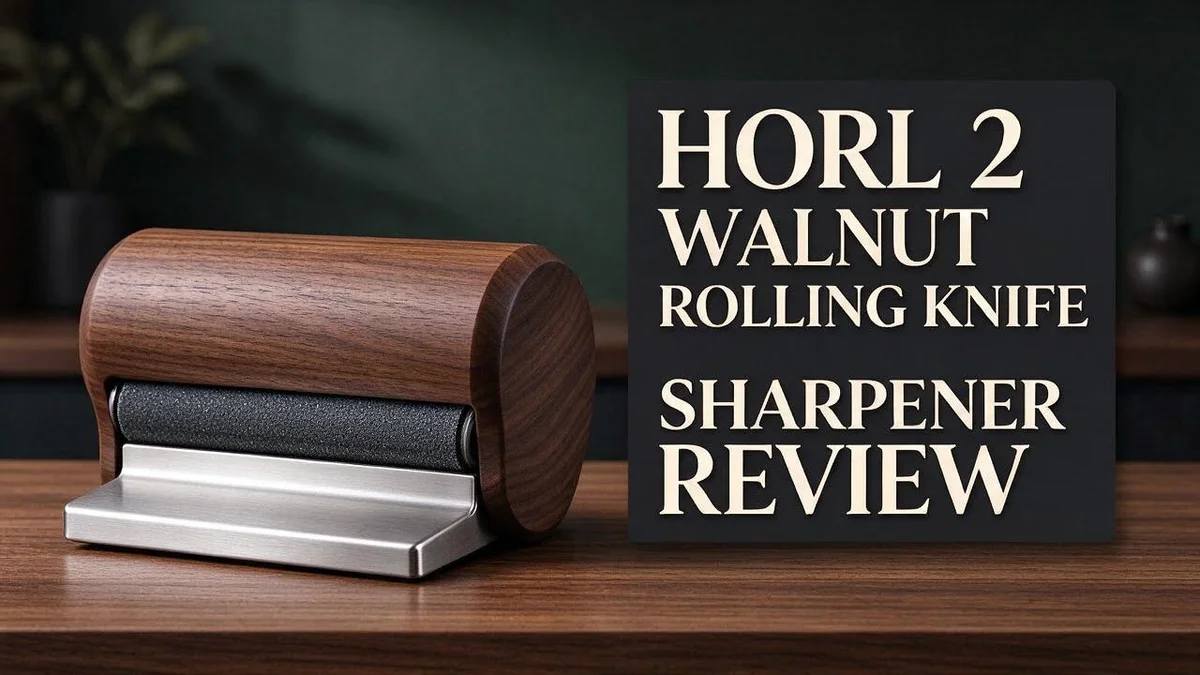
The HORL 2 Walnut Rolling Knife Sharpener may be the answer. It is engineered in Germany and uses two discs. One fixes nicks, and the other polishes the edge.
Its walnut design also looks great on any countertop. Many owners praise its smooth rolling and consistent results.
In this review, we take a close look at how it works. We cover its strengths, its limits, and who it suits best. By the end, you will know if this rolling sharpener belongs in your kitchen.
In a Nutshell
-
Two discs, two jobs: The 420 grit diamond disc handles nicks and sharpening work. The 1000 grit ceramic honing disc then smooths and finishes the edge for everyday use.
-
Fixes microchips fast: One tester used it on over a dozen knives. It removes small nicks and microchips, so the blade feels sharp again.
-
Steady angle every pass: A magnetic angle support helps hold a constant 20 degree grinding angle on the Cruise model. Users find each pass more consistent.
-
Works on any steel: The roller handles steel of any hardness. Busy home cooks can keep their blades ready with quick maintenance sessions.
-
Smooth rolling feel: Owners often praise how smoothly the roller moves across the blade. Many also report consistent edges after each session.
-
Best for kitchen knives: Pocket knives do not suit this tool well. Only two angles also limit range, so some users may want more options.
Sharpening Discs and Grit Performance

- The HORL2 rThe HORL 2 rolling sharpener gives you full flexibility with interchangeable grinding...
- The HORL2 combines a professional-grade diamond disc and ceramic honing disc to sharpen knives of...
Last update on 2026-10-29 / Affiliate links / Images from Amazon Product Advertising API Some of the links on this website are affiliate links, which means that at no additional cost to you, I earn a commission if you click through and make a purchase. I only recommend products and services that I believe will add value to my readers. Thank you for your support!
Grit is the key to how any sharpener performs. Coarse grit removes metal quickly. Fine grit smooths the edge that remains. Each step plays a unique role in the final edge.
The second disc finishes the job. The ceramic honing disc carries a 1000 grit surface. It refines the edge after the first disc does its work. Many home cooks skip this step, yet it makes a real difference in daily use.
Think of the honing disc as a final polish. It smooths tiny burrs left behind by coarser work. The result is a cleaner slice through tomatoes, herbs, and soft bread.
Swapping discs takes only seconds. The discs are interchangeable, so you change them without special tools. Remove the current disc, then fit the other one into place. This quick switch helps during a busy prep session.
A simple routine gives the best results. Start with the honing disc when your knife feels only slightly dull. Move to the diamond disc when the edge needs more work. This order saves time and protects your blade from extra wear.
Grit order makes a difference. Begin with the coarse disc when an edge has real damage. Finish with the fine disc for a smooth result. Skipping this order can leave the edge rough or uneven.
Test the edge after each round. Hold a sheet of paper flat on the counter. Slice it with light pressure. A clean cut shows that the edge is ready. A snag means you need another pass. This quick check keeps you from over sharpening.
Care keeps the discs working well. Wipe each disc after use to remove metal dust. Store them in a dry place so the surfaces stay clean. Clean discs cut more evenly and last longer in regular use.
Regular touch ups beat rare repairs. A short session every few weeks keeps a knife sharp for longer. Small passes remove little metal each time. This habit protects the blade and keeps your knives ready for daily tasks.
Patience brings better results with this method. Short passes on each disc build a sharper edge over time. Your knives stay ready for cooking, and your kitchen runs more smoothly.
Angle Options and Edge Consistency
Angle choice matters more than many people expect. The HORL 2 offers two angle settings. This simple choice keeps the process easy for home cooks.
Start by looking at your knife’s current edge. Note whether the bevel looks steep or wide. That tells you which setting fits best.
A steeper edge slices well but can wear faster. A wider edge holds up longer on the cutting board. Pick the option that matches your knife’s factory bevel.
The limit of two angles does have a downside. Some knives need a setting that the tool does not offer. In that case, you may need another method for those blades.
Many home cooks never need more than one setting. Everyday kitchen knives often share a similar edge. Matching that edge keeps your blades sharp without extra effort.
Consistency comes from habit. Use the same angle every time you sharpen. Keep the same number of passes on each side of the blade.
Count your strokes out loud if that helps. Equal counts on both sides keep the bevel even. Uneven counts often create a lopsided edge.
Work with a steady pace. Rushing can cause uneven contact with the disc. Slow and even strokes give the most reliable edge.
Check your work in good light. Look for shiny spots along the edge. Shiny spots show where the blade missed the disc.
Let the roller do the work. Apply a light touch rather than pressing hard. Heavy pressure can shift the angle and throw off your results.
Keep a simple log for each knife. Write down the angle you used and the number of passes. This record helps you repeat good results later.
Repeat the same routine each time you maintain a blade. Familiar steps make the process faster. Your edges will also stay more predictable from one session to the next.
Over time, you will learn your knives. Each blade will show you what works best. Consistent habits matter more than fancy tricks.
Build Quality and Walnut Design
The walnut edition looks as good as it works. The wood has a warm, rich color that stands out on a kitchen counter. Many people like to keep it in plain sight.
Build quality shows in the small details. The walnut body feels solid in your hand. Each part fits together with very little play, which gives a sense of stability while you work.
Walnut also brings a natural feel. Wood stays comfortable to hold, even on a cool morning. Your grip remains steady during longer sessions at the sink.
The frame matters just as much as the wood. A sturdy base keeps the roller steady as it moves along the blade. Less wobble means less guesswork for your hands.
Good materials help the tool last. Wood needs gentle care to keep its shine. Wipe away water and dust after each use. Dry the tool fully before you store it.
Think about where you keep the sharpener. Some people store it in a drawer, while others leave it on a shelf. The natural finish suits both choices.
Design also supports the daily routine. The compact shape fits beside a cutting board with ease. You can pick it up, sharpen a few knives, and put it away in minutes.
Simple lines keep things easy. There are no fancy extras to get in the way. The tool does one job well, and the clean look helps it blend into any kitchen.
Many home cooks value tools that feel dependable. This sharpener earns that trust through solid parts and a neat finish. Over time, regular handling keeps the wood looking cared for.
Gift givers often choose walnut for its classic look. The wood suits a home that values natural materials.
Top 3 Alternatives
Looking for a different option? These three sharpeners are strong alternatives.
Work Sharp Precision Adjust

- PERFECT FOR HOME COOKS, HUNTERS & KNIFE ENTHUSIASTS - Delivers razor-sharp, professional-quality...
- ADJUSTABLE ANGLES FROM 15° TO 30° - Set the perfect angle for any knife: 15° for Japanese-style...
Last update on 2026-10-29 / Affiliate links / Images from Amazon Product Advertising API Some of the links on this website are affiliate links, which means that at no additional cost to you, I earn a commission if you click through and make a purchase. I only recommend products and services that I believe will add value to my readers. Thank you for your support!
This sharpener gives you very fine control over your blade angle.
You set the angle with a simple dial. It works well for kitchen and hunting knives.
Beginners can learn it fast, and experts can use it for detailed edges. Many people like how steady it feels in the hand.
Chef’sChoice 1520

- ANGLESELECT – Applies a traditional 20 degree edge or a finer 15 degree edge for precision slicing
- 100% diamond abrasives for sharpening and honing

Last update on 2026-10-29 / Affiliate links / Images from Amazon Product Advertising API Some of the links on this website are affiliate links, which means that at no additional cost to you, I earn a commission if you click through and make a purchase. I only recommend products and services that I believe will add value to my readers. Thank you for your support!
This electric sharpener makes sharpening fast and easy.
It uses three stages, so you can go from dull to sharp in minutes. The guides keep your knife at the right angle every time.
It suits busy home cooks who want good results with little effort. Keep in mind that it removes more metal than manual tools.
Lansky Blademaster

- Knife clamp with angle selector
- Custom molded storage/ travel case
Last update on 2026-10-29 / Affiliate links / Images from Amazon Product Advertising API Some of the links on this website are affiliate links, which means that at no additional cost to you, I earn a commission if you click through and make a purchase. I only recommend products and services that I believe will add value to my readers. Thank you for your support!
This clamp style system holds your blade firmly while you work.
It comes with rods and stones that give you a clean, sharp edge. The stones come in different grits for sharpening and polishing.
It takes a little practice, but it rewards patience. Many users like its simple design and quick setup.
Each option brings something different to the table. Think about how often you sharpen your knives. Then pick the one that fits your routine best.
Best Knives to Sharpen and Its Limits
Most kitchen knives suit this sharpener well. A chef’s knife, a santoku, and a utility knife all have straight blades that roll smoothly under the disc. Paring knives work nicely too, since the short blade is easy to guide.
Japanese knives need extra care. Many of them have thin blades ground at lower angles. Check the maker’s advice before you use the standard setting. A mismatch can leave the edge thick or uneven.
Pocket knives fall outside its range. Folding blades are smaller, and their edges often have different shapes. The roller simply does not suit them well. Keep a pocket sharpener or a small stone for those tools instead.
Serrated edges cannot be sharpened this way. The scalloped teeth do not rest flat on the disc, so the roller cannot reach the cutting points. Use a dedicated tool for bread knives and steak knives.
Two angles limit your choices. Some knives need a steeper or shallower edge than the available settings allow. Many home cooks never notice this gap. Owners of specialty blades should plan for it early.
Steel type matters less than blade shape. The sharpener works on steel of any hardness, so the metal itself rarely causes trouble. The shape of the blade and its intended use decide whether the tool fits.
Heavy damage needs more time. Deep chips may take several passes, so expect a longer session. If the blade still feels dull after many rounds, a professional service may be the better choice.
Think about your knife collection before you buy anything. List the blades you use each day. Then decide which ones deserve this kind of care. Match the tool to the job, and every blade stays in good shape.
Pros and Cons
Pros
- Removes nicks and fixes tiny microchips on the edge.
- Rolls smoothly across the blade for steady results.
- Works on steel of any hardness.
- Suits regular maintenance between deeper sharpening sessions.
- Includes a magnetic angle support for easy setup.
Cons
- Handles only kitchen knives well.
- Pocket knives fall outside its range.
- Takes more time than a quick sharpening tool.
- Works best on straight blades with simple shapes.
Who Should Buy It
Home cooks who feel nervous about freehand sharpening will find this tool a calm starting point. You do not need a steady hand or years of practice. The roller does the guiding, so you can focus on a smooth rhythm.
Busy households also benefit from this setup. A few minutes after dinner can keep the family knives ready for the next day. Nobody needs to pack up blades and wait weeks for a shop visit.
Curious beginners can learn a lot here. Watching the edge change with each pass shows how sharpening really works. That practical lesson builds confidence over time.
Cooks with a small group of favorite knives get the best results. Keep the blades you use most in regular rotation. Large collections may feel slow to work through in one sitting.
People who want a fast fix for badly damaged blades may need something stronger. Deep dents and heavy chips call for more aggressive work. Sharpening damaged edges usually needs more time and a different approach. This tool suits upkeep far better than full repair.
Anyone who likes a tidy, planned routine will enjoy the process. Set a sharpening day each month and stick to it. Many owners say a regular schedule feels easy after the first few weeks. Routine keeps edges steady and makes the habit easy to maintain.
Think about your daily cutting habits before you decide. If you slice fruit, vegetables, and bread most days, your knives will need regular attention. Light use at home means less frequent sessions.
Gift buyers also have good reasons to choose it. A cook who already owns sharp knives may appreciate a tool that keeps them that way. Pairing it with a short care guide makes the gift even more useful.
Final Verdict
The short answer is yes for most home cooks. The HORL 2 Walnut earns its place on a kitchen counter. It turns a tricky task into a steady routine.
Think of it as a tool for upkeep, not rescue. Owners praise the smooth rolling motion. The movement feels calm and controlled. Many also say their edges stay consistent from one session to the next. That steady performance often matters more than one dramatic result.
The walnut edition also looks good in a kitchen. Its warm wood finish sits well beside other tools. Guests often notice it, which makes it a thoughtful gift.
Compared with the HORL Tumbler, the HORL 2 is a clear step up. Users report easier handling and more reliable results. Anyone who has tried a basic roller will likely notice the difference.
The HORL 2 Pro suits people who want a larger set and a stronger warranty. Readers should compare both models side by side. Choose the one that matches your confidence level.
Skip this model if you want one tool for every blade. It shines with kitchen knives and simple shapes. Your other tools may need a different approach.
Beginners may need a few tries to find the right rhythm. Practice on an older knife first. This builds confidence before you touch your best blades.
Start with a short list of favorite knives. Use the sharpener for a few weeks. Notice how your edges feel after each session. Then decide if the routine fits your kitchen.
The HORL 2 Walnut is a smart pick for steady care of kitchen knives. It rewards patience and regular use. Keep your expectations realistic, and it will serve you well for years. Your kitchen will feel more prepared each week.
Frequently Asked Questions
What do the two discs do?
The diamond disc uses 420 grit. It handles nicks and basic sharpening. The ceramic honing disc uses 1000 grit. It polishes the edge after the diamond disc does the heavy work. Both discs are interchangeable, so you can switch between tasks.
Do the two angles limit what I can sharpen?
Yes, a little. The tool offers only two angles. Knives that need a different edge may not fit well. The Cruise model keeps a constant 20° grinding angle. This gives steady results on kitchen knives that already use that edge.
Does the steel type change how it works?
No, not much. The sharpener works on steel of any hardness. Blade shape matters more than the metal. Simple, straight blades give the most even results.
How can I spot a genuine HORL model?
Many unbranded rolling sharpeners look similar. Check for the HORL name and the Germany engineered build. Genuine models offer interchangeable discs and a magnetic angle support, which cheaper copies often lack.

Hi, I’m Greta Monroe, and I’m passionate about making every kitchen a place of creativity and efficiency. I’ve spent years exploring and testing kitchen gadgets, tools, and devices to help home cooks find exactly what they need. At ChefKit Blog, I share honest Amazon product reviews and practical insights on kitchen essentials that actually make a difference. From must-have basics to innovative new devices, I break down what works and what doesn’t. My mission is simple: to help you build a kitchen that inspires delicious possibilities every single day.