Yabano Espresso Machine Review: Winner or Compromise?
Many home coffee lovers want great flavor without complicated machines. The Yabano Espresso Machine claims to deliver just that.
But does it really produce true espresso, or something else entirely? That question sits at the center of this review.
This machine has gained attention for its simple design and quick heat up time. Casual coffee drinkers often praise its ease of use.
In a Nutshell
- It skips a true pump system. The Yabano relies on a boiler based setup instead of a real pump. This is the main reason it struggles to match authentic espresso results.
- Pressure claims are confusing. Some listings mention 3.5 bar, while others say 15 bar. Our tests point to the lower figure, which explains the weaker crema and taste.
- It heats up fast. You will not wait long for your first cup. This makes it great for quick mornings.
- Cleaning is simple. The parts come apart easily and wipe clean without hassle.
- The steam frother actually works. It froths milk well, so cappuccino and latte fans will enjoy this feature.
- Best suited for casual drinkers. If you love strong coffee more than traditional espresso, this machine fits your daily routine nicely.
- Espresso purists may feel let down. The flavor and texture lean closer to strong brewed coffee than authentic espresso shots.
Build Quality and Design
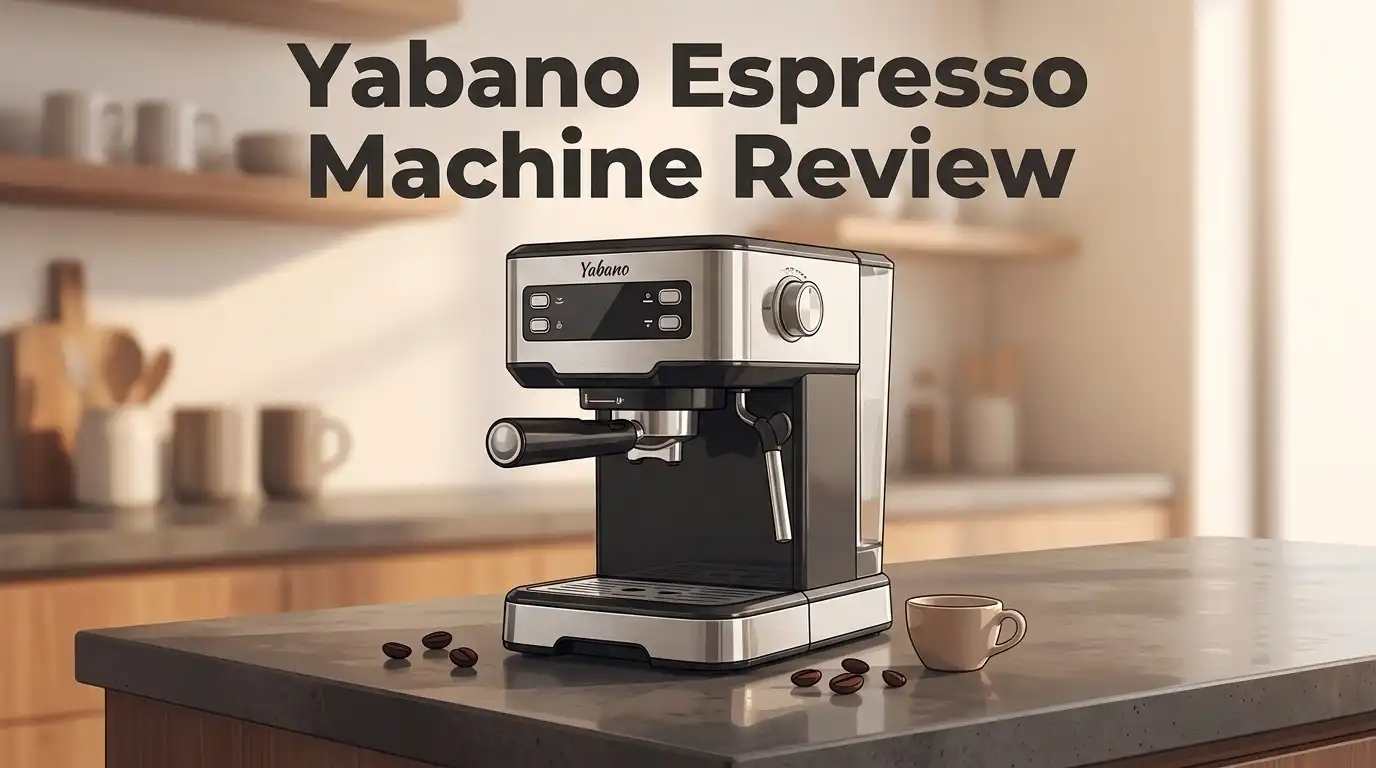
The Yabano espresso machine features a compact, lightweight design that appeals to people with limited counter space. The unit measures roughly 8 inches wide and stands about 9 inches tall, making it easy to store in small kitchens or apartments.
The exterior uses a combination of plastic and stainless steel materials. The plastic housing keeps the overall weight down, while the steel components add durability where it matters most. The water tank sits on the side and holds 4 cups of liquid. You can see the water level through a simple indicator window.
The build quality reflects its category. The plastic parts feel solid enough for occasional use, though they won’t match premium espresso machines. The steam frother arm attaches securely and doesn’t wobble during operation. All removable components fit together snugly without gaps or loose pieces.
The control panel is straightforward. A single power switch and a steam knob handle all functions. There are no digital displays or complicated buttons to confuse new users. This simplicity makes the machine feel approachable for beginners.
The boiler sits at the machine’s core. Unlike traditional espresso makers with separate pump mechanisms, this unit heats water in a closed chamber and uses pressure to force liquid through ground coffee. The system works reliably, though it operates at lower pressure levels than true espresso machines.
Heat distribution happens evenly across the brew group. The metal components conduct warmth consistently, which helps extract flavor from your coffee grounds. The shower head disperses water across the portafilter basket in a uniform pattern.
Durability concerns exist mainly with plastic elements. Extended use may cause some parts to wear faster than metal alternatives. The steam wand can accumulate mineral deposits over time, requiring regular cleaning to maintain performance.
The overall design prioritizes function over aesthetics. You won’t find sleek lines or modern styling here. Instead, the machine focuses on doing its job without unnecessary frills. The straightforward construction also means fewer parts can break, which benefits long term reliability for casual users.

- [20 BAR PRESSURE SYSTEM] Equipped with 20 bar professional pump, SPACEKEY espresso machine can...
- [1350W FAST PREHEATING SYSTEM] Under the powerful 1350W boiler, water can be heated to the set...
Last update on 2026-08-03 / Affiliate links / Images from Amazon Product Advertising API Some of the links on this website are affiliate links, which means that at no additional cost to you, I earn a commission if you click through and make a purchase. I only recommend products and services that I believe will add value to my readers. Thank you for your support!
Pressure System and Brewing Performance
The pressure system is where the Yabano story gets interesting. This machine uses a boiler-based setup instead of a traditional pump. That difference matters more than you might think.
Most real espresso machines rely on electric pumps to force water through coffee grounds at high pressure. The Yabano skips this entirely. Instead, it heats water in a boiler and relies on steam pressure to push water down through the portafilter. This is a fundamental limitation.
The specs create confusion online. Some listings claim 3.5 bar of pressure, while others mention 15 bar. The truth is closer to the lower number. True espresso requires 9 bars of pressure minimum to extract properly. At 3.5 bars, the Yabano simply cannot achieve authentic espresso extraction.
What does this mean for your cup? You get strong coffee that tastes espresso-like, but it is not true espresso. The brewing process happens more slowly. Water seeps through grounds rather than being forced through them. The result lacks the crema and intensity you find in real espresso shots.
The steam frother deserves credit here. It actually works well for frothing milk. Many budget machines fail at this task, but the Yabano handles it competently. Cappuccinos and lattes come out decent because milk texture matters more than espresso quality in these drinks.
Heat up speed is genuinely fast. The boiler reaches temperature in just a few minutes. You won’t sit around waiting for your machine to be ready. This is one area where the Yabano performs well.
The brewing performance suits casual users perfectly. If you enjoy strong coffee drinks and don’t demand authentic espresso, this machine delivers satisfaction. Cappuccino lovers will find it functional. Latte fans appreciate the milk frothing capability.
However, espresso purists should look elsewhere. The pressure system simply cannot produce the shots you want. The machine is honest about what it offers once you understand its limitations. It brews strong coffee quickly and froths milk well. That is exactly what it does best.
Steam Frother and Milk Frothing Capability
The steam frother on the Yabano sits as one of its strongest features. This component heats and froths milk directly through a small nozzle on the machine’s side. You insert the steam wand into your milk pitcher and press the steam button. The process takes about 60 to 90 seconds for a standard cup.
The frother produces decent microfoam for cappuccinos and lattes. It creates small, fine bubbles that blend well with espresso shots. Casual coffee drinkers will find the results satisfying. The milk texture works perfectly for home use. You won’t achieve barista-level latte art, but you’ll get smooth, drinkable results.
One key advantage is the frother’s simplicity. It has no complex internal mechanisms to clog or break down. You simply purge it after use by running steam through it without milk. This takes 10 seconds and prevents milk residue buildup. Cleaning remains straightforward, which matters for long-term reliability.
The steam pressure comes from the same boiler system that brews coffee. This means steam availability depends on how recently you brewed. After pulling a shot, you may wait 20 to 30 seconds for sufficient steam pressure to build. This is normal for entry-level machines. You won’t get instant steam like premium models offer.
One limitation exists for back-to-back frothing. If you make multiple cappuccinos in succession, the machine needs brief cooling periods. The boiler can’t maintain both brewing and steaming pressure simultaneously. Most home users won’t notice this issue since they make one or two drinks at a time.
The frother’s nozzle requires regular attention. Milk can dry on the tip and block steam flow. A quick wipe with a damp cloth after each use prevents this problem. Some users report the nozzle occasionally needs a toothpick to clear small blockages.
Overall, the steam frother delivers practical performance for everyday milk-based drinks. It won’t replace a professional steam wand, but it handles its job reliably. For people wanting cappuccinos at home without complexity, this frother meets expectations. The combination of ease and functionality makes it a genuine strength of this machine.
Top 3 Alternatives
Gaggia Classic Pro

- Solid Steel Housing, Made in Italy
- 9 Bar Espresso Extractions

Last update on 2026-08-03 / Affiliate links / Images from Amazon Product Advertising API Some of the links on this website are affiliate links, which means that at no additional cost to you, I earn a commission if you click through and make a purchase. I only recommend products and services that I believe will add value to my readers. Thank you for your support!
The Gaggia Classic Pro stands out for users who want simplicity and reliability. This machine heats up fast and produces excellent crema. You get a manual steam wand that lets you control milk frothing with precision.
Breville Barista Express

- The Breville Barista Express delivers third wave specialty coffee at home using the 4 keys formula...
- DOSE CONTROL GRINDING: Integrated precision conical burr grinder grinds on demand to deliver the...
Last update on 2026-08-02 / Affiliate links / Images from Amazon Product Advertising API Some of the links on this website are affiliate links, which means that at no additional cost to you, I earn a commission if you click through and make a purchase. I only recommend products and services that I believe will add value to my readers. Thank you for your support!
The Breville Barista Express appeals to people who value convenience. This machine includes a built-in grinder, so you grind and brew in one device. The digital temperature control keeps your shots consistent every time.
DeLonghi Dedica Espresso
No products found.
The DeLonghi Dedica Espresso combines Italian engineering with modern features. This compact machine heats water rapidly using advanced technology. The pressure system creates rich, thick crema in your cup.
Ease of Use and Learning Curve
Learning to use the Yabano espresso machine happens quickly for most people. The control panel keeps things simple with just a few buttons and switches. You won’t need to read a thick manual to get started.
The basic process follows three steps. Fill the water tank, add ground coffee to the filter basket, and press brew. Most users figure this out within their first or second attempt. The machine heats up in about 30 seconds, so you spend less time waiting and more time enjoying your drink.
New users often struggle with one thing: tamping pressure. If you pack the coffee grounds too loosely, water rushes through too fast. If you tamp too hard, the low pressure system struggles to push water through. Finding the right balance takes a few tries. This learning curve exists with most entry level machines, so it’s not unique to Yabano.
The steam frother adds a small wrinkle to the learning process. Frothing milk requires practice to get smooth, creamy results. You need to position the steam wand correctly and time the process right. After three or four attempts, most people get decent microfoam. The good news is that mistakes don’t ruin anything. You can always try again with fresh milk.
Cleaning and maintenance feel straightforward. Parts come apart easily, and you won’t need special tools or complicated procedures. This simplicity means less frustration and more enjoyment.
The biggest mental hurdle is understanding what this machine actually does. It doesn’t produce true espresso due to its low pressure system. Once you accept that you’re making strong coffee instead of authentic espresso, the learning curve becomes even gentler. Casual drinkers and cappuccino lovers rarely feel disappointed.
Overall, the Yabano espresso machine suits people who want something simple and forgiving. It rewards practice without punishing mistakes. Beginners find the experience encouraging rather than overwhelming.
Cleaning and Maintenance
Cleaning the Yabano espresso machine takes minimal effort, which appeals to busy coffee drinkers. The removable brew group detaches easily from the machine body. You can rinse it under running water after each use.
The portafilter and basket also come off without tools. Soak these parts in hot water for five minutes if coffee residue sticks. A soft brush works well for stubborn buildup inside the basket.
The steam frother nozzle needs immediate attention after frothing milk. Dried milk hardens quickly and blocks the steam ports. Wipe the nozzle with a damp cloth right after each use. Run steam through it for a few seconds to clear any remaining milk inside.
The water tank sits at the back and lifts out cleanly. Empty it if you won’t use the machine for several days. Stale water affects taste and can leave mineral deposits over time.
Descaling happens less often than with pump espresso machines. The boiler system doesn’t accumulate scale as rapidly. Run a descaling solution through the brew group once every two months if you have hard water. Follow the manual’s instructions for your specific water type.
The plastic exterior wipes down with a soft, dry cloth. Avoid harsh scrubbers that scratch the finish. Don’t soak the main body in water.
One maintenance point stands out: the pressure release valve. After brewing, let steam escape from the group head before opening it. This prevents hot water from spraying out unexpectedly.
Regular cleaning keeps the machine running smoothly for years. Most owners report no major issues with maintenance routines. The simplicity here actually works in the Yabano’s favor compared to complex pump machines.
The main takeaway is this: treat the frother nozzle with care, and the rest practically maintains itself. New owners appreciate how straightforward the process feels. You spend more time enjoying coffee and less time fussing with equipment.
Pros and Cons
Pros
- Heats up fast and ready to brew in minutes
- Steam frother produces decent microfoam for cappuccinos and lattes without extra equipment
- Simple design means cleaning takes just a few minutes with no special tools needed
- Straightforward operation that most users master within their first few attempts
- Compact size fits easily on kitchen counters and takes minimal storage space
Cons
- Produces strong coffee rather than true espresso due to low 3.5-bar pressure system
- No pump mechanism limits your ability to achieve the crema and extraction that espresso lovers expect
- Requires careful tamping technique or water rushes through the grounds too quickly
- Steam frother cannot handle back-to-back milk frothing sessions without cooling down between uses
Who Should Buy It
The Yabano espresso machine works best for casual coffee drinkers who want convenience over authenticity. If you enjoy strong coffee but don’t need true espresso, this machine fits your lifestyle perfectly.
Home baristas just starting out should consider this machine. The learning curve stays manageable because the process involves just a few simple steps. You won’t feel overwhelmed by complicated settings or intimidating features. Most people master the basics within their first few attempts.
People who live in small spaces will appreciate the compact design. The machine takes up minimal counter space and stores easily in tight kitchens. You get full functionality without sacrificing your precious square footage.
Milk drink enthusiasts find real value here. The steam frother produces decent microfoam for cappuccinos and lattes. You won’t need to buy separate equipment to create these drinks at home. The frother works reliably once you understand the basic technique.
Busy individuals love this machine because cleaning takes just minutes. No special tools are required. The portafilter and basket come off without effort. The water tank lifts out cleanly. This simplicity appeals to people who don’t want maintenance headaches eating into their morning routine.
Those seeking low maintenance will appreciate how straightforward upkeep becomes. Descaling happens less often than with pump espresso machines. Regular cleaning keeps everything running smoothly for years. The design prevents complicated problems from developing.
Skip this machine if you’re an espresso purist. The 3.5-bar pressure system cannot produce true espresso with proper crema and extraction. If you demand authentic espresso shots, you’ll feel disappointed. The machine delivers strong coffee instead, which is different from what espresso lovers expect.
People who want unlimited upgrade options should look elsewhere. The boiler-based system has a limited upgrade path. Once you outgrow this machine, you’ll likely need to replace it entirely rather than modify it.
The Yabano espresso machine serves its purpose well for the right person. Know what you actually want from your coffee setup before buying.
Final Verdict
The Yabano Espresso Machine sits in an interesting spot. It calls itself an espresso maker, but it really delivers strong coffee with a milk frothing bonus. That distinction matters a lot for anyone comparing options.
If you want authentic espresso with real crema, this machine will disappoint you. The boiler based system simply can’t match what a proper pump driven machine offers. Purists should look elsewhere.
But that’s not the whole story. Many people don’t need authentic espresso. They want something quick, simple, and satisfying for daily use.
For that group, Yabano makes sense. Casual drinkers, students, and anyone new to home brewing will find it approachable. The learning curve exists, but it’s manageable within a few tries.
Compared to machines like the Breville Bambino Plus or De’Longhi Stilosa, Yabano trades pump technology for simplicity. Those competitors produce closer to true espresso. Yabano focuses on ease and speed instead.
That tradeoff defines this machine. It’s not built to compete with serious espresso equipment. It’s built for people who want good coffee without complicated steps.
Think about your coffee goals before buying. If crema and precise extraction matter to you, this isn’t your machine. If you just want a strong, satisfying cup with minimal fuss, it delivers well.
The frother adds real value here. Combined with strong coffee output, it lets you make decent lattes and cappuccinos at home. That’s a nice bonus for casual milk drink lovers.
Overall, Yabano works best as an entry point machine. It suits people testing home brewing without diving into complex equipment. It’s honest performance for what it actually is, even if the marketing oversells it.
Choose this machine if convenience matters more than authenticity. Skip it if you dream of café style espresso with proper pressure and crema. Knowing your priorities makes this decision simple.
Frequently Asked Questions
Does the Yabano make real espresso?
No. The Yabano uses a 3.5-bar boiler system instead of a pump. True espresso requires 9 bars of pressure minimum. What you get is strong coffee with some milk drink capability, not authentic espresso with crema.
How long does it take to heat up?
The machine heats quickly, usually within 5 to 10 minutes. This speed makes it convenient for people who don’t want to wait around. Once ready, you can brew multiple cups back to back without long delays between shots.
Is the steam frother any good?
Yes, it works well for basic milk frothing. You can make cappuccinos and lattes without extra equipment. The frother won’t match commercial machines, but it delivers enough foam for casual milk drinks at home.
What’s the learning curve like?
Expect some trial and error in your first few brews. Tamping pressure matters a lot here. If you tamp too light, water rushes through too fast. If you tamp too hard, the machine struggles. Most users figure out the sweet spot within 3 to 5 attempts.
Who should skip this machine?
Espresso purists should look elsewhere. If you demand real crema, precise extraction, and pump pressure, this won’t satisfy you. Also skip it if you want lots of upgrade options down the road. The Yabano hits a ceiling quickly for serious coffee enthusiasts.

Hi, I’m Greta Monroe, and I’m passionate about making every kitchen a place of creativity and efficiency. I’ve spent years exploring and testing kitchen gadgets, tools, and devices to help home cooks find exactly what they need. At ChefKit Blog, I share honest Amazon product reviews and practical insights on kitchen essentials that actually make a difference. From must-have basics to innovative new devices, I break down what works and what doesn’t. My mission is simple: to help you build a kitchen that inspires delicious possibilities every single day.