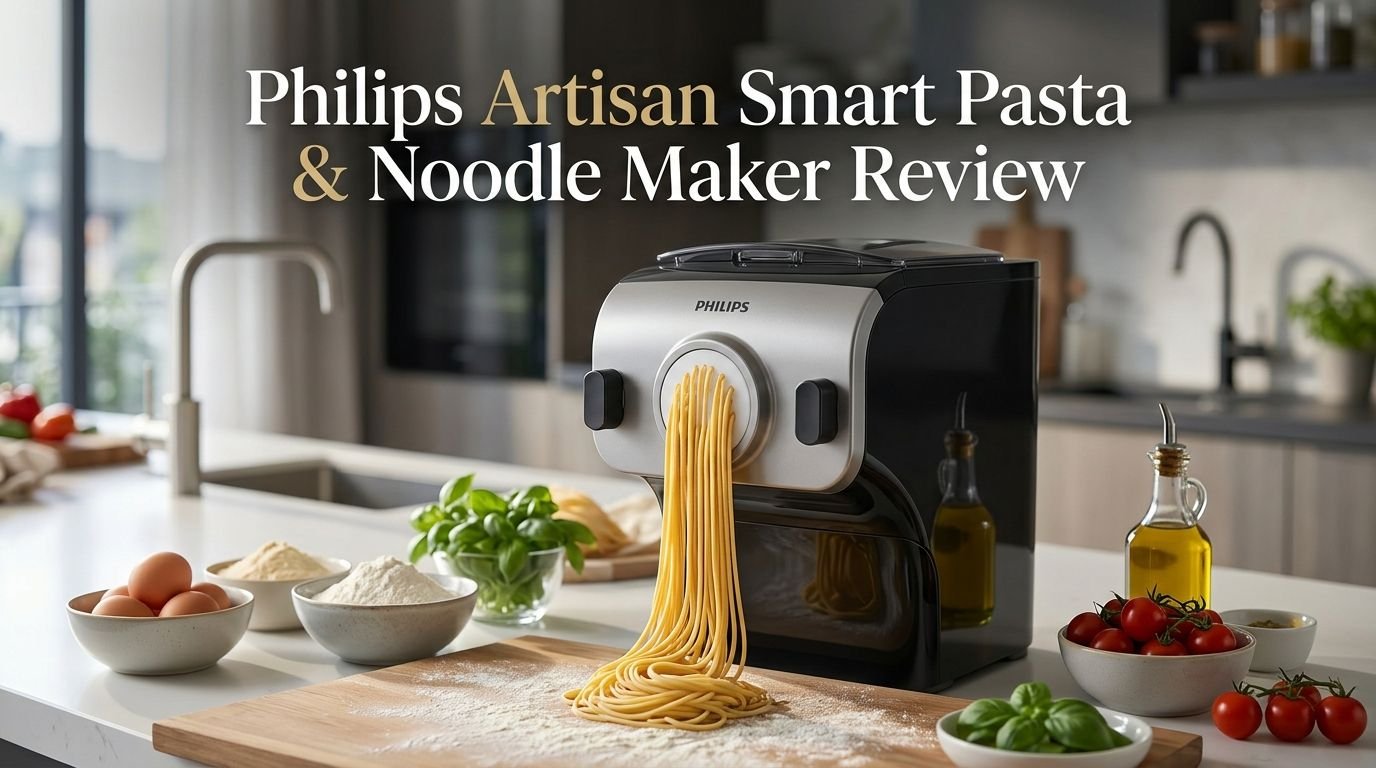
Philips Artisan Smart Pasta & Noodle Maker Review 2026
Have you ever craved fresh, homemade pasta but felt turned off by the messy, time-consuming process? The Philips Artisan Smart Pasta & Noodle Maker promises to change all of that.
This fully automatic machine mixes, kneads, and extrudes fresh pasta in under 10 minutes. You just add flour and liquid. The machine handles everything else.
In this review, we put the Philips Artisan Smart Pasta & Noodle Maker through real kitchen tests. We looked at its build quality, ease of use, pasta texture, cleaning process, and overall value.
Key Takeaways:
- The Philips Artisan Smart Pasta & Noodle Maker is one of the top-rated electric pasta extruders on the market in 2026. It uses a powerful motor to mix, knead, and extrude dough through shaping discs in a single appliance. There is no need for separate mixing bowls, rolling pins, or manual cranking.
- The machine comes with six shaping discs (spaghetti, fettuccine, penne, lasagna, angel hair, and thick spaghetti/ramen). You can create a wide range of pasta shapes right out of the box. Additional discs are sold separately for even more variety.
- Automatic weighing is a standout feature. The built-in scale measures your flour so you add the right amount of liquid every time. This takes the guesswork out of pasta ratios and helps beginners get consistent results.
- The mixing chamber also works for non-pasta doughs like pizza dough, bread dough, and cookie dough. This adds versatility beyond just pasta.
- Cleanup is easier than expected. Most parts disassemble quickly, and several components are dishwasher safe. However, the shaping discs do require some manual attention to remove stuck dough.
- The price point sits in the premium range. It costs more than compact Philips models and manual pasta machines. But if you make pasta regularly, the speed and consistency may justify the investment.

- PASTA UNDER 10 MINUTES: Enjoy fresh homemade pasta effortlessly in under 10 minutes¹.
- LARGE CAPACITY: Makes up to 8 portions⁴ of homemade pasta in one go for family and friends.

Last update on 2026-07-21 / Affiliate links / Images from Amazon Product Advertising API Some of the links on this website are affiliate links, which means that at no additional cost to you, I earn a commission if you click through and make a purchase. I only recommend products and services that I believe will add value to my readers. Thank you for your support!
Philips Artisan Smart Pasta & Noodle Maker: Overview and First Impressions
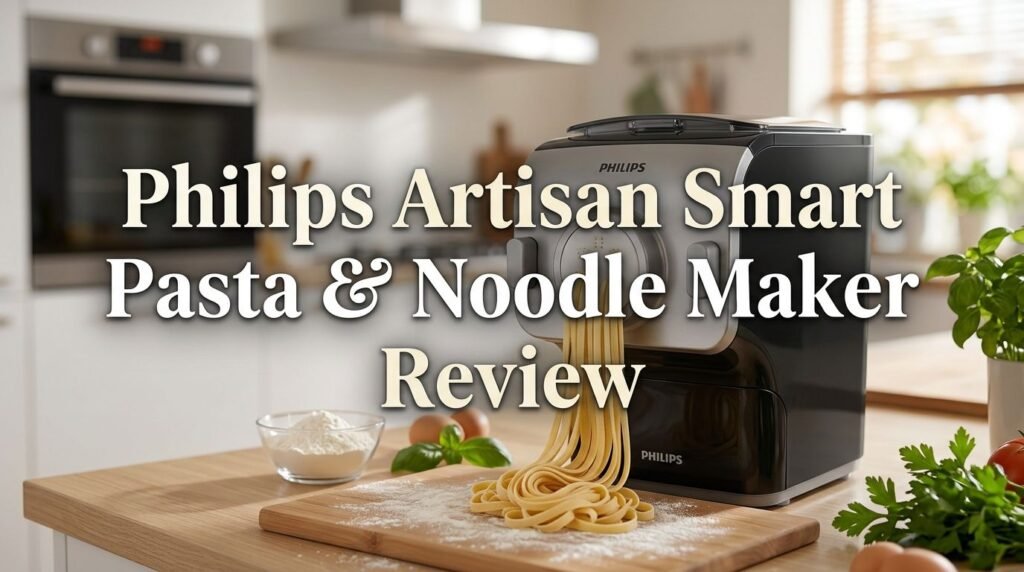
The Philips Artisan Smart Pasta & Noodle Maker arrives in a clean, well-packaged box. Inside, you get the main unit, six shaping discs, a measuring cup, a cleaning tool, and a recipe booklet. The machine itself looks modern and sleek with a white and silver design that fits most kitchen styles.
It measures roughly 9 x 13 x 12.75 inches and weighs about 15 pounds. This is not a small appliance. You will need a dedicated spot on your counter or in a cabinet. The build quality feels solid, with a heavy base that stays stable during operation.
The first thing that stands out is the built-in disc storage drawer. All six shaping discs slide neatly into the front of the machine. This means you won’t lose discs in a drawer somewhere. The cleaning tools also tuck inside.
Powering the unit on reveals a simple interface. The LED display and intuitive buttons keep things straightforward. There is no complicated menu to learn. You select your settings, add ingredients, and press start. For a machine that costs a premium price, the first impression is strong.
How the Philips Artisan Pasta Maker Works
The Philips Artisan Smart Pasta Maker uses an extrusion system to make pasta. This is different from roller-style machines. Instead of flattening dough into sheets, the machine pushes dough through a shaping disc at high pressure.
Here is the basic process. You add flour into the mixing chamber. The built-in scale weighs it for you. Then the display tells you exactly how much liquid to add. You pour in your egg and water mixture through the top opening while the machine mixes.
The mixing arm blends the ingredients into a crumbly dough. Then it automatically begins kneading and extruding. The dough gets pushed through the selected shaping disc, and fresh pasta comes out the front. The entire process takes about 8 to 10 minutes for a full batch.
The 150-watt motor and 1,600 pounds of extrusion force create pasta with a firm, authentic texture. The dough comes out with a slightly rough surface, which helps sauce cling to the pasta. This is a key advantage over smooth, store-bought pasta.
Build Quality and Design
The Philips Artisan Smart Pasta Maker feels like a premium kitchen appliance. The main body is sturdy plastic with metallic accents. It does not flex or wobble during use. The motor runs with a low hum and does not vibrate excessively.
The mixing chamber locks into place with a secure twist mechanism. This keeps it firmly attached during the high-pressure extrusion process. The shaping disc holder screws onto the front and creates a tight seal.
One design highlight is the built-in drawer for disc storage. Six discs fit neatly inside the base of the machine. This small detail makes a big difference for organization. You always know where your discs are.
The power cord is about 40 inches long, which gives you decent reach from a standard outlet. The overall footprint is compact enough for most kitchen counters, though you will need clearance at the front for the pasta to extrude out.
Top 3 Alternatives for Philips Artisan Smart Pasta & Noodle Maker
If the Philips Artisan is not quite right for your budget or needs, here are three strong alternatives worth considering.

- Automatically kneads and extrudes 2-3 servings of fresh pasta in just 18 minutes thanks to uniquely...
- With the machine there are 3 default classic shaping discs for Spaghetti, Penne and Fettuccini. The...
Last update on 2026-07-21 / Affiliate links / Images from Amazon Product Advertising API Some of the links on this website are affiliate links, which means that at no additional cost to you, I earn a commission if you click through and make a purchase. I only recommend products and services that I believe will add value to my readers. Thank you for your support!
The Philips Viva Compact Pasta Maker (HR2370/05) is a great budget-friendly option from the same brand. It costs about $170 less than the Artisan model. It comes with three shaping discs and makes 2 to 3 servings in about 18 minutes. It lacks the automatic weighing feature, but it still produces quality fresh pasta with a fully automatic process.

- User-Friendly Operation: Designed for ease of use, this pasta maker machine comes with recipes and...
- Versatile for Many Tastes: With a generous 500g flour capacity, you can whip up enough noodles for...
Last update on 2026-07-21 / Affiliate links / Images from Amazon Product Advertising API Some of the links on this website are affiliate links, which means that at no additional cost to you, I earn a commission if you click through and make a purchase. I only recommend products and services that I believe will add value to my readers. Thank you for your support!
The VEVOR Electric Pasta Maker offers 8 pasta shapes and 4 intelligent modes at a lower price point. It handles up to 500 grams of flour per batch. The build quality does not match Philips, but it is a solid entry-level electric pasta maker for beginners who want variety without a big investment.

- Material Type: Nickel-Plated Steel, Chrome-Plated Steel, ABS
- Included Components: User Manual
Last update on 2026-07-21 / Affiliate links / Images from Amazon Product Advertising API Some of the links on this website are affiliate links, which means that at no additional cost to you, I earn a commission if you click through and make a purchase. I only recommend products and services that I believe will add value to my readers. Thank you for your support!
The Marcato Atlas 150 Classic Manual Pasta Maker is a top pick for people who prefer a hands-on approach. Made in Italy from chrome steel, it rolls and cuts lasagna, fettuccine, and tagliolini. It costs a fraction of electric models and is built to last decades. If you enjoy the process of pasta making and don’t mind manual effort, this is a classic choice.
Pasta Shapes and Disc Variety
The Philips Artisan Smart Pasta Maker ships with six shaping discs. These cover the most popular pasta styles: spaghetti, fettuccine, angel hair, penne, lasagna/dumpling sheets, and thick spaghetti (also great for ramen noodles).
Each disc snaps into the front housing with ease. Swapping between shapes takes about 30 seconds. This makes it simple to prepare multiple pasta varieties in one session.
The penne disc deserves special mention. Extruded penne at home is rare with consumer machines. The Philips Artisan handles it well, though the shape works best when the pasta is cooked immediately. The tubes can flatten slightly if left to dry too long.
For more shapes, Philips sells accessory disc kits separately. These include pappardelle, tagliatelle, shells, paccheri, rigatoni, and macaroni. Third-party companies also make compatible discs with fun shapes like bucatini and novelty designs.
The variety of shapes sets this machine apart from cheaper models that only offer 2 or 3 disc options. If you love experimenting with different pasta styles, the Artisan model gives you room to grow.
Automatic Weighing Feature Explained
One of the most talked-about features of the Philips Artisan Smart Pasta Maker is its automatic weighing function. A built-in scale sits inside the mixing chamber. When you add flour, the machine measures the exact weight and displays how much liquid you need.
This is a game changer for beginners. Pasta dough depends on precise flour-to-liquid ratios. Too much flour makes the dough dry and crumbly. Too much liquid makes it sticky and hard to extrude. The auto-weighing system removes this common frustration.
You place your flour in the chamber and press a button. The screen shows the liquid amount in ounces and grams. You then pour in your egg and water mixture through the top lid opening while the machine mixes.
Advanced users can also override the suggestions and use their own recipes. The weighing feature still helps by giving you a precise flour measurement to work from. This flexibility means the machine grows with your skill level.
In our testing, the auto-weighing feature produced consistent dough every single time. We made five batches with the same recipe, and each one came out identical. This level of consistency is hard to achieve with manual measuring.
Pasta Texture and Taste Test
The real test of any pasta maker is the quality of the pasta it produces. We tested spaghetti, fettuccine, and penne using a basic flour and egg recipe.
The spaghetti came out with a slightly rough surface texture. This is exactly what you want. The roughness helps sauce grip the pasta. Compared to smooth store-bought spaghetti, the difference in sauce adhesion was dramatic.
The fettuccine had a firm, chewy bite after cooking. It held its shape well in boiling water and did not turn mushy. The thickness was even throughout, with no thin spots or thick clumps.
Penne was the most impressive shape to make at home. The tubes formed cleanly, though a few pieces were slightly uneven. After cooking, they tasted rich and fresh with a texture that boxed penne simply cannot match.
We also tested a spinach pasta recipe using the machine’s mixing chamber. The dough came out evenly green with no streaking. Flavor-wise, the fresh spinach pasta was noticeably better than anything from a store shelf.
Overall, the Philips Artisan delivers restaurant-quality fresh pasta at home. The taste difference between fresh and dried pasta is significant, and this machine makes it accessible for everyday meals.
Ease of Use for Beginners
The Philips Artisan Smart Pasta Maker is one of the most beginner-friendly pasta machines available. The automatic weighing system, clear LED display, and simple button layout make it approachable for anyone.
Setup takes about 2 minutes. You attach the mixing chamber, insert a shaping disc, and lock the front housing. The included recipe book walks you through basic dough formulas step by step.
The machine also connects to the Philips HomeID app (or Kitchen+ app depending on the model). This app offers guided recipes for gluten-free, vegan, whole-grain, and vegetable-infused pastas. Each recipe includes exact measurements and instructions tailored to the machine.
First-time users may find the dough consistency tricky to judge. The dough should look crumbly before extrusion begins. This is normal. The high pressure inside the machine compresses it into smooth pasta. Many beginners expect smooth dough and add too much liquid.
After your first or second batch, the process becomes second nature. Most people report feeling comfortable with the machine within their first week of ownership.
Cleaning and Maintenance
Cleaning a pasta maker can feel like a chore. The Philips Artisan makes it easier than most, but it is not effortless.
The mixing chamber, lid, and front housing are all dishwasher safe. This saves a lot of time. You simply disassemble the parts and place them in the top rack of your dishwasher.
The shaping discs require a bit more attention. Dough tends to stick inside the extrusion holes. Philips includes a special cleaning tool that pushes dried dough out of the holes. The best approach is to let leftover dough dry for about 30 minutes. It then pops out more easily than wet dough.
The mixing arm and internal seals need a quick wipe after each use. These parts are not dishwasher safe. A damp cloth works well for routine cleaning.
Overall, cleanup takes about 10 to 15 minutes. It is faster than cleaning a manual pasta roller and drying rack. The dishwasher-safe parts are a genuine time-saver and make daily use more practical.
Comparing the Philips Artisan to the Philips 7000 Series
Philips offers two premium pasta makers that often get compared: the Artisan Smart Pasta & Noodle Maker and the 7000 Series Pasta Maker (HR2660/03). Both share many features, but there are key differences.
The 7000 Series uses ProExtrude Technology and Perfect Mixing Technology. It comes with up to 8 shaping discs (depending on the package) and supports the HomeID app. It also has an automatic weighing function and can make up to 8 portions at once.
The Artisan model is sold through retailers like Williams Sonoma and Crate & Barrel and often includes 6 discs. Its model number (HR2665/96) aligns it with the 7000 family. The main differences often come down to color options, included accessories, and retail packaging.
In terms of performance, the two machines produce nearly identical pasta quality. The motor power (150 watts), extrusion force, and mixing system are the same. If you find one model at a better price, go with that one.
The 7000 Series is easier to find on Amazon, while the Artisan branding appears more at specialty kitchen retailers. Both are excellent choices for serious home pasta makers.
Who Should Buy the Philips Artisan Smart Pasta Maker
This machine is ideal for people who want fresh pasta without the manual work. If you enjoy eating pasta weekly but dislike the time and effort of hand-rolling, the Artisan model fits your life.
It also works well for families. A full batch produces about one pound of pasta, enough for 4 adults. You can make multiple batches in a row for larger gatherings. Kids often enjoy watching the pasta come out of the machine, which makes cooking together fun.
Health-conscious cooks will appreciate the control over ingredients. You choose the flour, add vegetables for color, skip preservatives, and control salt content. The app offers recipes for gluten-free and whole-grain pastas.
However, this machine is not the best fit for people who make pasta only once or twice a year. The price is a significant investment, and cheaper options exist for occasional use. It also takes up counter space, so small kitchens may struggle to store it.
If you cook pasta at least twice a month and value speed and consistency, the Philips Artisan Smart Pasta Maker is worth every dollar.
Pros and Cons of the Philips Artisan Smart Pasta Maker
- PASTA UNDER 10 MINUTES: Enjoy fresh homemade pasta effortlessly in under 10 minutes¹.
- LARGE CAPACITY: Makes up to 8 portions⁴ of homemade pasta in one go for family and friends.
Last update on 2026-07-21 / Affiliate links / Images from Amazon Product Advertising API Some of the links on this website are affiliate links, which means that at no additional cost to you, I earn a commission if you click through and make a purchase. I only recommend products and services that I believe will add value to my readers. Thank you for your support!
Every product has strengths and weaknesses. Here is a balanced look at the Philips Artisan Smart Pasta & Noodle Maker.
The pros are significant. The automatic weighing feature makes this machine exceptionally easy to use. Six included shaping discs give you plenty of variety from day one. The pasta quality is outstanding with a firm texture and rough surface that holds sauce perfectly. Build quality is solid, and the design looks great on a kitchen counter.
The app integration adds value. Step-by-step recipes for specialty pastas help you explore beyond basic egg noodles. Gluten-free and vegan options expand the range of what you can create.
On the downside, the price is steep. Budget shoppers may find the Philips Viva Compact model a better match. Cleaning the shaping discs takes patience, especially with smaller shapes like angel hair. The machine is also louder than expected during the mixing phase, though it quiets down during extrusion.
Some users report that the penne disc produces inconsistent tube shapes on occasion. Gravity can cause the tubes to flatten before they set. This is a minor issue that improves with practice and quick cutting.
Is the Philips Artisan Smart Pasta Maker Worth the Price in 2026
The Philips Artisan Smart Pasta & Noodle Maker sits in the $300 to $400 range depending on the retailer and any ongoing promotions. That is a meaningful investment for a kitchen appliance.
But consider what you get. Fresh pasta from a restaurant costs $15 to $25 per plate. A one-pound batch at home uses about $1 to $2 worth of flour and eggs. If you make pasta just twice a month, the machine pays for itself within a year.
Beyond savings, the quality difference between fresh and dried pasta is real. Fresh pasta cooks faster, tastes richer, and has a better texture. Once you experience it regularly, going back to boxed pasta feels like a downgrade.
The automatic features also save significant time. Manual pasta making takes 45 minutes to an hour. This machine cuts that down to under 10 minutes. Over a year, those hours add up.
For frequent pasta lovers, the Philips Artisan Smart Pasta Maker is a smart kitchen investment. It delivers consistent quality, saves time, and opens up creative possibilities that dried pasta simply cannot offer.
Final Verdict
The Philips Artisan Smart Pasta & Noodle Maker is one of the best electric pasta machines you can buy in 2026. It combines automatic weighing, strong extrusion force, and a user-friendly design into one well-built appliance.
The pasta it produces is genuinely excellent. Texture, taste, and consistency match what you would expect from a high-end Italian restaurant. The six included discs cover the most popular shapes, and expansion options add even more variety.
It is not cheap, and it is not tiny. But if fresh pasta matters to you, this machine earns its spot on your counter. Beginners will love the guided weighing system. Experienced cooks will appreciate the speed and quality.
We give the Philips Artisan Smart Pasta & Noodle Maker a strong recommendation for anyone who eats pasta regularly and wants a faster, easier way to enjoy it fresh.
Frequently Asked Questions
How long does it take to make pasta with the Philips Artisan Smart Pasta Maker?
The machine produces about one pound of fresh pasta in 8 to 10 minutes. This includes mixing, kneading, and extrusion. Preparation time adds another 2 to 3 minutes for measuring ingredients and setting up the machine. Total time from start to finished pasta is typically under 15 minutes.
Can I make gluten-free pasta with this machine?
Yes. The Philips Artisan Smart Pasta Maker supports gluten-free recipes. The companion app provides specific recipes using rice flour, almond flour, and other gluten-free alternatives. The auto-weighing feature helps you get the liquid ratios right, which is especially important with gluten-free flours that behave differently than wheat flour.
What types of flour work best in the Philips Artisan Pasta Maker?
The machine works with multiple flour types. These include 00 flour, all-purpose flour, semolina, durum wheat, whole wheat, rice flour, and almond flour. For classic Italian pasta, 00 flour or a blend of 00 and semolina produces the best results.
Is the Philips Artisan Pasta Maker dishwasher safe?
Several parts are dishwasher safe, including the mixing chamber, lid, and front housing. The shaping discs and mixing arm should be cleaned by hand. Philips includes cleaning tools to help remove dried dough from the disc holes.
How many servings does one batch of pasta make?
One full batch produces approximately one pound of fresh pasta. This serves about 4 adults as a main course or 6 to 8 as a side dish. You can make back-to-back batches for larger groups.
Can I use the Philips Artisan Pasta Maker for doughs other than pasta?
Yes. The mixing chamber doubles as a dough maker for pizza dough, bread dough, and cookie dough. You use the machine without a shaping disc attached. It mixes and kneads the dough, which you then remove and shape by hand.
Where can I buy extra shaping discs?
Extra discs are available through Philips directly, Williams Sonoma, Crate & Barrel, and Amazon. Third-party brands like Pastidea and PASTADISC also make compatible discs with additional shapes like bucatini, shells, rigatoni, and fun novelty designs.
Hi, I’m Greta Monroe, and I’m passionate about making every kitchen a place of creativity and efficiency. I’ve spent years exploring and testing kitchen gadgets, tools, and devices to help home cooks find exactly what they need. At ChefKit Blog, I share honest Amazon product reviews and practical insights on kitchen essentials that actually make a difference. From must-have basics to innovative new devices, I break down what works and what doesn’t. My mission is simple: to help you build a kitchen that inspires delicious possibilities every single day.