Why Is My Whirlpool Fridge Not Cooling but Freezer Works?
You open your Whirlpool refrigerator expecting cold milk and crisp vegetables, but everything feels warm. Meanwhile, your freezer is doing its job just fine. This is one of the most common and frustrating problems Whirlpool fridge owners face.
The good news? Most causes are fixable, and many of them do not require a professional technician. Your fridge and freezer share the same cooling system, so if the freezer works, the compressor is likely running fine.
The real issue usually lies in how cold air gets from the freezer into the fridge compartment. In this post, you will learn exactly what causes this problem, how to diagnose it yourself, and how to fix it step by step.
Key Takeaways
- The compressor is probably fine. If your freezer is cold, the cooling system is working. The problem almost always involves how cold air moves from the freezer to the fridge section. Focus your troubleshooting on airflow, fans, and sensors rather than the compressor itself.
- Blocked air vents are the easiest fix. Food items, ice buildup, or packaging can block the vents between the freezer and fridge. Check these vents first before moving on to more involved repairs. Clearing a blocked vent takes less than five minutes and costs nothing.
- A faulty evaporator fan is a top cause. The evaporator fan pushes cold air from the freezer into the fridge. If this fan stops spinning, the fridge will warm up while the freezer stays cold. You can often hear if this fan is making unusual noises or has gone silent.
- Defrost system failures create ice blockages. When the defrost heater, defrost thermostat, or defrost timer fails, ice builds up on the evaporator coils. This ice blocks airflow and prevents cold air from reaching the fridge compartment. A manual defrost can temporarily solve this problem.
- The damper control assembly matters more than you think. This small door between the freezer and fridge controls how much cold air enters the fridge. If it gets stuck in the closed position, no cold air reaches your food even though the system is working perfectly.
- A simple reset can sometimes solve the problem. Before replacing any parts, try unplugging your Whirlpool fridge for five to ten minutes and plugging it back in. This resets the control board and can fix minor electronic glitches that affect temperature regulation.
How the Cooling System Works in a Whirlpool Fridge
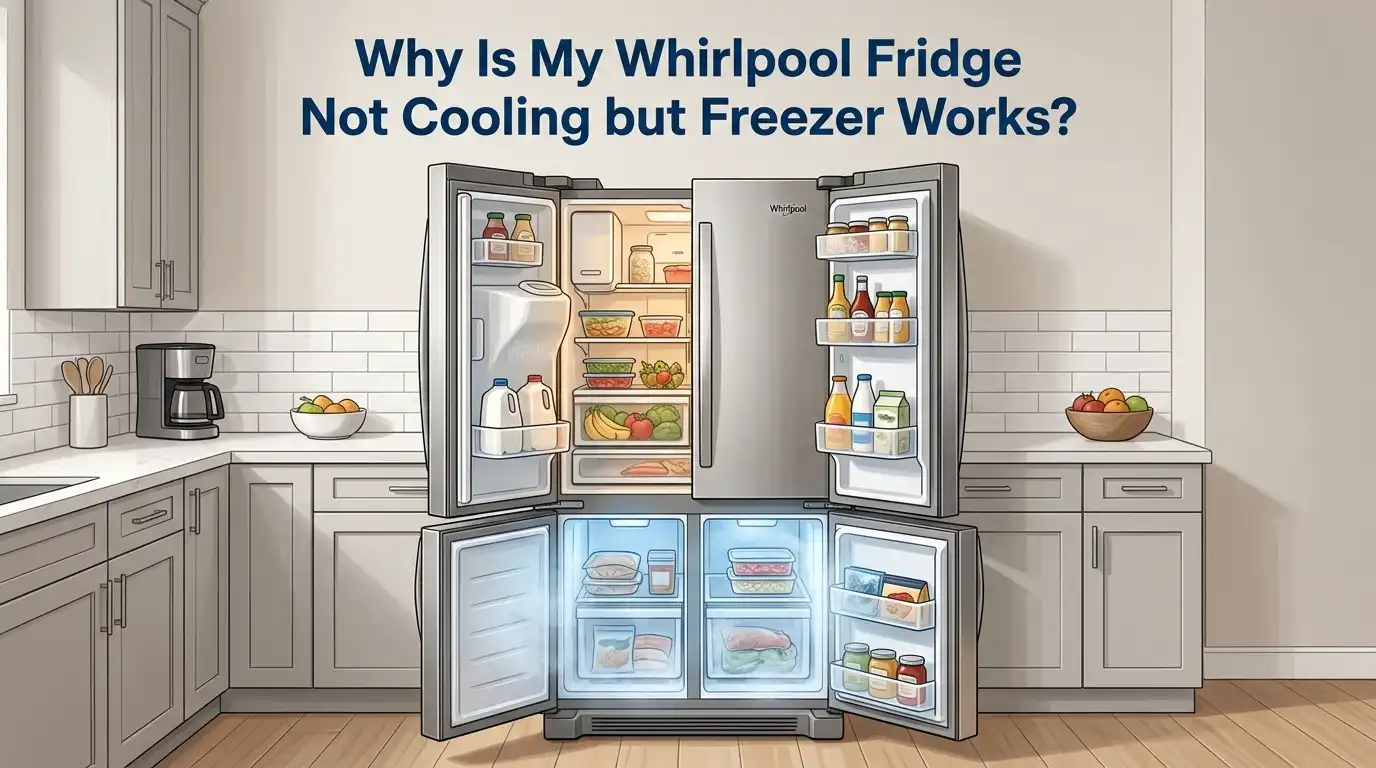
Understanding how your fridge cools food makes troubleshooting much easier. In most Whirlpool refrigerators, all cooling happens in the freezer section. The evaporator coils sit behind the back panel of the freezer compartment.
A fan called the evaporator fan blows air across these cold coils. Some of that air stays in the freezer, and the rest travels through vents and ducts into the fridge section. A small motorized door called the damper control regulates how much cold air enters the fridge.
The control board reads temperature data from sensors called thermistors. It then decides when to run the compressor, the fan, and the defrost cycle. If any part of this chain breaks, your fridge can lose cooling while your freezer continues to work normally.
Blocked Air Vents Between the Freezer and Fridge
The most common and simplest cause is blocked air vents. These vents connect the freezer to the fridge compartment. Cold air flows through them to keep your food fresh.
If you pack food too tightly against these vents, airflow stops. Ice can also form over the vents and seal them shut. Check the back wall of both the freezer and fridge for vent openings. Remove any items pressed against them.
If you see ice covering the vents, unplug the fridge and let the ice melt. You can speed this up with a hair dryer on low heat. Keep at least two inches of clearance around all vents for proper circulation.
Pros: Free fix, no tools needed, takes minutes.
Cons: May not be the root cause if ice keeps returning, which signals a defrost system problem.
Faulty Evaporator Fan Motor
The evaporator fan motor is one of the most common part failures in this situation. This fan sits inside the freezer, usually behind the back panel. It pushes cold air into the fridge through the duct system.
Open the freezer door and listen carefully. If you hear the compressor running but no fan noise from inside the freezer, the evaporator fan motor may be dead. Some models stop the fan when the door opens, so you may need to press the door switch manually.
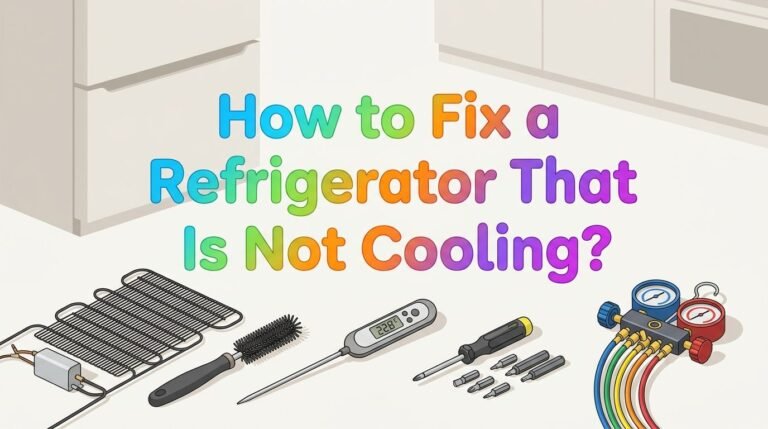
If the fan is not spinning, you can test the motor with a multimeter for continuity. A motor with no continuity needs replacement. This is a common DIY repair that requires removing the freezer back panel with a screwdriver.
Pros: Relatively affordable part, straightforward replacement for most DIY skill levels.
Cons: Requires a multimeter to confirm, and you need to remove the freezer back panel.
Defrost System Problems Causing Ice Buildup
Your Whirlpool fridge runs a defrost cycle several times a day to prevent ice from forming on the evaporator coils. When this system fails, ice builds up and blocks airflow to the fridge compartment.
Three main parts make up the defrost system: the defrost heater, the defrost thermostat (also called the bimetal thermostat), and the defrost timer or control board. If any one of these parts fails, the coils freeze over.
Pull the back panel off the freezer and inspect the evaporator coils. If they are covered in thick frost or solid ice, you have a defrost problem. You can manually defrost by unplugging the fridge for 24 hours with the doors open. However, this only provides a temporary fix. You still need to find and replace the failed defrost component.
Pros: Manual defrost restores cooling quickly without any parts.
Cons: The problem will return within days or weeks until the defective defrost part is replaced.
Stuck or Broken Damper Control Assembly
The damper control is a small motorized flap that opens and closes between the freezer and fridge sections. It controls how much cold air enters the fridge. If this damper gets stuck in the closed position, your fridge receives zero cold air.
You can usually find the damper behind a cover at the top or back of the fridge compartment. Remove the cover and check if the damper door moves freely. Try gently pushing it open with your finger. If it is frozen shut or mechanically stuck, that is your problem.
Some dampers are controlled by a small electric motor and a thermistor. The control board tells the damper when to open based on temperature readings. A failed motor or a bad sensor can keep the damper closed even when the fridge is warm.
Pros: Damper assemblies are affordable and relatively easy to replace.
Cons: Diagnosing a damper issue can be tricky because you need to determine if the damper itself or the controlling sensor is at fault.
Dirty Condenser Coils Reducing Efficiency
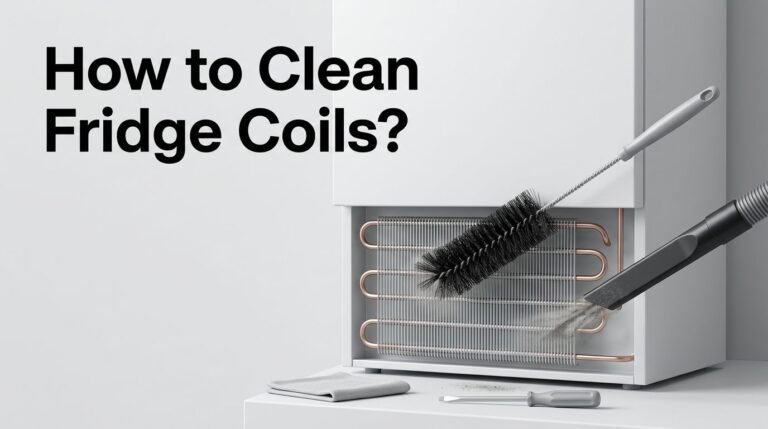
Condenser coils release heat from the refrigerant. Over time, dust, pet hair, and debris coat these coils and reduce their ability to dissipate heat. This forces the entire system to work harder and can result in poor fridge cooling.
On most Whirlpool models, the condenser coils sit underneath the fridge behind the front kick plate or on the back. Pull the fridge away from the wall or remove the bottom grille to access them.
Use a condenser coil brush or a vacuum with a narrow attachment to clean the coils thoroughly. Whirlpool recommends cleaning condenser coils at least once or twice per year. This simple maintenance step improves cooling performance and extends the life of your compressor.
Pros: Free maintenance task, prevents future cooling problems, extends appliance life.
Cons: Requires moving the fridge and can be physically awkward to reach the coils.
Faulty Refrigerator Thermistor (Temperature Sensor)
The thermistor is a small sensor that monitors the temperature inside the fridge compartment. It sends this data to the control board. If the thermistor gives wrong readings, the control board may not activate cooling for the fridge even when the temperature rises.
A bad thermistor can make the control board think the fridge is already cold enough. This means the evaporator fan or damper may not turn on when needed. You can test a thermistor with a multimeter by checking its resistance at a known temperature.
The resistance should change smoothly as the temperature changes. If the reading is stuck, erratic, or shows no continuity, replace the thermistor. This part is usually clipped to the inside wall or ceiling of the fridge compartment and is simple to swap out.
Pros: Inexpensive part, easy to replace, often solves mysterious cooling failures.
Cons: Requires a multimeter and some basic knowledge of resistance values to test properly.
Main Control Board Malfunction
The electronic control board acts as the brain of your Whirlpool refrigerator. It manages the compressor, fans, defrost cycle, and damper. A glitch or failure on this board can disrupt cooling in the fridge while leaving the freezer unaffected.
Before replacing the control board, try a simple reset. Unplug the refrigerator from the wall outlet for five to ten minutes. Plug it back in and wait 24 hours to see if the fridge cools down. This reset clears minor electronic errors that can cause temperature regulation issues.
If a reset does not help, the control board may need replacement. Look for burn marks, corrosion, or damaged relays on the board. Control board replacement is more expensive and more involved, so rule out other causes first.
Pros: A reset is free and often effective for minor glitches.
Cons: Replacement control boards are costly, and misdiagnosis can lead to unnecessary spending.
Door Seal Problems Letting Warm Air In
A worn or damaged door gasket allows warm air to enter the fridge continuously. This forces the cooling system to work overtime and can make the fridge feel warm. Check the rubber seal around the entire fridge door for gaps, tears, or areas that do not stick properly.
Close the door on a dollar bill and try to pull it out. If it slides out easily, the seal is not tight enough in that area. Repeat this test at multiple points around the door.
Clean the gasket with warm soapy water, as dirt and residue can prevent a proper seal. If the gasket is cracked or deformed, it needs replacement. New gaskets press or snap into a groove around the door edge and do not require special tools.
Pros: Easy to diagnose with the dollar bill test, gaskets are affordable.
Cons: A bad gasket alone rarely causes the fridge to be completely warm, so it may be a contributing factor rather than the sole cause.
Overstocking or Incorrect Temperature Settings
Sometimes the answer is simpler than a broken part. An overpacked fridge restricts airflow and prevents cold air from circulating to all areas. Food pushed against sensors or vents makes the problem worse.
Check your temperature settings. The fridge should be set between 35°F and 38°F (1.7°C to 3.3°C). If someone accidentally bumped the temperature dial or digital controls, your fridge may simply be set too warm. On digital models, verify the display shows the correct setting.
Also consider recent events. Did someone leave the door open for an extended period? Did you add a large amount of warm food? These situations temporarily raise the internal temperature. Give the fridge 24 hours to stabilize after any major change.
Pros: Costs nothing and takes seconds to check.
Cons: Often overlooked because people assume a mechanical failure, but this should always be your first check.
How to Reset a Whirlpool Refrigerator Step by Step
A reset can fix minor software or sensor glitches. Here is how to do it. First, unplug the refrigerator from the wall outlet. If you cannot reach the plug, switch off the circuit breaker that powers the fridge.
Wait at least five minutes. Some technicians recommend waiting a full ten minutes for a complete reset. Then plug the fridge back in or flip the breaker back on. The display lights should come back on immediately.
On models with a digital control panel, you may need to hold down specific buttons. For many Whirlpool side by side models, press and hold the “Lock” and “Measured Fill” buttons simultaneously for five seconds to reactivate cooling. Check your owner’s manual for your specific model’s reset procedure. Allow 24 hours after a reset to evaluate whether the fridge is cooling properly.
Pros: Quick, free, and resolves a surprising number of electronic issues.
Cons: Does not fix hardware problems like a broken fan, bad thermistor, or failed defrost system.
When to Call a Professional Technician
Some problems go beyond DIY repairs. Call a professional if you smell burning, hear loud grinding noises, or see oil stains near the compressor. These signs suggest a serious mechanical failure.
If you have tested the evaporator fan, defrost system, thermistor, and damper and nothing seems wrong, the issue may be a sealed system problem. Refrigerant leaks, a failing compressor, or a clogged capillary tube require professional tools and EPA certification to repair.
A qualified technician can also run built in diagnostic modes on your Whirlpool refrigerator. These diagnostics test each component electronically and pinpoint the exact failure. If your fridge is still under warranty, contact Whirlpool directly to avoid voiding coverage by attempting unauthorized repairs.
Pros: Professional diagnosis is accurate and saves time.
Cons: Service calls can cost $100 to $300 or more depending on the repair needed.
Frequently Asked Questions
Why does my Whirlpool fridge stop cooling after defrosting?
If the fridge stops cooling again shortly after a manual defrost, the defrost system has a failed component. The defrost heater, defrost thermostat, or defrost timer is not working. The ice returns and blocks airflow again. Test each defrost component with a multimeter and replace the one that has failed.
Can a power outage cause my Whirlpool fridge to stop cooling?
Yes. A power outage can sometimes reset the control board to an incorrect state or put the fridge into a demo or showroom mode. After a power outage, unplug the fridge for five to ten minutes and then plug it back in. Check the display for any error codes or unusual settings.
How long should I wait after resetting my Whirlpool fridge to check if it is cooling?
After a reset, wait at least 24 hours before judging the fridge’s performance. Place a thermometer inside the fridge compartment to track the temperature. The fridge should reach between 35°F and 38°F within that time frame if the reset resolved the issue.
Is it safe to manually defrost my Whirlpool fridge?
Yes. Manual defrosting is completely safe. Unplug the fridge, open the doors, and place towels around the base to catch melting water. You can use a fan to speed up the process. Avoid using sharp objects to chip away ice, as you could damage the evaporator coils.
How much does it cost to replace an evaporator fan motor in a Whirlpool fridge?
The evaporator fan motor part typically costs between $30 and $80 depending on your specific Whirlpool model. If you hire a technician, expect to pay an additional $100 to $200 for labor. Replacing the fan yourself can save significant money since it is a straightforward repair with basic tools.
Why does my Whirlpool fridge make a clicking sound but not cool?
A clicking sound usually indicates the compressor is trying to start but failing. This can be caused by a faulty start relay, an overloaded compressor, or a power supply issue. If the freezer is still cold, the clicking may come from the damper motor trying to open and close. Listen carefully to identify where the sound originates before diagnosing further.

Hi, I’m Greta Monroe, and I’m passionate about making every kitchen a place of creativity and efficiency. I’ve spent years exploring and testing kitchen gadgets, tools, and devices to help home cooks find exactly what they need. At ChefKit Blog, I share honest Amazon product reviews and practical insights on kitchen essentials that actually make a difference. From must-have basics to innovative new devices, I break down what works and what doesn’t. My mission is simple: to help you build a kitchen that inspires delicious possibilities every single day.