How to Clean a Whirlpool Dishwasher? Step by Step Guide
Your Whirlpool dishwasher cleans your dishes every day, but what cleans the dishwasher? Over time, food particles, grease, mineral deposits, and soap scum build up inside the machine.
This buildup causes bad smells, cloudy glassware, and poor cleaning results. You might even notice a thin film of grime coating the interior walls or a funky odor every time you open the door.
The good news is that cleaning your Whirlpool dishwasher is simple and takes very little effort. You probably already have everything you need in your kitchen pantry.
In a Nutshell
- Clean the filter first. The filter sits at the bottom of your Whirlpool dishwasher and traps food debris during every wash cycle. A clogged filter is the number one cause of bad smells and poor cleaning performance. Remove it and rinse it under warm running water at least once a month.
- Use vinegar and baking soda for deep cleaning. Place 2 cups of white vinegar in a dishwasher safe container on the lower rack and run a normal cycle. After that cycle finishes, sprinkle 1 cup of baking soda on the bottom and run a short hot water cycle. Never combine vinegar and baking soda in the same cycle because they neutralize each other.
- Do not forget the spray arms. Clogged spray arm holes reduce water pressure and leave food residue on your dishes. Remove each spray arm, soak it in warm vinegar water, and use a toothpick to clear every tiny hole.
- Wipe down the door gasket and edges. Mold and mildew love the rubber seal around your dishwasher door. Use a damp cloth with mild soap to wipe these areas regularly.
- Stick to a monthly schedule. Whirlpool recommends a deep clean every 30 days. If you have hard water, clean even more often to prevent mineral buildup. A consistent cleaning routine keeps your dishwasher running at its best and extends its lifespan.
- Check the drain area after every load. Remove any visible food bits or debris from the bottom of the tub. This quick habit prevents clogs and reduces the amount of buildup between deep cleans.
Why Your Whirlpool Dishwasher Needs Regular Cleaning
A dishwasher cleans dishes, but it cannot clean itself. Every cycle leaves behind tiny food particles, grease, and detergent residue. These substances accumulate on internal surfaces, inside the filter, and within the spray arms over weeks and months.
Mineral deposits from hard water add another layer of buildup. This white, chalky residue coats the interior walls, racks, and heating element. It reduces efficiency and makes your dishes look cloudy or spotted.
Bad smells are another common result of a dirty dishwasher. Trapped food particles decompose inside the warm, damp environment and create unpleasant odors. Mold and mildew can also grow on the door gasket and in hidden crevices.
Regular cleaning prevents all of these problems. It improves wash performance, reduces the risk of expensive repairs, and keeps your kitchen smelling fresh. Whirlpool recommends cleaning your dishwasher at least once every 30 days as part of standard maintenance.
Gather Your Cleaning Supplies
Before you start, collect everything you need so the process goes smoothly. You do not need any expensive or specialized products. Most of the best cleaning agents are already in your home.
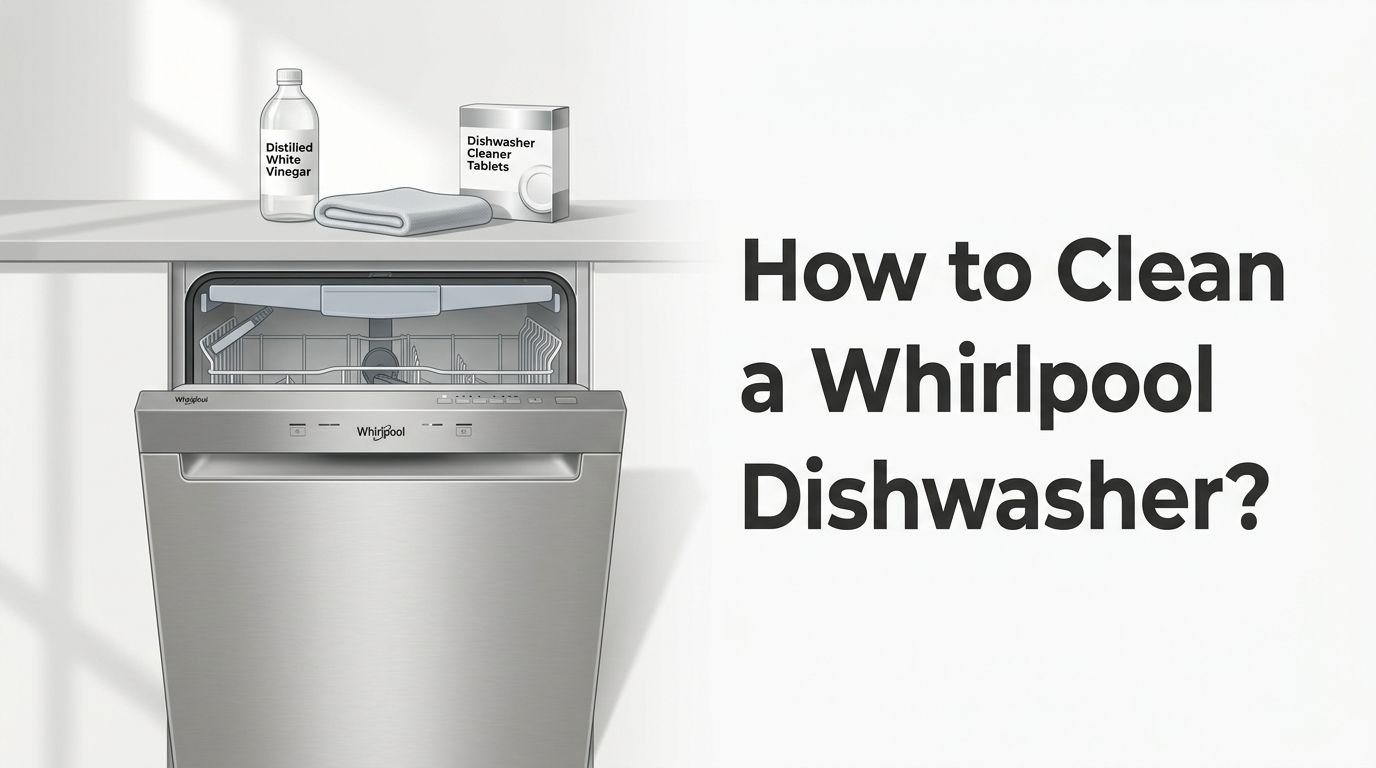
You will need distilled white vinegar, baking soda, a soft bristle brush or old toothbrush, a clean cloth or sponge, and mild dish soap. A toothpick or thin wire is helpful for clearing clogged spray arm holes.
If you prefer a ready made solution, you can use a dishwasher cleaning tablet. These tablets are formulated to dissolve grease, limescale, and mineral deposits inside the machine.
Avoid using bleach if your dishwasher has a stainless steel interior. Bleach can damage and discolor stainless steel surfaces. Also avoid abrasive scrubbing pads or wire brushes on any part of the dishwasher because they can scratch and damage the finish.
How to Clean the Whirlpool Dishwasher Filter
The filter is the most important part to clean. It sits at the bottom of the dishwasher tub, usually near the base of the lower spray arm. Its job is to trap food debris so it does not recirculate onto your clean dishes.
To remove the filter, twist it counterclockwise and lift it out. Some Whirlpool models have a two part filter system with an upper filter and a lower flat mesh filter. Remove both pieces.
Rinse the filter under warm running water. Use a soft brush and a small amount of dish soap to scrub away any stuck on food, grease, or calcium deposits. Do not use a wire brush because it can damage the fine mesh.
Once the filter is clean, place it back in the dishwasher and twist clockwise to lock it into position. Check your owner’s manual if you are unsure whether your filter is removable.
Pros of regular filter cleaning: Eliminates odors, improves water flow, and helps dishes come out cleaner. Cons: Requires manual effort, and some models have filters that are harder to access or cannot be removed at all.
How to Clean the Spray Arms
The spray arms distribute water throughout the dishwasher during each cycle. Over time, food particles and mineral deposits clog the small holes in these arms. Clogged spray arms lead to uneven cleaning and dishes that still have food residue after a full cycle.
Remove the lower spray arm by rotating its base counterclockwise. The upper spray arm typically detaches by rotating its base clockwise. Check your model’s manual for specific instructions.
Soak the spray arms in a basin of warm water mixed with white vinegar for 15 to 30 minutes. This loosens mineral buildup and softens trapped debris. Then use a toothpick, thin wire, or small brush to clear each individual spray hole.
Rinse the spray arms under running water and hold them up to make sure water flows freely through every hole. Reinstall them securely before running your next cycle.
Pros of this method: Restores full water pressure and dramatically improves cleaning results. Cons: Requires removing parts and can be time consuming if the buildup is heavy.
Deep Clean With White Vinegar
White vinegar is a natural acid that cuts through grease, dissolves mineral deposits, and eliminates odors. It is one of the most effective and affordable ways to deep clean your Whirlpool dishwasher.
Start with a completely empty dishwasher. Make sure the filter is already clean. Pour 2 cups (500 mL) of distilled white vinegar into a glass measuring cup or any dishwasher safe container. Place the container upright on the lower rack.
Run a normal wash cycle with the heat dry option turned off. Do not add any detergent. The vinegar will disperse throughout the cycle, breaking down buildup on the interior walls, racks, and hidden components.
Whirlpool notes that vinegar is an acid, so you should not use this method too frequently. Once a month is enough for most households. If you have hard water, you may benefit from doing this every two to three weeks.
Pros: Inexpensive, natural, and very effective at dissolving grease and limescale. Cons: Overuse can potentially damage rubber gaskets or internal parts. Does not kill all types of mold or bacteria as effectively as bleach.
Follow Up With Baking Soda
After the vinegar cycle is complete, baking soda provides a second layer of cleaning. It is a mild abrasive that helps scrub away remaining residue. It also neutralizes odors and leaves the interior smelling fresh.
Sprinkle 1 cup of baking soda across the bottom of the dishwasher tub. Close the door and run a short hot water cycle. The hot water activates the baking soda and helps it reach every surface inside the machine.
When this cycle finishes, open the door and let the dishwasher air dry. You should notice a visibly cleaner interior and a much fresher smell.
Important: Do not combine vinegar and baking soda in the same cycle. They react with each other and create a fizzy mixture that is less effective than using them separately. Run the vinegar cycle first, then follow with the baking soda cycle.
Pros: Very safe, removes stubborn odors, and leaves the interior bright. Cons: Less effective against heavy mineral deposits on its own, and it requires running two separate cycles, which uses more water and energy.
Clean the Door Gasket and Edges
The rubber gasket around your Whirlpool dishwasher door is a hotspot for mold, mildew, and grime. This seal stays damp after every cycle and rarely gets rinsed by the spray arms. Food particles and moisture collect in the folds of the gasket and along the door edges.
Use a damp cloth or sponge with mild dish soap to wipe the entire gasket. Pull the rubber folds open gently and clean inside them. Pay extra attention to the bottom of the door seal where debris tends to settle.
Wipe the interior edges of the door and the area around the hinges. These spots are easy to miss, but they accumulate a surprising amount of grime over time.
After wiping everything down, dry the gasket with a clean towel. Leaving the dishwasher door slightly open between cycles also helps air circulate and prevents mold growth.
Pros: Stops mold and mildew growth, eliminates hidden odors, and keeps the seal in good condition. Cons: Requires hands on effort each time, and stubborn mold may need a stronger cleaning solution like diluted bleach (only if your interior is not stainless steel).
How to Clean the Dishwasher Drain
A slow draining dishwasher or standing water at the bottom of the tub often signals a clogged drain. Food particles, grease, and soap residue can accumulate in the drain area and block water from flowing out properly.
Start by removing the bottom rack to access the drain area at the base of the tub. Check for any visible debris such as food scraps, broken glass, or small objects. Remove anything you find by hand.
If the drain seems slow, pour a quarter cup of baking soda directly into the drain hole. Follow that with one cup of distilled white vinegar. Let the mixture fizz and sit for 15 minutes. Then pour hot water down the drain to flush everything through.
Check the drain hose connection under your sink as well. A kinked or clogged drain hose can also cause drainage problems. Make sure it is clear and positioned correctly.
Pros: Prevents water backup and potential leaks, and improves cycle efficiency. Cons: May not fix serious blockages caused by hard objects or heavy grease buildup deep in the hose, which could require professional help.
Clean the Exterior and Control Panel
The outside of your Whirlpool dishwasher also needs attention. Fingerprints, grease splatters, and kitchen dust collect on the door and control panel. A dirty exterior makes even a clean kitchen look untidy.
For stainless steel exteriors, use a soft damp cloth and wipe in the direction of the grain. This prevents streaks and protects the finish. A small amount of mild dish soap on the cloth works well for tougher spots.
For plastic or painted door panels, a damp cloth with mild soap is all you need. Avoid abrasive cleaners or rough sponges that could scratch the surface.
Clean the control panel buttons gently with a slightly damp cloth. Do not spray any liquid directly onto the control panel because moisture can seep behind the buttons and damage the electronics. Wipe it with a nearly dry cloth instead.
Pros: Keeps the dishwasher looking new and maintains your kitchen’s overall appearance. Cons: Stainless steel can show streaks if you wipe against the grain or use the wrong cleaning product.
Dealing With Hard Water Mineral Buildup
Hard water is one of the biggest enemies of dishwasher cleanliness. It contains high levels of calcium and magnesium that leave white, chalky deposits on your dishwasher’s interior, racks, and heating element. These deposits reduce efficiency and make glassware look cloudy.
White vinegar is the first line of defense against mineral buildup. Run a vinegar cycle as described earlier. For heavier deposits, citric acid is a powerful natural alternative. Place two tablespoons of citric acid powder in the detergent dispenser and run a hot cycle on an empty dishwasher.
You can also use a commercial calcium, lime, and rust remover designed for dishwashers. Follow the product instructions carefully and avoid mixing it with other cleaning agents.
If you have very hard water (15 grains per gallon or above), Whirlpool recommends cleaning the filter and running a cleaning cycle at least once per month. Using a rinse aid in every cycle also helps prevent water spots and mineral film on your dishes.
Pros of citric acid: Very effective at dissolving heavy mineral deposits and safe for most dishwasher interiors. Cons: Can be harder to find than vinegar or baking soda, and overuse may affect rubber components over time.
How to Remove Bad Odors From Your Whirlpool Dishwasher
A smelly dishwasher usually has one or more identifiable causes. The most common source is trapped food debris in the filter or drain area. The second most common source is mold or mildew growing on the door gasket.
Start by cleaning the filter, drain, and door gasket as described in the previous sections. This alone solves the odor problem in most cases.
If the smell persists, run a vinegar cleaning cycle followed by a baking soda cycle. This combination eliminates most stubborn odors. For very strong or persistent smells, check the drain hose connection under the sink. A faulty or improperly looped drain hose can allow sewer gas to enter the dishwasher.
Make it a habit to remove food scraps from the bottom of the tub after every load. Also, leave the dishwasher door slightly ajar between uses to allow air flow and prevent moisture from becoming trapped.
Pros of the vinegar and baking soda approach: Natural, effective, and safe for most models. Cons: Does not address plumbing issues like a bad drain hose connection, which may require a plumber.
Create a Monthly Cleaning Schedule
Consistency is the key to a clean, efficient Whirlpool dishwasher. A simple monthly routine prevents buildup, odors, and performance problems before they start.
After every load: Check the bottom of the tub and remove any visible food debris. This takes less than 30 seconds and makes a big difference over time.
Every week: Wipe down the door gasket, edges, and exterior with a damp cloth. This prevents mold growth and keeps the outside looking clean.
Once a month: Remove and clean the filter. Run a vinegar cycle followed by a baking soda cycle. Inspect and clean the spray arms. This full deep clean takes about two hours but most of that time is just waiting for cycles to finish.
Every three to six months: Check the drain hose, inspect spray arm holes for mineral buildup, and examine the interior for any signs of damage or heavy deposits.
Pros of a regular schedule: Prevents costly repairs, maintains cleaning performance, and extends the life of your appliance. Cons: Requires consistency and discipline to keep up the routine.
Frequently Asked Questions
How often should I clean my Whirlpool dishwasher filter?
You should clean the filter at least once a month. If you use your dishwasher daily or have hard water, cleaning it every two weeks is a better practice. A dirty filter leads to bad smells, poor drainage, and food residue left on dishes after a cycle. Cleaning it takes only a few minutes and makes a noticeable difference in performance.
Can I use bleach to clean my Whirlpool dishwasher?
You can use bleach if your dishwasher has a plastic interior. Add half a cup of liquid bleach to the bottom of an empty dishwasher and run a normal cycle. Do not use bleach in a dishwasher with a stainless steel interior because it can cause permanent discoloration and damage to the surface.
Why does my Whirlpool dishwasher smell bad even after cleaning?
If the smell persists after a full cleaning, check the drain hose under your sink. A drain hose that is not looped properly can allow sewer gas to travel back into the dishwasher. Also check the air gap (if your model has one) and make sure the garbage disposal connection is clear. Persistent odors sometimes indicate a plumbing issue rather than a cleaning issue.
Is it safe to use vinegar in my Whirlpool dishwasher?
Yes, white distilled vinegar is safe for occasional use in your Whirlpool dishwasher. Whirlpool’s own maintenance guide recommends it as a cleaning method. However, vinegar is an acid, so you should limit its use to once a month. Using it more often than that could gradually wear down rubber seals and gaskets.
What is the best way to remove hard water stains inside the dishwasher?
Run a cleaning cycle with 2 cups of white vinegar on the lower rack. For stubborn mineral deposits, use citric acid powder in the detergent dispenser with a hot cycle. These natural acids dissolve calcium and lime buildup effectively. Consistent use of a rinse aid also helps prevent new mineral stains from forming on the interior surfaces.
Can I clean my Whirlpool dishwasher with dishes inside?
If you are using a dishwasher cleaning tablet, many brands allow you to run the tablet with a normal load of dishes. Place the tablet in the bottom of the tub and your regular detergent in the dispenser. However, for deep cleaning with vinegar or baking soda, you should always run the cycle with an empty dishwasher for the best results.

Hi, I’m Greta Monroe, and I’m passionate about making every kitchen a place of creativity and efficiency. I’ve spent years exploring and testing kitchen gadgets, tools, and devices to help home cooks find exactly what they need. At ChefKit Blog, I share honest Amazon product reviews and practical insights on kitchen essentials that actually make a difference. From must-have basics to innovative new devices, I break down what works and what doesn’t. My mission is simple: to help you build a kitchen that inspires delicious possibilities every single day.