Philips 7000 Series Pasta Maker Review 2026: Worth the Hype?
Do you love fresh pasta but hate the mess and effort of making it by hand? The Philips 7000 Series Pasta Maker promises to change that. This fully automated machine claims to deliver restaurant-quality pasta in under 10 minutes. But does it actually live up to the promise?
I spent weeks testing this machine with different flours, recipes, and pasta shapes. I pushed it through multiple batches, tried unusual dough types, and even tested the cleanup process.
This review covers everything you need to know before you buy. You will learn about the features, the performance, the cleaning, and whether this machine is a good fit for your kitchen.
Key Takeaways:
- The Philips 7000 Series Pasta Maker (HR2660/03) is a fully automated machine that mixes, kneads, and extrudes fresh pasta in under 10 minutes. You simply add your ingredients and press a button.
- It includes 8 shaping discs that cover popular pasta types like spaghetti, fettuccine, penne, lasagna, angel hair, pappardelle, tagliatelle, and thick spaghetti. This gives you plenty of variety for everyday meals.
- ProExtrude Technology uses a powerful 150W motor, a metal mixing paddle, and a strong metal front panel. This system produces smooth, springy pasta with a consistent texture.
- The machine makes up to 8 portions in a single batch. This is enough for a family dinner or meal prep for the week. The large capacity saves time.
- Cleanup is simple because most parts are dishwasher safe. The non-stick surfaces and detachable components make the process fast and hassle-free.
- The Philips HomeID app connects to the machine and offers guided recipes, step-by-step instructions, and tips. This feature is great for beginners who want extra guidance.

Philips 7000 Series Pasta Maker: Overview and First Impressions
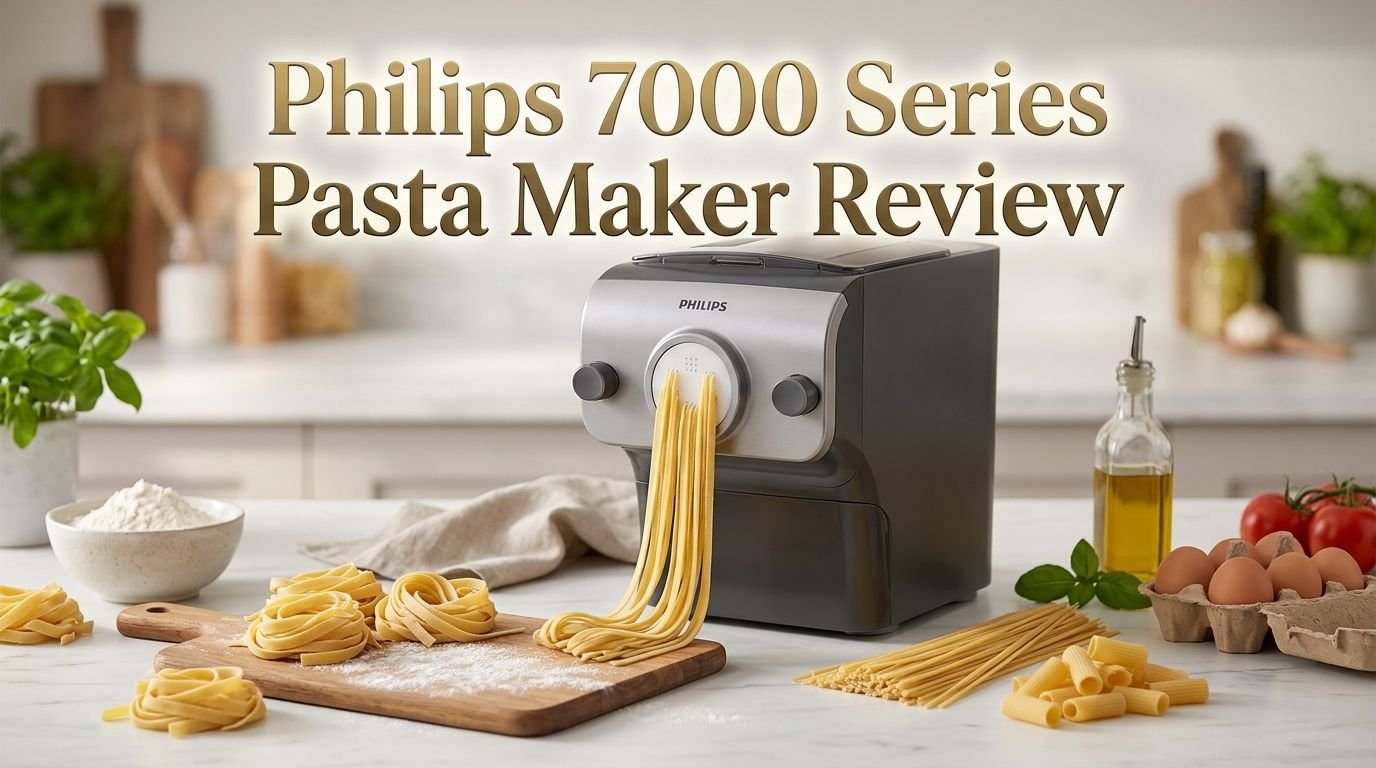
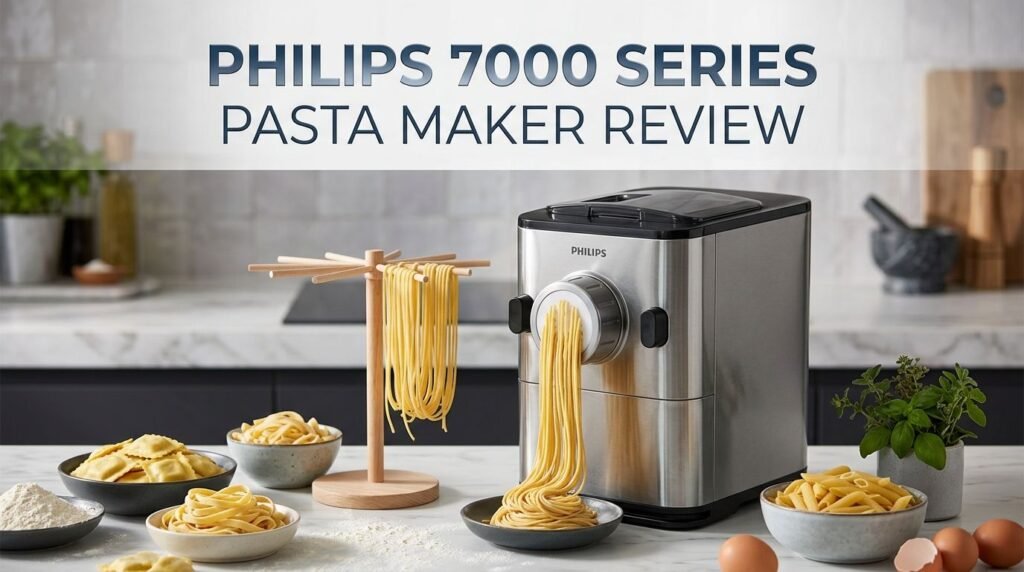
The Philips 7000 Series Pasta Maker (HR2660/03) arrives in a well-packed box with all accessories neatly organized. The machine itself has a clean, white design that fits most kitchen styles. It feels solid and heavy, which gives confidence about its build quality.
Right out of the box, you get the main unit, 8 shaping discs, a measuring cup, a cleaning tool, and a recipe booklet. The LED display on the front panel is simple and easy to read. The buttons are minimal, which keeps the user experience straightforward.
First impressions are positive. The machine looks premium and feels well-built. The non-slip feet keep it stable on the countertop during operation. The 0.8m cord length is a bit short, so you may need to place it near an outlet. Overall, the unboxing experience feels complete and well-organized.
ProExtrude Technology Explained
The standout feature of this pasta maker is its ProExtrude Technology. This system combines a powerful 150W motor, a metal mixing paddle, and a strong metal front panel. Together, these parts work to mix, knead, and extrude dough smoothly.
The metal mixing paddle is a big upgrade over plastic alternatives found in cheaper machines. It handles thicker doughs like whole wheat and semolina without straining. The motor runs consistently and does not overheat during extended use.
The result is pasta with a smooth, springy texture. The extrusion process pushes dough evenly through the shaping discs. This creates consistent thickness and shape across every piece. You will notice the difference compared to hand-rolled or lower-end machine pasta. The surface of the extruded pasta also has a slight roughness that helps sauces cling better.
Perfect Mixing Technology: How It Works
The Perfect Mixing Technology is another feature that sets this machine apart. It uses an optimized mixing chamber design paired with a powerful metal blending bar. This combination ensures the flour and liquid ingredients blend evenly every time.
Getting the dough consistency right is the hardest part of making pasta. Too dry and the machine jams. Too wet and the pasta comes out sticky. This technology takes the guesswork out of the process. The mixing chamber distributes moisture evenly across the flour.
I tested this with all-purpose flour, semolina, and whole wheat flour. Each batch came out with a consistent, smooth dough base. The machine handled all three types without any issues. You just pour the dry ingredients in, add the liquid slowly, and the machine does the rest.
Top 3 Alternatives for Philips 7000 Series Pasta Maker
If the Philips 7000 Series is outside your budget or you want a different style of pasta maker, here are three strong alternatives worth considering.

The VEVOR Electric Pasta Maker is a budget-friendly option with a 150W motor and 8 pasta shapes. It includes 4 intelligent modes and a 500g flour capacity. This machine is a solid pick for anyone who wants an automatic pasta maker at a lower price point.

The KitchenAid KSMPRA 3-Piece Pasta Roller and Cutter Set is perfect if you already own a KitchenAid Stand Mixer. It attaches directly to the mixer and gives you a pasta roller, fettuccine cutter, and spaghetti cutter. This is a great space-saving option since it uses a machine you likely already have.

The Marcato Atlas 150 Classic Pasta Machine is the most popular manual pasta maker in the world. It is made in Italy from chrome-plated steel. If you prefer a hands-on approach and want precise control over your pasta thickness, this is the gold standard. It supports 10 thickness settings and makes lasagna, fettuccine, and tagliolini.
8 Shaping Discs: What Pasta Types Can You Make?
The Philips 7000 Series comes with 8 shaping discs that cover a wide range of pasta types. The included shapes are spaghetti, fettuccine, penne, lasagna, angel hair, thick spaghetti, pappardelle, and tagliatelle.
Each disc is easy to insert and lock into place. You simply choose your shape, slide the disc into the front panel, and start the machine. Switching between discs takes only a few seconds. This makes it easy to prepare different shapes for different dishes in a single cooking session.
The pasta quality is consistent across all disc types. Thin shapes like angel hair come out delicate and uniform. Thicker shapes like pappardelle have a satisfying chewiness. The penne disc impressed me the most because tube-shaped pasta is hard to make at home without a professional extruder. Philips also sells additional discs separately if you want shapes like rigatoni, shells, or paccheri.
How Fast Does It Actually Make Pasta?
Philips claims this machine can produce fresh pasta in under 10 minutes. Based on my testing, this claim is accurate. The full process from adding ingredients to having extruded pasta ready takes about 8 to 10 minutes depending on the dough type.
The mixing and kneading phase takes around 3 to 4 minutes. The extrusion phase takes another 4 to 5 minutes for a full batch. You can cut the pasta to your preferred length as it comes out of the machine using the built-in cutter or a knife.
A single batch produces up to 8 portions. This is enough for a large family dinner. If you are doing meal prep, you can run two batches back to back. The motor handles consecutive batches without overheating. For a weeknight dinner, the speed of this machine is a genuine time saver compared to hand-rolling or using a manual press.
Cleaning and Maintenance: Is It Really Easy?
Cleaning a pasta maker is often the biggest complaint among users. The Philips 7000 Series addresses this with dishwasher-safe, non-stick, detachable parts. Most of the removable components can go straight into the dishwasher.
The mixing chamber, shaping discs, and front panel all detach with a simple twist or pull. The included cleaning tool helps remove leftover dough from the discs and mixing bar. I found that rinsing the parts immediately after use prevents dough from drying and sticking.
One small tip: the shaping discs clean best if you soak them in warm water for a few minutes before scrubbing. Dried pasta dough can lodge in the small holes of discs like angel hair and spaghetti. A brief soak loosens it quickly. Overall, the cleanup takes about 5 to 10 minutes. This is a reasonable trade-off for a batch of fresh homemade pasta.
Philips HomeID App Integration
The Philips 7000 Series Pasta Maker connects to the Philips HomeID App. This app is available for both iOS and Android devices. It offers guided recipes, step-by-step cooking instructions, and tips specific to the 7000 Series model.
The app is especially useful for beginners. It walks you through exact measurements for different flour types and liquids. It also suggests recipes based on the shaping disc you are using. You can find ideas for flavored pasta, gluten-free options, and even Asian-style noodles.
More experienced users may not need the app as much. But it still offers useful reference material for trying new flour blends or unusual ingredients like spinach, beetroot, or squid ink. The app updates with new recipes periodically, which keeps things fresh. It is a nice bonus feature that adds value to the machine.
Build Quality and Durability
The Philips 7000 Series feels like a premium appliance. The body is made from high-quality plastic with metal reinforcements in key areas. The front panel where the extrusion happens is solid metal. This is important because the extrusion process puts significant pressure on this part.
The metal mixing paddle is durable and shows no signs of wear after many uses. The shaping discs are also made of quality material that resists bending or warping. The non-slip feet keep the machine firmly in place during operation, even during heavy dough mixing.
The LED display is bright and clear. The buttons respond well and do not feel cheap. The overall construction gives the impression that this machine will last for years with proper care. Philips backs it with a standard warranty, which adds extra peace of mind. For the price, the build quality matches or exceeds expectations.
Who Should Buy the Philips 7000 Series Pasta Maker?
This machine is ideal for families who eat pasta frequently. If you cook pasta two or more times per week, this machine will save you time and improve the quality of your meals. The large 8-portion capacity makes it great for feeding a crowd.
Beginners will love it because the automation removes the learning curve. You do not need to know how to knead dough or roll pasta sheets. The machine handles everything after you add the ingredients. The HomeID app guides you through the process.
Health-conscious individuals will also benefit. You control every ingredient. There are no preservatives, additives, or excess sodium. You can use whole wheat flour, gluten-free blends, or vegetable-infused doughs. This level of control is hard to get with store-bought pasta. If you value fresh, clean ingredients, this machine gives you full control.
Who Might Want to Skip This Machine?
The Philips 7000 Series is not for everyone. If you only make pasta once a month, the investment may not be justified. The machine takes up counter space and costs more than a basic manual roller.
Traditional pasta enthusiasts who enjoy the hands-on process of rolling and cutting dough may find this machine too automated. Some people enjoy the tactile experience of making pasta by hand. This machine removes that element entirely.
Storage can be a factor too. The machine is not small. You will need dedicated cabinet or counter space for it. The 0.8m cord length also means you need a nearby outlet. If your kitchen is tight on space, consider whether this machine fits your setup before you buy.
Philips 7000 Series Pasta Maker: Performance With Different Flours
One of the biggest tests for any pasta maker is how it handles different types of flour. I tested the Philips 7000 Series with five common flour types: all-purpose, semolina, 00 flour, whole wheat, and a gluten-free rice flour blend.
All-purpose flour produced a smooth, reliable dough with no issues. This is the most forgiving flour and works great for beginners. Semolina created a slightly firmer, more textured pasta that held up well in soups and heavy sauces.
00 flour gave the silkiest result. This is the traditional Italian pasta flour, and the machine handled it beautifully. Whole wheat required slightly more liquid but still produced a good dough with a nutty flavor. Gluten-free rice flour was the trickiest. The dough was more fragile, but the machine still extruded it without jamming. You just need to adjust the liquid ratio. The recipe booklet and HomeID app both provide guidance for each flour type.
Noise Level and Power Consumption
The Philips 7000 Series runs on a 150W motor. This is energy-efficient for a kitchen appliance. Running the machine for a full 10-minute cycle uses very little electricity. You will not notice any difference on your power bill.
The noise level is moderate. During the mixing phase, the machine sounds similar to a stand mixer. During extrusion, there is a low humming sound as the dough pushes through the disc. It is not loud enough to disturb a conversation in the same room.
Compared to other electric pasta makers, the Philips 7000 Series is on the quieter side. The metal construction helps dampen vibration. The non-slip feet also prevent the machine from rattling against the countertop. If you live in an apartment or cook late at night, the noise level should not be a concern.
Philips 7000 Series Pasta Maker: Pros and Cons
Let us break down the strengths and weaknesses. On the positive side, the ProExtrude Technology delivers smooth, consistent pasta every time. The 8 included shaping discs give you plenty of variety. The fully automated process is perfect for busy cooks. The dishwasher-safe parts make cleanup simple. The HomeID app adds guided support for beginners.
On the downside, the cord length at 0.8m is short. The machine is bulky and requires storage space. The price point is higher than manual pasta makers. Gluten-free doughs require extra experimentation to get right. You also cannot make filled pasta like ravioli or tortellini with this machine.
Overall, the pros far outweigh the cons for most home cooks. The speed, consistency, and ease of use make this one of the best electric pasta makers you can buy right now. If fresh pasta is something you want to enjoy regularly, the Philips 7000 Series is a strong investment.
Final Verdict: Is the Philips 7000 Series Pasta Maker Worth It in 2026?
Yes, the Philips 7000 Series Pasta Maker is absolutely worth it in 2026. It delivers on every major promise. The pasta quality is excellent. The automation saves real time. The cleanup is genuinely easy.
This machine is best suited for families, busy professionals, and anyone who values fresh, homemade food without the labor. The ProExtrude and Perfect Mixing technologies work together to produce pasta that tastes better than anything from a box.
At its current price point, it sits in the mid-to-premium range for electric pasta makers. But you get what you pay for. The build quality, the number of included discs, the app integration, and the overall performance justify the cost. If you eat pasta regularly and want to elevate your home cooking, the Philips 7000 Series Pasta Maker is one of the best choices available right now.
Frequently Asked Questions
How long does the Philips 7000 Series Pasta Maker take to make pasta?
The machine produces fresh pasta in under 10 minutes. The mixing phase takes about 3 to 4 minutes. The extrusion phase takes another 4 to 5 minutes. A full batch of up to 8 portions is ready in a single cycle. This makes it one of the fastest electric pasta makers on the market.
Can I use gluten-free flour in the Philips 7000 Series Pasta Maker?
Yes, you can use gluten-free flour. Rice flour blends work well, but you may need to adjust the liquid ratio. The dough tends to be more fragile. The HomeID app and the included recipe booklet both provide specific guidelines for gluten-free pasta. Start with small batches to find the right consistency.
Is the Philips 7000 Series Pasta Maker dishwasher safe?
Most detachable parts are dishwasher safe. The mixing chamber, shaping discs, and front panel can go in the dishwasher. The main body of the machine should only be wiped clean with a damp cloth. The non-stick surfaces make hand washing quick and easy if you prefer that method.
How many pasta shapes can I make with the Philips 7000 Series?
The machine comes with 8 shaping discs out of the box. These include spaghetti, fettuccine, penne, lasagna, angel hair, thick spaghetti, pappardelle, and tagliatelle. Philips also sells additional discs separately for shapes like rigatoni, shells, and paccheri.
Can I make colored or flavored pasta with this machine?
Yes, this machine handles flavored pasta well. You can add ingredients like spinach, beetroot, squid ink, tomato paste, or herbs directly to the dough. The Perfect Mixing Technology blends these additions evenly into the flour. The HomeID app includes several flavored pasta recipes to get you started.
Is the Philips 7000 Series Pasta Maker noisy?
The noise level is moderate. It sounds similar to a stand mixer during the mixing phase. The extrusion phase produces a low hum. It is not loud enough to disturb conversation. Compared to other electric pasta makers, the Philips 7000 Series is on the quieter side.