Ninja BL660 Blender Review: Worth Your Money in 2026?
Making smoothies should be easy. Finding the right blender should be simple. But walking into a store or scrolling through Amazon can make your head spin.
You see hundreds of options, each promising to be the best thing since sliced bread.
Today we’re talking about the Ninja BL660 blender. This machine has been sitting on kitchen counters for years. People love it. Some people hate it.
Key Takeaways:
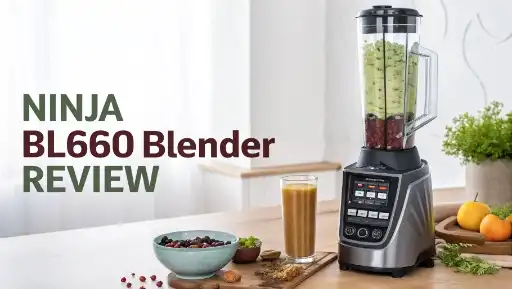
- Power and Performance: The Ninja BL660 comes with a 1100-watt motor that can crush ice, blend frozen fruits, and make smooth drinks without breaking a sweat. This isn’t a weak blender that struggles with tough ingredients.
- Total Crushing Technology: Ninja’s special blade design turns ice into snow in seconds. You get smooth results for smoothies, frozen drinks, and even nut butters if you’re patient enough.
- Three Containers Included: You get a 72-ounce pitcher, two 16-ounce cups with lids, and one 24-ounce cup. This means you can make big batches for the family or single servings for yourself.
- Price Point Sweet Spot: This blender costs less than high-end models like Vitamix but performs better than cheap alternatives. You get professional results without the professional price tag.
- Dishwasher Safe Parts: Cleanup is simple because most parts can go right into the dishwasher. The blades need a little more care, but the containers and lids are easy to clean.
- Not Perfect for Everything: While this blender handles most jobs well, it struggles with very small amounts of food and isn’t the best choice for hot soups or making super smooth nut butters.

What Makes the Ninja BL660 Different from Other Blenders
The Ninja BL660 stands out because it focuses on real kitchen tasks. You don’t need a degree in engineering to use it. The controls are simple. Three speeds and a pulse button. That’s it. No complicated programs or confusing settings.
The blade system is where Ninja really shines. Instead of one blade at the bottom, you get stacked blades that reach different heights. This design means every ingredient gets blended evenly. No more chunks hiding at the top while the bottom turns to liquid.
The motor sits at 1100 watts. This number matters because it tells you how much power the blender has. More power means better blending. The Ninja BL660 has enough power to handle frozen fruits, ice cubes, and tough vegetables. You won’t hear the motor struggling or smell burning plastic like cheaper blenders.
Power and Performance: Can It Really Crush Ice and Blend Smoothies?
Let’s talk about what this blender actually does in your kitchen. The 1100-watt motor isn’t just a number on the box. It translates to real power when you’re blending.
Ice crushing is where many blenders fail. They either leave chunks or they overheat. The Ninja BL660 turns ice cubes into snow in about 10 to 15 seconds. You can make frozen drinks that taste like they came from a restaurant. The texture is smooth and consistent.
For smoothies, this blender performs excellently. Throw in frozen berries, a banana, some spinach, and your liquid of choice. Hit the button. In less than a minute, you have a perfectly smooth drink. The stacked blades pull ingredients down and blend everything evenly.
Making nut butter is possible but requires patience. The Ninja BL660 can do it, but you need to stop and scrape down the sides several times. It takes about five to ten minutes of blending with breaks. Professional food processors do this job faster, but the Ninja manages if you don’t mind the extra time.
Thick mixtures like hummus or salsa work well. The pulse function gives you control over texture. You can make chunky salsa or smooth dips. The large pitcher size means you can make enough for a party.
One weakness is small quantities. If you’re trying to blend just a tiny amount, the blades might not reach everything. The personal cups solve this problem for drinks, but the large pitcher needs a minimum amount to work properly.
Design and Build Quality: Does It Feel Cheap or Premium?
When you take the Ninja BL660 out of the box, you notice the weight immediately. This blender has substance. The base is heavy and stable. It won’t walk across your counter when blending tough ingredients.
The plastic construction might worry some people. Yes, most parts are plastic. But it’s thick, durable plastic. The containers feel solid. They don’t flex or feel flimsy. After years of use, many owners report no cracks or damage.
The blade assembly is made from stainless steel. These blades stay sharp for years. They’re designed to handle impact from ice and frozen ingredients. The stacked design means multiple blades work together. This creates better blending results than single-blade systems.
The control panel is straightforward. Three speed settings marked as Low, Medium, and High. Plus a Pulse button. No digital displays or complicated programming. This simplicity means fewer things can break. It also means anyone in your family can use it without training.
Top 3 Alternatives for Ninja BL660


What Can You Actually Make with the Ninja BL660?
Blenders promise to do everything. Let’s be realistic about what the Ninja BL660 actually handles well. Starting with the obvious: smoothies and shakes are perfect. This is where the blender truly excels. Frozen fruits, ice, protein powder, vegetables, all blend perfectly smooth.
Frozen cocktails come out restaurant quality. Margaritas, daiquiris, piña coladas, all work beautifully. The ice crushing ability means drinks have the perfect slushy texture. The large pitcher makes enough for several people.
Salsas and dips work well using the pulse function. You control the texture by how long you pulse. Chunky salsa takes just a few pulses. Smooth hummus requires more blending time. The large capacity means you can make party-sized portions.
Soups are tricky. You can blend cooked vegetables and broth into smooth soup. But you cannot heat soup in this blender. Some high-end blenders create heat through friction. The Ninja BL660 doesn’t do this. You need to heat soup separately.
Nut butters require patience. The blender can make peanut butter, almond butter, and cashew butter. But you need to stop frequently and scrape down the sides. It takes time. A food processor does this job faster.
Personal Cups: Are They Actually Useful or Just a Gimmick?
The Ninja BL660 includes personal cups. Some people think this is just marketing. Let’s see if they actually add value. The package includes two 16-ounce cups and one 24-ounce cup. Each cup comes with a sip-and-seal lid.
For single servings, these cups shine. Put your smoothie ingredients directly in the cup. Blend. Remove the cup. Attach the lid. Walk out the door. No need to pour from a large pitcher. This saves time and reduces dishes.
The portion control aspect helps people watching calories or macros. A 16-ounce cup is a perfect serving size. You see exactly how much you’re consuming. No guessing or overfilling.
Convenience factor is high. Make your morning smoothie in two minutes. The cups fit in car cup holders. The lids prevent spills. You can drink while driving, walking, or working.
One downside is cleaning multiple containers. If different family members want different smoothies, you need multiple cups. This means more parts to wash. The dishwasher helps, but hand washing the blades still takes time.
Noise Level: Will It Wake the Whole House?
Blenders are loud. Anyone who tells you otherwise is selling something. The Ninja BL660 is no exception. When you turn it on, everyone knows. But let’s put this in perspective with real numbers and comparisons.
The Ninja BL660 reaches about 88 to 95 decibels during operation. For reference, normal conversation is around 60 decibels. A lawnmower is about 90 decibels. So yes, this blender is loud. But it’s not unusual for a powerful blender.
Compared to other blenders, the Ninja BL660 sits in the middle range. Vitamix blenders are slightly louder. Cheap blenders are sometimes quieter but take longer to blend, so total noise time increases. The Ninja gets the job done quickly, which means less total noise.
Morning smoothie concerns are valid. If you wake up early and others are sleeping, running this blender will wake them. Some solutions include making smoothies the night before or waiting until others wake up.
Cleaning and Maintenance: Is It Really Dishwasher Safe?
Cleaning can make or break your relationship with a kitchen appliance. Nobody wants to spend twenty minutes scrubbing blender parts after making a smoothie. The Ninja BL660 gets cleaning mostly right.
The containers and lids are completely dishwasher safe. Throw them on the top rack. They come out clean. This convenience factor is huge for daily use. No scrubbing required.
The blade assemblies need more care. Ninja says they’re dishwasher safe, but many users report better longevity with hand washing. The blades have lots of edges and crevices where food can hide. A bottle brush helps get everything clean.
Quick cleaning between uses is simple. Add warm water and a drop of dish soap to the container. Blend on high for 30 seconds. Rinse. Done. This works for smoothies and drinks that don’t have sticky residue.
For sticky or oily residues like nut butters, you need more effort. The self-cleaning trick doesn’t remove everything. You’ll need to disassemble the blade assembly and scrub with a brush. Hot water helps dissolve oils.
Durability and Warranty: Will It Last for Years?
You want your blender to last. Nobody wants to buy a new one every year. The Ninja BL660 has a mixed track record on durability. Some units last for years without problems. Others develop issues within the first year.
The motor generally stays strong. Most complaints aren’t about motor failure. The 1100-watt motor is built to handle regular use. People report using their Ninja BL660 daily for years with no power loss.
Blade assemblies hold up well. The stainless steel doesn’t rust or dull easily. Even after crushing ice hundreds of times, the blades keep their edge. This is one area where the Ninja BL660 truly impresses.
The plastic containers sometimes develop cracks. This usually happens from temperature shock. Going from hot to cold or cold to hot can stress the plastic. Normal use at room temperature causes fewer problems. Some users report cloudiness developing over time, but this doesn’t affect function.
Gear teeth on the containers occasionally strip. This is the part that connects the container to the motor. When this happens, the container won’t blend properly. This seems to be the most common failure point. Replacement containers are available but cost money.
Price and Value: Is the Ninja BL660 Worth the Cost?
The Ninja BL660 typically costs between $90 and $120 depending on sales and retailers. This puts it in the middle price range for blenders. It’s not cheap, but it’s not expensive either. Let’s break down the value proposition.
What you get for your money includes the main base unit, one 72-ounce pitcher, two 16-ounce cups, one 24-ounce cup, and multiple lids. This is a complete blending system. You don’t need to buy additional accessories to get full functionality.
Compared to budget blenders under $50, the Ninja BL660 offers significantly better performance. Cheap blenders struggle with ice and frozen ingredients. They overheat. They leave chunks. The extra money gets you a tool that actually works well.
Compared to premium blenders like Vitamix (starting around $300), the Ninja BL660 delivers 80% of the performance for 30% of the cost. Yes, Vitamix is better. But is it three times better? For most people, the answer is no. The Ninja handles everyday tasks beautifully.
The cost per use matters more than initial price. If you use this blender every day for five years, the cost per use is tiny. Even if it costs $120, that’s less than 7 cents per day over five years. That’s incredible value for a tool that makes healthy eating easier.
Replacement costs should factor into your decision. If a container cracks or gears strip, replacement parts cost $20 to $40. This is cheaper than buying a whole new blender, but it’s an additional expense to consider.
Common Problems and How to Fix Them
No product is perfect. The Ninja BL660 has some recurring issues. Knowing about them helps you troubleshoot or decide if these problems are deal-breakers for you.
Leaking is the most common complaint. Liquid seeps out from the bottom of the pitcher during blending. This usually happens because the blade assembly isn’t tightened properly. Solution: Make sure the blade assembly is screwed on tightly. Check that the rubber gasket is in place and clean.
Container won’t blend even though the motor runs. This happens when the gear teeth strip on the container. The motor spins but doesn’t connect to the blades. Solution: You need a replacement container. This is a design flaw some units experience.
Burning smell during use scares people. Usually this happens when blending thick mixtures without enough liquid. The motor works too hard. Solution: Add more liquid. Use the pulse function instead of continuous blending. Let the motor rest between pulses.
Blades get stuck when trying to remove the assembly from the pitcher. The blades cut into food particles that dry and act like glue. Solution: Soak the pitcher in warm water for ten minutes. The dried food softens and the assembly unscrews easily.
Loud rattling noise beyond normal blending sounds indicates something is loose. Solution: Check that the pitcher is seated properly on the base. Ensure the blade assembly is tight. If the noise continues, the motor mount might be loose, which requires contacting customer service.
Cloudiness develops in plastic containers over time. This is cosmetic and doesn’t affect function. Solution: Try soaking in a mixture of baking soda and water. Some cloudiness is permanent from microscopic scratches.
FAQs
Can the Ninja BL660 blend hot liquids?
No, you should not blend hot liquids in this blender. The heat can build pressure and cause the lid to pop off. It can also damage the plastic containers. Let liquids cool to room temperature before blending. If you need to blend soup, cook and cool it first, then reheat after blending.
How long should I run the blender at one time?
For most tasks, blend for 30 to 60 seconds. If you’re making something thick like nut butter, use pulse bursts with rest periods. Don’t run the motor continuously for more than one minute. Let it rest for a minute between long blending sessions. This prevents overheating.
Can I grind coffee beans in the Ninja BL660?
Yes, you can grind coffee beans using the personal cups. Add beans to a 16-ounce cup and pulse until you reach the desired consistency. The blades work well for coarse to medium grinds. Very fine espresso grind is harder to achieve consistently.
Why does my smoothie have chunks after blending?
Chunks usually mean you didn’t blend long enough or the ingredients were too frozen. Try adding more liquid to help ingredients move around. Start on low speed and gradually increase to high. Blend for a full minute. If you used frozen fruit, let it thaw slightly for better results.
Is the Ninja BL660 good for making baby food?
Yes, this blender works well for baby food. Steam your vegetables until very soft. Add a small amount of liquid like water or breast milk. Blend in the large pitcher or a personal cup until completely smooth. The texture control lets you adjust as