
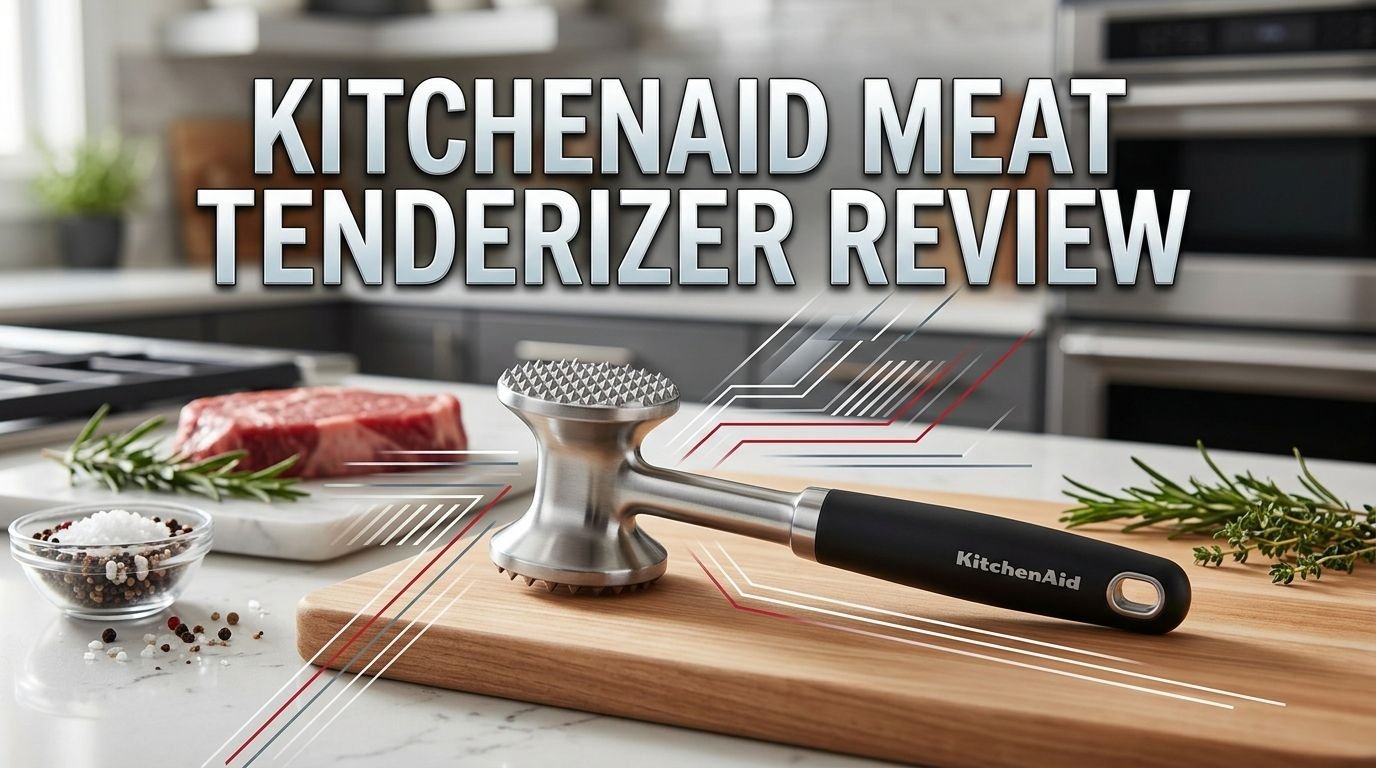
KitchenAid Meat Tenderizer Review 2026: Top Tier or Trash?
Have you ever cooked a steak or chicken breast that turned out too tough to enjoy? You are not alone. Many home cooks struggle to get that perfect, fall-apart texture from their meat.
This is exactly where a quality meat tenderizer steps in. The KitchenAid Meat Tenderizer has gained huge popularity among home cooks and food lovers who want reliable results in their kitchen.
In this review, we will take a close look at the KitchenAid Gourmet Multi Sided Meat Tenderizer. We will cover its design, performance, ease of use, and how it stacks up against other options on the market.

Key Takeaways:
- The KitchenAid Gourmet Meat Tenderizer is a dual-sided mallet that offers both a textured surface and a smooth surface. The textured side tears connective tissue and softens tough cuts. The smooth side flattens meat for even cooking. This makes it a two-in-one tool for your kitchen.
- It measures 9.45 inches in length and weighs just enough to give you solid pounding force without tiring your arm. The aluminum construction keeps the tool lightweight, and the ergonomic handle provides a secure grip during use.
- This tenderizer works on more than just meat. You can use it to crack shellfish, crush nuts, break up peppercorns, and even smash hard candy. It adds real versatility to your countertop.
- Cleaning is very easy. KitchenAid rates this tenderizer as dishwasher safe, so you can toss it in after use. Hand washing also works well with warm soapy water.
- The price point sits in the affordable range. Compared to premium meat tenderizers from brands like OXO or Jaccard, this KitchenAid model gives you trusted brand quality at a lower cost.
- User reviews are mostly positive, with buyers praising the comfortable grip, dual-surface design, and solid weight. Some users do note that the all-aluminum build may feel light for heavier tenderizing jobs.

KitchenAid Gourmet Multi Sided Meat Tenderizer: Product Overview
The KitchenAid Gourmet Multi Sided Meat Tenderizer carries model number KO119OHOBA. It is made from aluminum and features a nonstick coated head. The product dimensions are 1.97 x 3.35 x 9.45 inches, making it compact enough to store in a drawer or hang on a hook.
The head of the mallet has two distinct sides. One side has a textured surface with rows of pyramid-shaped spikes. These spikes dig into meat fibers, break down connective tissue, and help marinades absorb faster. The other side is completely smooth and flat. This side is perfect for pounding chicken breasts thin or flattening cutlets to an even thickness.
KitchenAid built the handle with an ergonomic shape. The grip feels natural in your hand and reduces fatigue during extended use. A hanging hole at the end of the handle lets you store the tenderizer on a wall hook for quick access. The overall design reflects KitchenAid’s attention to practical details that matter in real cooking situations.
Design and Build Quality
The aluminum construction gives this tenderizer a solid feel without adding unnecessary weight. You get enough heft to break down fibers with each swing, but your wrist won’t get tired after a few minutes of work. The balance between the handle and the head feels intentional and well-thought-out.
The nonstick coating on the weighted head is a nice bonus. It helps prevent meat from sticking to the surface during tenderizing. This means less mess and faster cleanup. The coating also resists scratches and wear over time with normal use.
One thing users notice right away is the color and finish. The black colorway looks sleek and professional. It matches well with other KitchenAid kitchen tools. The build quality matches what you would expect from a trusted brand that has been in kitchens for over a century.
The handle itself is smooth but offers a secure grip. Some users have noted that a rubberized grip might improve comfort during heavy-duty use. Still, for most standard kitchen tasks, the handle works well. Overall, the design scores high marks for form and function.
How It Performs on Different Meats
Performance is where this tenderizer really counts. We tested it on chicken breasts, pork chops, and beef steaks to see how it handles different proteins.
On chicken breasts, the smooth side did an excellent job of flattening the meat to an even thickness. This helps chicken cook evenly and prevents dry edges with raw centers. The textured side broke down the fibers quickly, making the chicken noticeably more tender after cooking.
For pork chops, the textured side made a clear difference. Tough pork chops became easier to chew after just a minute of tenderizing on each side. The spikes created small channels that also helped seasoning and marinade penetrate deeper into the meat.
Beef steaks, especially cheaper cuts like round steak, saw the biggest improvement. The KitchenAid tenderizer broke down the tough fibers and reduced cooking time. The results were a softer, juicier piece of meat that tasted more like a premium cut.
The tool also worked surprisingly well for crushing garlic cloves and cracking crab shells. Its versatility goes beyond just meat, which adds real value to the purchase.
Top 3 Alternatives for KitchenAid Gourmet Multi Sided Meat Tenderizer
If you want to explore other options before making your decision, here are three strong alternatives worth considering.
1. OXO Good Grips Die Cast Meat Tenderizer — This is a top-rated pick from Food Network and The Spruce Eats. It offers a die-cast aluminum build, dual-sided head with pyramid-shaped teeth, and a soft comfortable handle that absorbs pressure. It is ideal for pounding and tenderizing poultry, pork, and beef with minimal effort.

2. KITEXPERT Meat Tenderizer Hammer — This budget-friendly option comes with a comfortable-grip handle and a dual-sided mallet design. It works great for steak, beef, and fish. The heavy-duty build makes it suitable for both regular home cooking and serious kitchen prep work.

3. Jaccard 45-Blade Meat Tenderizer — If you prefer a needle-style tenderizer over a mallet, the Jaccard is a favorite among professional cooks. Its 45 stainless steel blades pierce meat fibers quickly. This reduces marinating time and promotes even cooking without flattening the cut.

Ease of Use and Comfort
One of the biggest selling points of the KitchenAid meat tenderizer is how easy it is to use. You simply pick it up, choose the side you need, and start pounding. There is no assembly, no setup, and no learning curve.
The weight distribution between the head and the handle makes each strike effective. You do not need to use excessive force to get good results. A moderate swing does the job on most cuts of meat. This is especially helpful for people with wrist pain or limited hand strength.
The ergonomic handle shape fits comfortably in both small and large hands. It does not slip during use, even if your hands are slightly wet or greasy from handling raw meat. This reliable grip adds a layer of safety to the tool.
For first-time users, this tenderizer is very forgiving. You can practice on chicken breasts and quickly develop a feel for the right amount of pressure. The straightforward design means you spend more time cooking and less time figuring out your tools.
Cleaning and Maintenance
Cleanup is one area where this tenderizer truly shines. KitchenAid designed it to be dishwasher safe, which saves you time and effort after a busy cooking session. Simply place it on the top rack of your dishwasher and let the machine do the work.
If you prefer hand washing, the process is just as simple. Warm water, dish soap, and a soft sponge are all you need. The nonstick coating on the head prevents meat residue from sticking, so there is no scrubbing involved. A quick rinse usually does the trick.
The aluminum body resists rust and corrosion, which means this tool holds up well over months and years of use. You do not need any special oils, sprays, or storage cases to keep it in good condition. Just dry it off after washing and store it in a drawer or hang it on a hook.
Long-term maintenance is virtually zero. Unlike blade-style tenderizers that need sharpening or replacement parts, this mallet design stays ready to use without any upkeep. It is a set-it-and-forget-it type of kitchen tool.
Versatility Beyond Meat
Many buyers purchase this tenderizer for meat alone. But they quickly discover it does much more. The smooth flat side acts like a small kitchen hammer. You can use it to crush ice for cocktails, flatten garlic cloves, or break apart frozen ingredients.
The textured side works well for cracking crab legs, lobster claws, and other shellfish. It provides enough force to break through hard shells without destroying the delicate meat inside. This is a genuine time saver during seafood dinners.
You can also use it to crush nuts and peppercorns for recipes that call for a coarse grind. Place them in a zip-lock bag and give them a few taps with the tenderizer. The result is a rough, flavorful texture that a food processor cannot replicate.
Some creative home cooks even use it to break up hard candy or chocolate for baking projects. The possibilities go far beyond its original purpose. This kind of versatility makes the KitchenAid meat tenderizer a tool that earns its place in your kitchen.
Price and Value for Money
The KitchenAid Gourmet Meat Tenderizer sits in the affordable price range, typically retailing between $12 and $18 on Amazon. This puts it in line with other mid-range tenderizers. But the brand recognition and build quality give it an edge over generic options at the same price.
When you compare it to the OXO Good Grips Die Cast (around $20 to $25) or the Jaccard 45-Blade Tenderizer (around $20 to $30), the KitchenAid offers solid performance at a lower entry cost. You get a trusted brand name without paying a premium.
The durability factor also plays into the value equation. This tenderizer lasts for years with basic care. You are not buying a disposable tool. The aluminum body and nonstick coating hold up through hundreds of uses.
For home cooks on a budget, this is one of the best investments you can make. It improves the quality of cheaper cuts of meat, which can save you money at the grocery store over time. Instead of buying expensive tenderloin every time, you can tenderize a round steak and get similar results on the plate.
What Users Are Saying
Customer feedback for the KitchenAid Gourmet Meat Tenderizer is overwhelmingly positive. On Amazon and Birch Lane, the product holds a rating around 4.8 out of 5 stars with hundreds of reviews.
Many users highlight the comfortable grip as a standout feature. Reviewers say the handle feels natural and does not cause hand fatigue, even during longer prep sessions. The dual-sided design also receives frequent praise for its flexibility.
Some users mention that the weight could be slightly heavier for those who deal with very thick cuts of beef or pork. The aluminum construction keeps things light, which some heavy-duty cooks find limiting. However, for standard home cooking, most reviewers say the weight is just right.
A few reviews mention the handle placement as slightly unusual at first. But most users adapt quickly and find it comfortable after a few uses. Overall, the consensus is clear: this is a reliable, affordable kitchen tool that delivers on its promises.
KitchenAid Meat Tenderizer vs. Blade-Style Tenderizers
There are two main types of meat tenderizers: mallet-style and blade-style. The KitchenAid falls into the mallet category. Understanding the difference helps you pick the right tool for your cooking style.
Mallet tenderizers like the KitchenAid flatten and pound meat. They break fibers through physical force. This approach works great for cutlets, chicken parmesan, schnitzel, and other dishes that need thin, even pieces of meat. The flattening action also speeds up cooking time.
Blade-style tenderizers like the Jaccard use dozens of small needles to pierce the meat. They do not flatten the cut. Instead, they break internal fibers and create tiny channels for marinade absorption. This method works best when you want to keep the shape of the meat intact.
The KitchenAid mallet gives you more control over thickness. The blade-style gives you more control over texture without changing shape. Both approaches produce tender meat, but they serve different cooking goals. If you frequently make thin cutlets, the KitchenAid is the better choice. If you prefer thick steaks with deep flavor penetration, a blade tenderizer might suit you more.
Who Should Buy This Tenderizer?
The KitchenAid Gourmet Meat Tenderizer is a great fit for home cooks who prepare meat dishes regularly. If you cook chicken, pork, or beef at least a few times a week, this tool will make a noticeable difference in your results.
It is especially useful for budget-conscious cooks who buy cheaper cuts of meat. Tenderizing a round steak or a tough pork chop can transform it into a restaurant-quality meal. The tool pays for itself quickly through the savings on premium cuts.
Beginner cooks will appreciate the simple design. There are no blades to handle, no batteries to charge, and no complicated instructions. You just pick it up and start pounding. This makes it one of the most approachable kitchen tools on the market.
Experienced home chefs will value the versatility. From meat to shellfish to nuts, this single tool replaces several others. It earns a permanent spot in your kitchen toolkit without taking up much space. If you already own a KitchenAid stand mixer or other KitchenAid tools, this tenderizer fits right into your collection.
Pros and Cons of the KitchenAid Meat Tenderizer
Every product has strengths and weaknesses. Here is an honest look at both sides of this tenderizer.
On the positive side, the dual-surface design gives you two tools in one. The ergonomic handle is comfortable and easy to grip. The dishwasher-safe construction simplifies cleanup. The affordable price makes it accessible to every budget. And the KitchenAid brand reputation gives you confidence in the purchase.
On the less positive side, the aluminum body may feel too light for heavy-duty tenderizing tasks. Some users wish the handle had a rubberized or silicone coating for extra grip. The nonstick coating, while helpful, could wear down after years of aggressive use. And this tool only works as a mallet, so it cannot replace a blade-style tenderizer for certain cooking needs.
Overall, the pros clearly outweigh the cons for most home cooks. The limitations are minor and only affect a small percentage of users with very specific needs. For everyday kitchen use, this is a solid and dependable tool.
How to Get the Best Results
Getting the most out of your KitchenAid meat tenderizer requires a few simple tips. First, always place your meat between two sheets of plastic wrap or inside a zip-lock bag before pounding. This prevents splatter and keeps your countertop clean.
Second, use the textured side first to break down tough fibers. Then switch to the smooth side to flatten the meat to your desired thickness. This two-step approach gives you the best combination of tenderness and even thickness.
Third, apply moderate, even strokes. You do not need to slam the tenderizer down with full force. Controlled, consistent taps produce better results and prevent you from tearing the meat. Work from the center of the cut outward to spread the meat evenly.
Finally, let the meat rest after tenderizing and before cooking. This allows the fibers to relax and absorb any seasoning or marinade you apply. Even five minutes of rest time can improve your final result. These simple steps turn a good tenderizer into a great cooking companion.
Final Verdict: Is the KitchenAid Meat Tenderizer Worth It in 2026?
After thorough testing and research, the KitchenAid Gourmet Multi Sided Meat Tenderizer earns a strong recommendation. It delivers reliable performance at an affordable price. The dual-sided design adds real versatility to your cooking routine.
The build quality matches the KitchenAid name. The ergonomic handle provides comfort during use. And the dishwasher-safe design makes cleanup effortless. For home cooks who want a simple, effective meat tenderizer without spending a fortune, this is a smart buy in 2026.
It is not perfect for every situation. If you need a blade-style tenderizer or a heavier mallet for commercial use, you should look at other options. But for the vast majority of home kitchens, this KitchenAid model gets the job done well. We give it a solid 4.5 out of 5 rating for everyday kitchen use.
Frequently Asked Questions
Is the KitchenAid Meat Tenderizer dishwasher safe?
Yes, the KitchenAid Gourmet Multi Sided Meat Tenderizer is dishwasher safe. You can place it on the top rack of your dishwasher for easy cleaning. Hand washing with warm soapy water also works perfectly. The nonstick coating prevents food from sticking, which makes cleanup quick regardless of the method you choose.
Can I use the KitchenAid Meat Tenderizer on chicken?
Absolutely. This tenderizer works very well on chicken breasts and thighs. The smooth side flattens chicken to an even thickness for uniform cooking. The textured side breaks down fibers and helps marinades absorb better. It is especially useful for recipes like chicken parmesan, piccata, or grilled cutlets.
How heavy is the KitchenAid Meat Tenderizer?
The tenderizer has an aluminum construction that keeps it lightweight. It weighs enough to provide solid pounding force without causing wrist fatigue. The total product dimensions are 1.97 x 3.35 x 9.45 inches. Most users find the weight well-balanced and comfortable for standard home cooking tasks.
Does the KitchenAid Meat Tenderizer work on tough beef cuts?
Yes, it does. The textured side with pyramid-shaped spikes is effective at breaking down tough fibers in cuts like round steak, chuck, and flank. Regular tenderizing can transform a cheap cut into something much more enjoyable. For very thick cuts, you may need to spend a bit more time on each side.
What is the difference between the KitchenAid mallet tenderizer and a blade tenderizer?
A mallet tenderizer like the KitchenAid pounds and flattens meat using physical force. A blade tenderizer uses small needles to pierce the meat without changing its shape. The mallet is best for thin cutlets and even cooking. The blade style is best for thick steaks where you want to keep the original shape but improve tenderness and marinade absorption.
Can I use this tenderizer for things other than meat?
Yes. The KitchenAid Gourmet Meat Tenderizer is a versatile kitchen tool. You can use it to crack shellfish like crab and lobster, crush nuts and peppercorns, break apart hard candy, smash garlic cloves, and even crush ice. The dual-sided design makes it useful for a wide range of kitchen prep tasks beyond just meat.