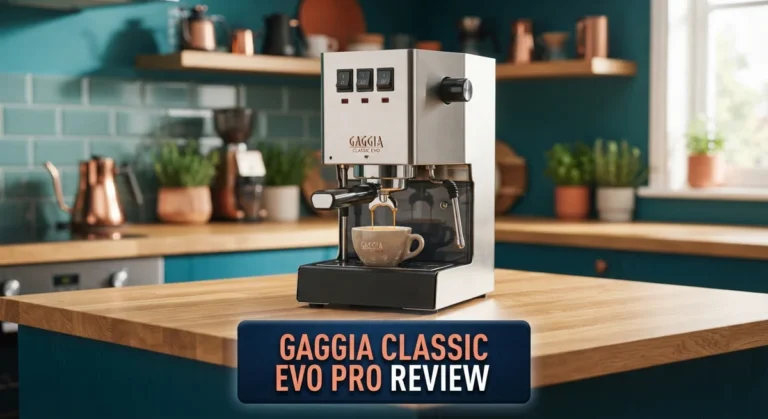

Gaggia Classic Pro Espresso Machine Review 2026: Worth Buying?
Are you searching for a reliable espresso machine that lasts for years? The Gaggia Classic Pro might be your answer. This machine holds a special spot in many kitchens. It brings café style coffee right to your countertop.
The Gaggia Classic Pro uses a lead-free brass boiler. This design helps it heat water fast and stay durable over time. Home baristas love this machine for good reasons. It ranks as a best-seller in the semi-automatic category.
People choose it because it lasts long. It also allows easy repairs and fun modifications. Maintenance stays simple too. You just backflush daily and descale once a month.
In a Nutshell
- Semi-automatic control puts you in charge of every shot. You control the pull, the timing, and the pressure.
- The 3-way solenoid valve releases pressure fast. This keeps your puck dry and clean after each brew.
- Boiler capacity sits around 100ml. That’s a solid 30% jump from the older aluminum version at 80ml.
- This machine stands out as a best-seller in its category. Many home baristas pick it as their first serious machine.
- It ranks as one of the most mod-friendly options under $500. You can upgrade parts easily as your skills grow.
- Competitors like the Breville Bambino Plus, Rancilio Silvia, and DeLonghi Stilosa offer different features. But the Gaggia holds its own against all of them.
- Steam power stays limited due to the small boiler size. This matters if you make lots of milk drinks daily.
Build Quality and Materials
The lead-free brass boiler forms the heart of this machine’s construction. Brass conducts heat evenly and resists corrosion far better than aluminum. This choice matters because it directly impacts how long your machine survives daily use.
The boiler holds about 100ml of water. This represents a 30% increase compared to older aluminum models. More water means better steam consistency, though some users still find it limiting for milk frothing tasks.
A 3-way solenoid valve sits inside the group head. This valve does three important jobs: it pushes water through the coffee grounds, stops the flow when you release the lever, and releases residual pressure. The result? Clean shots without messy drips.
The semi-automatic design keeps things straightforward. You control when water enters and exits the group head. No complicated electronics mean fewer parts can break. This simplicity also makes repairs easier when problems do occur.
The chassis uses durable materials throughout. Metal components resist wear better than plastic alternatives. The portafilter feels solid in your hand. The steam wand moves smoothly without wobbling.
Maintenance stays simple because of this robust construction. Daily backflushing takes just seconds. Monthly descaling removes mineral buildup. Both tasks require basic tools you probably own already.
One real concern exists with certain components. Some users report failures with the boiler gate on specific variants. These issues pop up occasionally, though they don’t affect every machine. Replacement parts remain available and affordable to install yourself.
The mod-friendly nature deserves mention here. Home baristas swap out parts constantly. Upgraded baskets fit easily. New gaskets install without special equipment. This repairability extends the machine’s lifespan significantly.
The overall build quality punches above its weight class. Competitors offer fancier features, but few match this machine’s durability record. The combination of brass construction, straightforward design, and repairable components explains why it remains a best-seller. You’re getting a machine built to last, not one designed to fail and force replacement.

- Solid Steel Housing, Made in Italy
- 9 Bar Espresso Extractions

Last update on 2026-10-23 / Affiliate links / Images from Amazon Product Advertising API Some of the links on this website are affiliate links, which means that at no additional cost to you, I earn a commission if you click through and make a purchase. I only recommend products and services that I believe will add value to my readers. Thank you for your support!
Boiler Capacity and Steam Power
The boiler capacity of the Gaggia Classic Pro measures around 100ml. This represents a 30% increase compared to the older aluminum model, which held about 80ml. The boiler itself uses lead-free brass construction, a material choice that affects both durability and heat distribution during brewing.
Despite this upgrade, the small boiler size creates a real limitation. Steam power remains modest because less water means less thermal energy available for steaming milk. Users who prioritize milk-based drinks should understand this constraint upfront. The machine excels at pulling espresso shots but struggles with high-volume milk steaming tasks.
The 3-way solenoid valve works inside the group head to manage pressure release. This component helps the machine operate smoothly during both brewing and purging cycles. The valve’s design contributes to the semi-automatic control that defines this machine’s user experience.
Heat management becomes important with a smaller boiler. The brass material conducts heat well, which helps maintain stable temperatures during back-to-back shots. However, users often need to wait between switching from espresso brewing to steam mode. This temperature surfing technique is common with compact machines like this one.
The boiler’s size makes maintenance straightforward. Daily backflushing keeps the group head clean without requiring complex procedures. Monthly descaling removes mineral buildup from the boiler’s interior surfaces. These simple tasks keep the machine running reliably for years.
Some users report reliability issues with boiler components on certain variants. The “boiler gate” problem affected some Evo Pro models, though the Classic Pro has shown better durability overall. The brass construction generally resists corrosion better than older aluminum designs.
For espresso enthusiasts who don’t demand heavy steaming, this boiler capacity works perfectly fine. The machine prioritizes shot quality over milk volume, which aligns with traditional espresso machine philosophy. Those seeking high steam power should explore alternatives with larger boiler capacities or dual-boiler systems.
Espresso Extraction and Performance
The Gaggia Classic Pro delivers consistent espresso extraction through its semi-automatic operation. You control the shot from start to finish, which means you decide when to start and stop the water flow. This level of control helps you dial in the perfect extraction for your coffee beans.
The 3-way solenoid valve inside the group head plays a crucial role in extraction quality. This valve releases pressure quickly after you stop pulling the shot. The fast pressure release prevents over-extraction and keeps your espresso tasting clean and balanced.
Water temperature stability matters for extraction, and the lead-free brass boiler handles this well. Brass retains heat effectively, so your water stays at the right temperature between shots. You’ll notice fewer temperature swings compared to machines with aluminum boilers. This consistency helps you pull better shots without constant adjustments.
The machine reaches extraction temperature fairly quickly. Most users report being ready to pull shots within 5 to 10 minutes of turning it on. The smaller boiler size actually works in your favor here since less water needs heating.
Extraction pressure stays steady at around 9 bars, which is the standard for espresso machines. This pressure level extracts the right amount of oils and solids from your coffee grounds. The consistency means your shots taste reliable from one day to the next.
One thing to note is that the small boiler does limit back-to-back shots. If you’re pulling multiple espressos in quick succession, you may need brief pauses between shots to let the boiler reheat. For single or double shots with breaks in between, this poses no real problem.
Grind size and tamping technique matter just as much as the machine itself. The Gaggia Classic Pro responds well when you dial in your grinder correctly and tamp with consistent pressure. Many users find that dialing in takes just a few shots before they hit their sweet spot.
The semi-automatic design keeps extraction straightforward and repeatable. You’re not fighting against automatic systems or complex programming. Instead, you’re working with a machine that lets your technique shine through in every cup.
Top 3 Alternatives
Breville Barista Express

- MANUAL HAND-TEXTURED MICROFOAM: The powerful steam wand on this cappuccino maker and latte machine...
- PRECISE DOSE GRINDING: Integrated precision conical burr grinder on bean-to-cup espresso machine...
Last update on 2026-10-23 / Affiliate links / Images from Amazon Product Advertising API Some of the links on this website are affiliate links, which means that at no additional cost to you, I earn a commission if you click through and make a purchase. I only recommend products and services that I believe will add value to my readers. Thank you for your support!
The Breville Barista Express gives you a complete espresso setup in one compact machine. You get a built-in grinder that adjusts to your preferred fineness. The machine heats up quickly and delivers consistent pressure for quality shots.
This option works well if you want less equipment clutter. The integrated grinder means you skip buying a separate one. You can dial in your grind size right before brewing. The steam wand froths milk smoothly for lattes and cappuccinos.
DeLonghi Dedica Espresso
No products found.
The DeLonghi Dedica offers a sleek, minimalist design that fits small kitchens easily. It features a thermoblock heating system that reaches temperature fast. The machine includes both a portafilter and pod compatibility for flexibility.
You get simple controls without overwhelming buttons. The steam wand produces quality microfoam for milk drinks. This machine appeals to people who prefer straightforward operation. It’s reliable for daily espresso pulls without fuss.
Roka Espresso Machine

- 190℉–201℉ Precision Temperature Control- Adjust brewing temperature from 190℉ to 201℉ to...
- 44 Adjustable Grind Settings for Precision Brewing- Featuring 44 grind settings, this espresso...
Last update on 2026-10-23 / Affiliate links / Images from Amazon Product Advertising API Some of the links on this website are affiliate links, which means that at no additional cost to you, I earn a commission if you click through and make a purchase. I only recommend products and services that I believe will add value to my readers. Thank you for your support!
The Roka Espresso Machine brings manual control to your brewing process. You pull the lever by hand to generate pressure, which many enthusiasts appreciate. This approach lets you feel connected to each shot you make.
The machine has a compact footprint and heats up quickly. It’s ideal if you enjoy the ritual of espresso preparation. The lever system requires practice but rewards you with excellent shots once you master the technique. No electricity needed for the actual extraction, only for heating water.
Maintenance and Repairability
Keeping your Gaggia Classic Pro in good shape requires minimal effort. The machine’s straightforward design makes daily upkeep simple and quick. You’ll spend just a few minutes each day maintaining peak performance.
Daily backflushing stands as the most important maintenance task. Run water through the group head without the portafilter attached for 2 to 3 seconds. Then insert the basket and repeat. This removes coffee residue and keeps the 3-way solenoid valve clean. Do this after every few shots for best results.
Monthly descaling keeps the lead-free brass boiler running smoothly. Use a commercial espresso machine descaler and follow the product instructions carefully. The descaling process flushes out mineral buildup that affects heat distribution. Plan for about 30 minutes to complete this task properly.
The lead-free brass boiler resists corrosion far better than older aluminum models. This material choice extends the machine’s lifespan significantly. Brass also distributes heat more evenly, which helps with consistency over time.
Repairability stands out as a major strength of this model. Most internal parts come apart easily without special tools. Replacement gaskets, seals, and solenoid valves are widely available and reasonably priced. Online communities share repair guides regularly, making DIY fixes accessible to anyone.
Some users report boiler gate failures on certain variants, so monitor your machine for leaks around the boiler area. Catching problems early prevents bigger damage later.
The mod-friendly nature of this machine appeals to espresso enthusiasts who want to upgrade components. You can replace the shower screen, dispersion plate, or even swap in a better pump. These modifications improve performance without voiding typical warranties.
Parts availability remains excellent because this machine has been a bestseller for years. You won’t struggle to find what you need when something wears out. The active community ensures that replacement parts stay stocked across multiple retailers.
Overall, the Gaggia Classic Pro rewards owners who perform basic maintenance consistently. Simple daily habits and monthly descaling keep everything functioning smoothly for years ahead.
Mod-Friendly Design and Customization
The Gaggia Classic Pro stands out because you can modify it. This machine welcomes upgrades and custom parts in ways that many competitors simply don’t allow.
Modding opens up new possibilities. The semi-automatic design gives you direct control over your shots. You can swap out the portafilter, upgrade the basket, or replace the group head gasket without needing special tools. The straightforward internal layout means you actually understand how each component works.
Popular modifications include upgrading to a single spout portafilter, installing a PID temperature controller, or adding a rotary pump. Many users install a better steam wand to compensate for the small boiler’s steam limitations. These upgrades don’t require you to buy a completely new machine. You simply enhance the one you have.
Parts availability makes modding realistic. Since the Gaggia Classic Pro has been a bestseller for years, aftermarket components remain easy to find. Online communities share modification guides regularly. You can access spare parts without hunting through obscure suppliers or waiting months for delivery.
The lead-free brass boiler proves friendly to modifications. You can drain it safely, work on internal components, and reassemble everything without complicated procedures. The 3-way solenoid valve sits in an accessible location, making upgrades straightforward.
One important note: modifications do require some mechanical confidence. You’re not just clicking buttons here. You need to understand basic espresso machine mechanics and feel comfortable working with water systems and electrical components.
The mod-friendly approach appeals to espresso enthusiasts who want to grow with their machine. You start with a solid foundation and gradually improve it over time. This philosophy keeps your investment relevant for years.
Not everyone needs modifications. If you prefer a machine that works out of the box without tinkering, you’ll still get excellent espresso from the Classic Pro. The point is that you have options. The machine doesn’t lock you into one fixed setup. You control how far you want to take it.
Pros and Cons
Pros
- Best seller in the semi automatic category with proven track record
- Lead free brass boiler resists corrosion better than older aluminum models
- Straightforward maintenance needs only daily backflushing and monthly descaling
- Most durable and repairable machine in its class with excellent parts availability
- Semi automatic design gives you direct control over every shot you pull
Cons
- Small boiler capacity around 100ml limits steam power for milk frothing
- Boiler gate failures reported on certain variants requiring close monitoring
- Limited back to back shot capability due to compact boiler size
Who Should Buy It
The Gaggia Classic Pro suits several types of espresso lovers. Home baristas who want hands-on control will appreciate the semi-automatic design. You pull the shots yourself, which means you learn faster and develop real skill.
Enthusiasts ready to customize their equipment find this machine perfect. The mod-friendly construction lets you upgrade components over time. You can swap the portafilter, add a PID controller, or install new internals. This machine grows with you as your skills improve.
Coffee lovers who value durability and repairability should consider this model. Parts remain easy to find because this machine has been a bestseller for years. If something breaks, you can fix it without replacing the entire unit. The lead-free brass boiler resists corrosion and lasts longer than older aluminum designs.
People who enjoy learning the espresso process will thrive with this machine. The straightforward maintenance routine keeps you connected to your equipment. Daily backflushing and monthly descaling take just minutes. You understand how your machine works instead of treating it like a black box.
However, this machine is not ideal for certain users. If you need to pull many shots back to back, the small 100ml boiler capacity will frustrate you. Steam power suffers because the compact boiler cannot heat enough water for milk frothing. You’ll wait between shots if you want consistent steam performance.
People who prefer fully automatic machines should look elsewhere. The Gaggia Classic Pro demands active participation. You control water flow, shot timing, and pressure. This requires attention and practice.
Those seeking a machine with zero maintenance needs should skip this option. While maintenance is simple, it still requires regular attention. You cannot ignore the machine for weeks and expect perfect performance.
Ultimately, the Gaggia Classic Pro appeals to engaged coffee enthusiasts. You get a durable, repairable machine that rewards your effort and curiosity. If you want to learn espresso making and potentially modify your equipment, this machine delivers real value.
Final Verdict
The Gaggia Classic Pro earns its reputation as a solid choice in home espresso machines. It blends simple engineering with real performance. This makes it a trusted pick for many coffee fans.
When you compare it to rivals like the Breville Bambino Plus or DeLonghi Stilosa, the Gaggia holds its own. Those machines offer more automation but less room to grow. The Rancilio Silvia competes closely in build quality, though it costs more to maintain long term.
If you want a manual lever experience, the Flair 58 offers a different path. It skips electricity entirely. The Gaggia instead gives you semi-automatic control without extra complexity.
The Gaggia Classic Evo Pro variant adds small upgrades. Some buyers report better factory testing on the original Classic Pro. This makes the standard version a safer long term bet for many buyers.
Overall, this machine rewards patience and curiosity. It is not a machine you set and forget. It asks you to learn, adjust, and improve your technique over time.
Think of the Gaggia Classic Pro as a long term companion. It grows with your skills instead of limiting them. Few machines in this space offer that kind of flexibility.
In short, this machine fits people who enjoy the craft of espresso making. It suits those who want a machine that can be opened, fixed, and upgraded. It does not suit people who want to press one button and walk away.
For espresso lovers ready to invest time and attention, the Gaggia Classic Pro delivers consistent results year after year. It stands as a dependable foundation for building real barista skills at home.
If you value control, durability, and the freedom to modify your setup, this machine deserves a serious look. It remains one of the smartest long term choices in its category.
Frequently Asked Questions
Does the Gaggia Classic Pro have enough steam power for milk frothing?
The 100ml brass boiler gives decent steam output, but it’s not a powerhouse. You’ll froth milk successfully, though the process takes longer than larger machines. The compact boiler means you’ll wait between shots and steaming. If you froth milk regularly for lattes and cappuccinos, expect a learning curve with timing.
Can I upgrade or modify this machine?
Yes. The Gaggia Classic Pro is highly mod-friendly. You can replace the shower screen, upgrade the group head gasket, or add a PID temperature controller. Parts availability is excellent, and the community shares many upgrade guides online. This machine rewards tinkering and customization.
How often does maintenance happen?
Daily backflushing takes just one minute. You run water through the group head without a portafilter to clear coffee grounds. Monthly descaling removes mineral buildup from the boiler. That’s it. No complex procedures needed. The lead-free brass boiler resists corrosion better than older aluminum models.
What makes this different from the Gaggia Classic Evo Pro?
The Evo Pro variant adds small improvements to the original design. However, some users report boiler gate failures on the Evo Pro, requiring close monitoring. The standard Classic Pro has a longer, more proven track record. Both machines share the same semi-automatic operation and 100ml boiler capacity.
Is this machine good for beginners?
It works well for beginners who want to learn. You control every part of the shot, which teaches you how espresso actually works. The straightforward maintenance won’t overwhelm you. However, if you prefer automatic machines with minimal involvement, look elsewhere.
Hi, I’m Greta Monroe, and I’m passionate about making every kitchen a place of creativity and efficiency. I’ve spent years exploring and testing kitchen gadgets, tools, and devices to help home cooks find exactly what they need. At ChefKit Blog, I share honest Amazon product reviews and practical insights on kitchen essentials that actually make a difference. From must-have basics to innovative new devices, I break down what works and what doesn’t. My mission is simple: to help you build a kitchen that inspires delicious possibilities every single day.