Breville Café Roma Espresso Machine Review 2026: Worth Buying?
Are you searching for a simple espresso machine for your kitchen? The Breville Café Roma might catch your eye. This machine holds a spot as an entry level pick for new espresso fans.
It uses a 15 BAR pressure system and a thermoblock heater. These features help it heat up fast. You can start brewing in minutes.
The Café Roma also comes with a warming tray. It holds up to six espresso cups. This keeps your cups warm before you pour.
In a Nutshell
- Easy to use: This machine keeps things simple. You won’t find confusing buttons or settings here.
- Solid build quality: The stainless steel design feels sturdy. Maintenance is also simple, so cleaning takes little time.
- Fast heat up time: You won’t wait long for your first shot. The thermoblock system heats quickly.
- Inconsistent shots: Espresso quality can vary from one brew to the next. Some users notice this more than others.
- Basic pressurized basket: This part limits what your grinder can actually do. It caps how fine you can tune your coffee.
- Durability concerns: A few users report issues over time. This machine may not last as long as pricier models.
Build Quality and Design
The Breville Café Roma features a compact stainless steel body that sits comfortably on most kitchen counters. The machine measures modestly, making it ideal for smaller spaces where larger espresso machines would overwhelm your setup.
The exterior uses brushed stainless steel throughout. This material resists fingerprints better than polished finishes. The overall construction feels solid when you hold it, and the weight distribution suggests durability in everyday use.
The control panel keeps things straightforward. You get a power button, a group head lever for pulling shots, and a steam wand switch. No confusing digital displays or overwhelming menu systems here. This simplicity appeals to beginners who want to focus on learning espresso basics rather than navigating complicated settings.
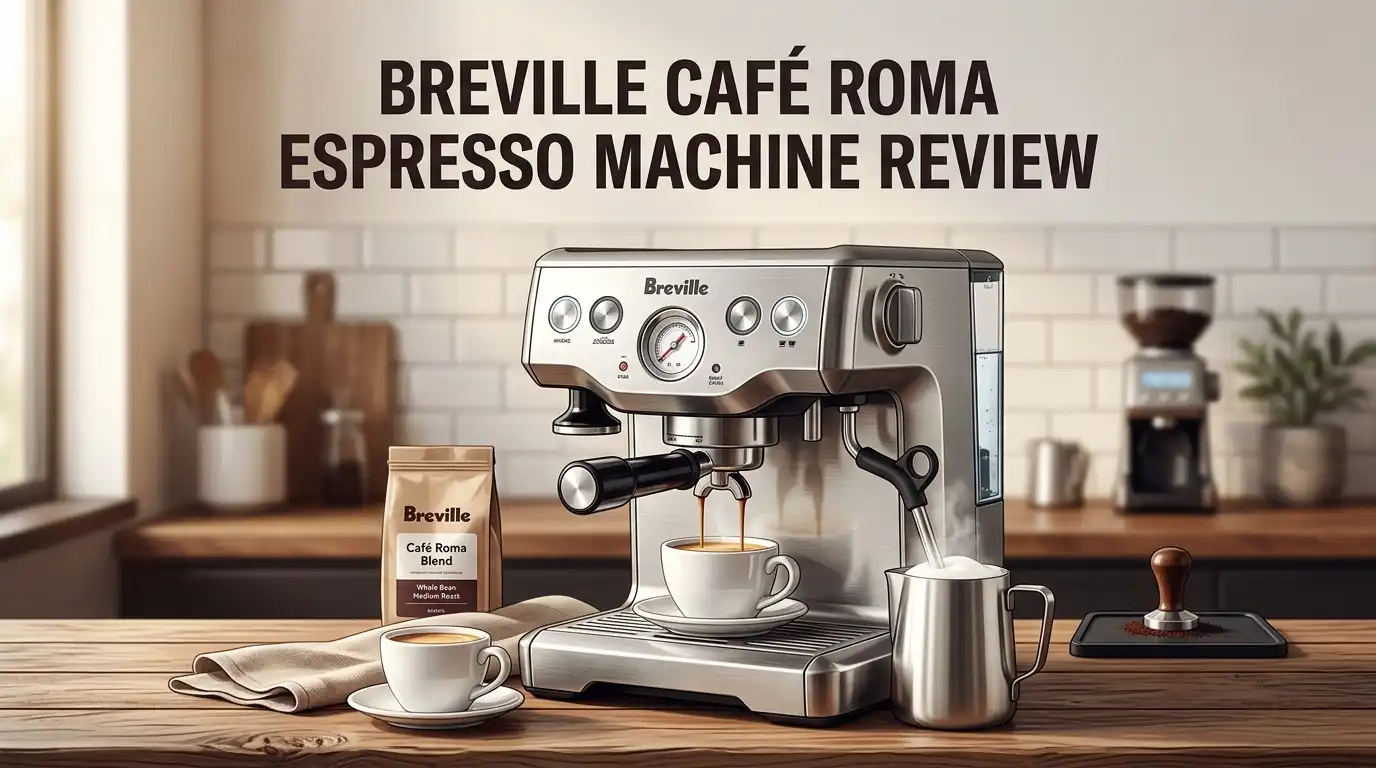
The warming tray sits on top and holds up to six espresso cups. This is a practical feature that keeps your cups preheated before serving. The tray design integrates seamlessly with the machine’s overall aesthetic.
The group head uses a pressurized basket design. While this limits grinder flexibility, it keeps the machine accessible for newcomers. The basket holds approximately 14 grams of coffee, which is standard for entry-level machines.
The steam wand attaches via a simple articulated joint. Users report strong milk frothing performance, which speaks to solid engineering in this component. The wand positioning allows easy access to your pitcher without awkward angles.
Build quality stands out as a genuine strength for this model. The internal thermoblock heating system sits protected within the stainless steel frame. Most components use durable materials that resist corrosion from water exposure and steam.
However, some users note durability concerns after extended use. Certain plastic connectors may wear faster than expected. The pressurized basket, while convenient, sometimes shows signs of degradation with frequent cleaning.
The machine’s overall design philosophy emphasizes simplicity over complexity. Every visible component serves a clear purpose. Nothing feels cheap or poorly assembled at first glance. The Café Roma presents itself as a genuine entry point into espresso making, with a build that matches its straightforward approach to coffee extraction.

- Note: 1)Too coarse a grind, too little coffee, or insufficiently tamping the grounds before brewing...
- Stainless-steel Espresso machine with 15-bar thermo block pump
Last update on 2026-10-23 / Affiliate links / Images from Amazon Product Advertising API Some of the links on this website are affiliate links, which means that at no additional cost to you, I earn a commission if you click through and make a purchase. I only recommend products and services that I believe will add value to my readers. Thank you for your support!
Heating System and Pressure Performance
The thermoblock heating system sits at the core of how the Café Roma operates. This technology heats water quickly and maintains a stable temperature during brewing. You get your first shot ready in just a few minutes after turning on the machine.
The 15 BAR pressure system delivers the force needed to extract espresso. However, pressure alone doesn’t guarantee great shots. The pressurized basket design actually limits how much your grinder choice matters. This basket pre infuses the water before it hits the coffee grounds.
Here’s where things get tricky. Despite having solid pressure numbers, users report inconsistent espresso shots. One brew might taste rich and full bodied. The next one could come out thin or over extracted. This inconsistency frustrates people who want reliable results every single time.
Temperature stability presents another challenge. The machine tends to brew slightly cold compared to professional standards. You might notice your shots lack the crema depth or flavor intensity you’d expect. This happens because the thermoblock cools down between shots when you’re pulling multiple drinks.
The heating system excels at one specific task though. Milk frothing performance ranks high at 8 out of 10. The steam wand produces enough pressure to create smooth microfoam. This strength makes the Café Roma appealing if you drink cappuccinos or lattes regularly.
Recovery time between shots matters for home use. The machine reheats fairly fast, so back to back espressos don’t require long waits. This speed works well for making multiple drinks during morning coffee time.
The thermoblock design also means fewer components to maintain. You won’t deal with complicated dual boiler systems or complex plumbing. Cleaning and descaling stay straightforward. This simplicity appeals to beginners who want a machine that doesn’t overwhelm them.
Overall, the heating and pressure system performs adequately for learning espresso basics. It won’t satisfy experienced baristas seeking precision and consistency. The machine strikes a balance between ease of use and functional performance, though that balance tips toward convenience over quality for serious coffee enthusiasts.
Espresso Quality and Milk Frothing Capability
The Café Roma excels when it comes to milk frothing. The steam wand delivers strong performance with an 8/10 rating. You can create smooth microfoam and latte art without much effort. The wand’s articulated joint gives you flexibility to position it exactly where you need it.
Frothing milk happens fast on this machine. The thermoblock heating system recovers quickly between espresso shots and steaming. This means you won’t sit around waiting to froth your milk. The steam pressure feels responsive and consistent throughout the frothing process.
Espresso quality tells a different story. The 15 BAR pressure system sounds impressive on paper. In reality, shots come out inconsistent from one brew to the next. You might pull a great shot one moment and a mediocre one the next. This inconsistency frustrates users who want reliable results.
The pressurized basket plays a big role here. This component limits how much your grinder choice actually matters. Even with a quality grinder, the pressurized design restricts what you can achieve. The basket holds about 14 grams of coffee, which is on the smaller side.
Temperature stability adds another wrinkle. The machine brews slightly cold compared to what espresso extraction demands. This affects shot flavor and crema quality. You might notice your espresso tastes a bit flat or thin. The thermoblock system works fine for learning, but it has limits.
For milk-based drinks, the Café Roma performs well. Cappuccinos and lattes come out creamy and smooth. Flat whites and macchiatos work nicely too. If you drink mostly milk-forward beverages, this machine handles that job competently.
For straight espresso shots, expectations need adjustment. This machine works best as a learning tool. It teaches you the basics without overwhelming complexity. Experienced espresso drinkers might find the shot quality underwhelming. The combination of pressurized baskets and temperature inconsistency holds it back from delivering cafe-quality espresso at home.
Top 3 Alternatives
DeLonghi Dedica Espresso
No products found.
Gaggia Classic Pro

- Solid Steel Housing, Made in Italy
- 9 Bar Espresso Extractions

Last update on 2026-10-23 / Affiliate links / Images from Amazon Product Advertising API Some of the links on this website are affiliate links, which means that at no additional cost to you, I earn a commission if you click through and make a purchase. I only recommend products and services that I believe will add value to my readers. Thank you for your support!
Roka Espresso Machine

- velvety lattes This semi-automatic espresso
Last update on 2026-10-23 / Affiliate links / Images from Amazon Product Advertising API Some of the links on this website are affiliate links, which means that at no additional cost to you, I earn a commission if you click through and make a purchase. I only recommend products and services that I believe will add value to my readers. Thank you for your support!
Ease of Use and Learning Curve
The Breville Café Roma strips away unnecessary features and focuses on what matters most for beginners. You get a straightforward control panel with clearly labeled buttons. The learning curve is genuinely gentle for newcomers to espresso.
Starting your first shot takes minutes, not hours. The machine heats up fast, so you won’t wait around. The pressurized basket does most of the work for you. This means you can pull a decent shot without years of experience. The steam wand is equally forgiving when you’re learning to froth milk.
The interface never overwhelms you with options. You press a button, and espresso flows. The warming tray sits right on top, so you can see your cups warming. Everything feels intuitive from the moment you unbox it.
However, consistency requires some attention. Your first five shots might taste different from each other. This teaches you how pressure and temperature affect results, which is actually valuable knowledge. You’ll start noticing patterns quickly. The machine responds well to small adjustments in tamping pressure or grind size.
The steam wand teaches milk frothing efficiently. The heat and pressure are strong enough to create microfoam without fighting the machine. Most users master basic latte art within a week or two of practice.
One learning point involves temperature management. The Café Roma brews slightly cool, so shots may taste flat at first. Once you understand this characteristic, you adapt your technique accordingly. This becomes a useful lesson about how machine design affects flavor.
Maintenance stays simple throughout ownership. The group head comes apart easily for cleaning. The thermoblock system has fewer parts to worry about compared to dual boiler machines. You’ll spend less time troubleshooting and more time actually making coffee.
The Café Roma works best when you approach it as a learning tool. It won’t produce competition level espresso, but it teaches you the fundamentals well. The machine’s simplicity becomes its greatest strength for skill development. You learn cause and effect quickly. Each adjustment you make produces noticeable results. This feedback loop accelerates your progress as a home barista.
Maintenance and Cleaning
Keeping your Café Roma clean keeps it running smoothly. The machine’s design makes maintenance straightforward, which is one of its genuine strengths.
The group head deserves attention after each shot. Remove the portafilter and basket, then run water through the group head without the basket attached. This flushes out old coffee grounds. Do this for about five seconds. Repeat two or three times until water runs clear.
The portafilter and basket need regular washing. Use hot water and a soft brush to remove residue. Soak them in hot water for ten minutes if buildup appears stubborn. Dry everything completely before your next shot. This simple routine prevents oil buildup and keeps extraction consistent.
The steam wand requires immediate attention after frothing milk. Wipe the wand with a damp cloth right after each use. Milk residue hardens quickly and becomes difficult to remove later. Run steam through the wand for a few seconds to clear any milk inside the nozzle. This takes less than a minute but makes a real difference.
The water tank needs regular checks. Empty it if you won’t use the machine for several days. Stale water affects both taste and machine performance. Rinse the tank with fresh water before refilling.
The thermoblock heating system contains fewer parts than traditional boilers, which actually simplifies maintenance. You won’t need to descale as frequently as other machines. However, descaling still matters. Run a descaling solution through the group head and steam wand once every three months, depending on your water hardness. Follow the manufacturer’s instructions carefully during this process.
The warming tray on top collects dust over time. Wipe it down weekly with a dry cloth. Don’t use water on the electrical components underneath.
The pressurized basket rarely needs replacement if you maintain it properly. Clean it thoroughly after each use. Replace it only when you notice water leaking around the sides during extraction.
Regular maintenance takes about five minutes per session. This small investment keeps your machine operating reliably and extends its lifespan significantly.
Pros and Cons
Pros
- Entry level machine perfect for learning espresso fundamentals
- Milk frothing performs exceptionally well with fast steam power
- Stainless steel build feels solid and resists wear over time
- Heat up happens quickly so you brew within minutes
- Simple controls mean no overwhelming menu options to navigate
Cons
- Espresso shots lack consistency even with 15 BAR pressure applied
- Pressurized basket limits what your grinder can do for you
- Brews at slightly lower temperatures than ideal for extraction
- Machine shows durability concerns after extended daily use
- Discontinued model means replacement parts become harder to find
Who Should Buy It
The Breville Café Roma works best for beginners who want to learn espresso skills without feeling overwhelmed. You get a machine that teaches you the fundamentals without throwing complex features at you.
This machine suits you if you’re starting your espresso journey. You don’t need years of experience to operate it. The controls stay simple and straightforward. You turn it on, wait a few minutes, and you’re ready to brew.
Home baristas who prioritize milk drinks will find real value here. The steam wand delivers strong frothing power. You can make cappuccinos and lattes that taste genuinely good. If your morning routine revolves around milk based coffee, this machine handles that job well.
The Café Roma fits people who accept that learning involves some trial and error. Your first shots won’t be perfect. That’s normal and expected. The machine teaches you how pressure, grind size, and tamping technique all matter. You develop skills that transfer to better machines later.
You should skip this model if you demand consistent espresso shots every single time. The pressurized basket limits what your grinder can accomplish. Shot quality varies more than you might want. If precision and repeatability matter most to you, look elsewhere.
Daily heavy users should consider other options. Users report durability concerns with extended use. If you brew 10 plus shots every single day, this machine may struggle to keep up over time.
The discontinued status creates a real consideration. Finding replacement parts becomes difficult as time passes. If you need a machine you can service for years without hunting for components, this affects your decision.
The Café Roma suits apartment dwellers and small kitchen spaces. It doesn’t take up much room. The compact design fits easily on most countertops. You get a full espresso experience in a small footprint.
Choose this machine if you want to explore espresso without major commitment. You get solid build quality and reliable milk frothing. You learn real skills that stick with you. The simple interface means you focus on technique, not menu buttons.
Final Verdict
The Breville Café Roma earns its spot as a solid starting point for anyone new to espresso. It brings simple controls, a sturdy build, and quick heat up together in one package. These qualities make it easy to recommend for first time buyers.
However, this machine has real limits. Shot consistency remains its biggest weakness, and that matters if you care about precision. You trade some quality for simplicity here.
Think about your goals before you decide. If you want to master latte art or nail espresso extraction every time, this machine may frustrate you. But if you just want to explore coffee at home, it delivers enough to keep you engaged.
The discontinued status also plays a role in this verdict. Finding parts later could become a hassle, so factor that into your decision now. This is worth weighing carefully.
For buyers who want more consistency without jumping to a high end machine, the Breville Bambino Plus offers a smaller footprint with steadier shots. Those who want smart guidance built in should look at the Breville Barista Express Impress, which adds sensors to help with grind and dose.
If you eventually want serious control and dual boiler performance, the Oracle Dual Boiler sits at the top of the Breville lineup. It costs more attention and space, but it solves many issues the Café Roma cannot.
So where does the Café Roma fit best? It works as a stepping stone, not a long term solution for serious espresso lovers. Use it to learn timing, tamping, and milk texturing without pressure.
This machine teaches you the basics well. Once you outgrow it, you will know exactly what features matter most to you. That knowledge alone makes it a worthwhile starting point.
In short, buy this if you want an easy entry into espresso making. Skip it if shot after shot consistency is your top priority.
Frequently Asked Questions
Does the Breville Café Roma still get sold in stores?
No, this model is discontinued. Breville stopped making the Café Roma, so you won’t find it new at major retailers. You might find used units online, but new stock is gone.
Discontinued status means fewer replacement parts available. If something breaks, you could struggle to find official Breville components. This is worth knowing before you buy secondhand.
Can I use any grinder with this machine?
The pressurized basket limits what your grinder can do. This basket works with pre ground coffee or coarser grinds, so a fancy burr grinder won’t make much difference.
If you already own a quality grinder, the Café Roma won’t let you use its full potential. The pressurized system does the work instead of your grind size. This design keeps things simple for beginners but frustrates experienced users.
Why do espresso shots taste inconsistent?
The 15 BAR pressure sounds impressive, but real shot consistency depends on more than pressure alone. Temperature stability matters. Grind precision matters. The Café Roma struggles with both.
The machine brews slightly cold, which affects extraction. Combined with the pressurized basket, you get varying results shot to shot. This isn’t a user error issue. It’s a machine limitation.
Is the milk frothing actually good?
Yes, the steam wand performs well for milk drinks. It rates 8 out of 10 for frothing power. Beginners can make decent cappuccinos and lattes without much practice.
If milk drinks are your main goal, the Café Roma delivers here. The inconsistent espresso shots matter less when you’re making milk based beverages.
Hi, I’m Greta Monroe, and I’m passionate about making every kitchen a place of creativity and efficiency. I’ve spent years exploring and testing kitchen gadgets, tools, and devices to help home cooks find exactly what they need. At ChefKit Blog, I share honest Amazon product reviews and practical insights on kitchen essentials that actually make a difference. From must-have basics to innovative new devices, I break down what works and what doesn’t. My mission is simple: to help you build a kitchen that inspires delicious possibilities every single day.