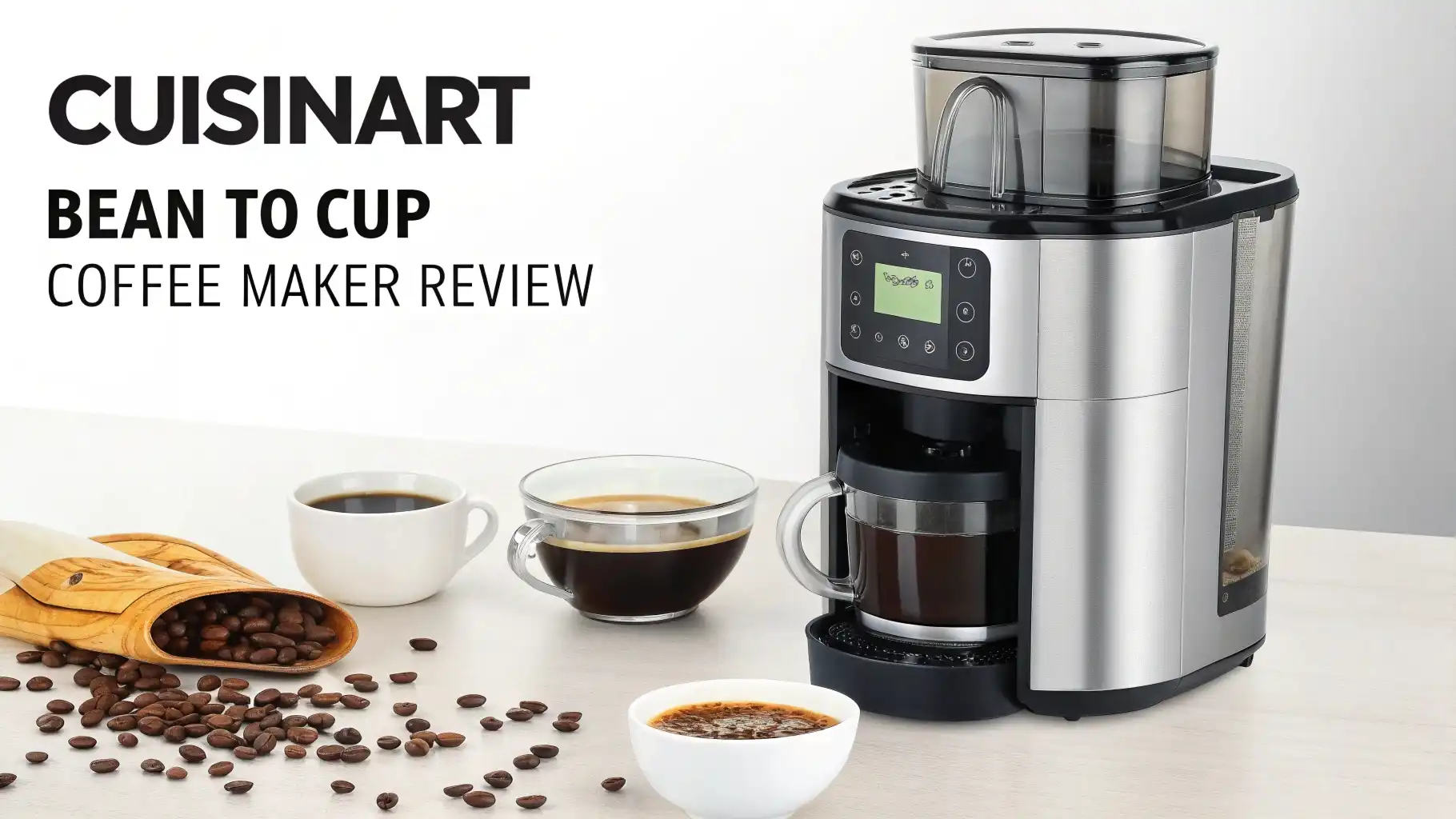
Cuisinart Bean to Cup Coffee Maker Review: Step-by-Step Guide
Waking up to the smell of freshly ground coffee is one of life’s simple pleasures. You don’t need to visit fancy coffee shops anymore.
Cuisinart bean to cup coffee makers bring that café experience right into your kitchen. These machines grind whole beans and brew coffee in minutes.
The best part? You control everything. The grind size, the strength, and the brew temperature are all in your hands. This review covers everything you need to know about Cuisinart bean to cup coffee makers available on Amazon.
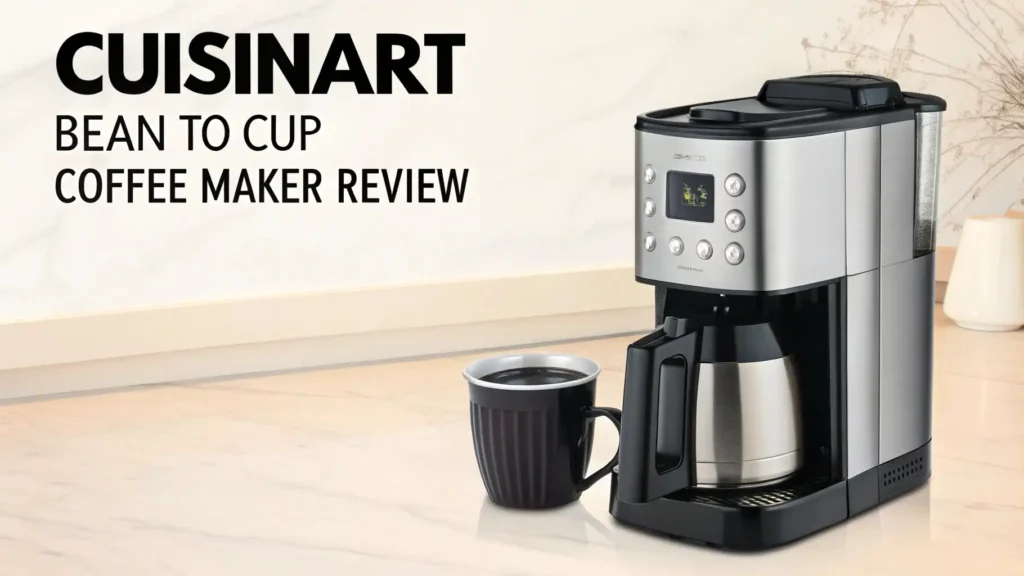
Key Takeaways
- Built-in grinder technology delivers fresh coffee every single time by grinding beans right before brewing
- Programmable features let you wake up to freshly brewed coffee with customizable strength settings
- Large water reservoirs mean fewer refills, with most models holding 10 to 12 cups worth
- Easy maintenance systems include self-cleaning functions and removable parts that go straight into the dishwasher
- Price range varies from budget-friendly options around $100 to premium models exceeding $300
- Grind control options allow you to adjust coarseness for different brewing preferences

- SINGLE SERVE COFFEE MAKER: Single serve coffee or espresso at the touch of a button. Innovative...
- COFFEE FOR EVERY OCCASION: Brew better coffee at home with Nespresso's single serve coffee maker...
Last update on 2026-08-02 / Affiliate links / Images from Amazon Product Advertising API Some of the links on this website are affiliate links, which means that at no additional cost to you, I earn a commission if you click through and make a purchase. I only recommend products and services that I believe will add value to my readers. Thank you for your support!
Cuisinart DGB-900BC Grind & Brew Automatic Coffeemaker
This model sits at the top of many coffee lover’s lists. The DGB-900BC combines grinding and brewing in one sleek machine. You get 12 cups of hot, fresh coffee without multiple appliances cluttering your counter.
The burr grinder inside produces consistent grounds. This consistency matters because it extracts flavors evenly. You can adjust the strength selector to make your coffee bolder or milder. The thermal carafe keeps coffee hot for hours without that burnt taste from traditional hot plates.
Programming this machine is simple. Set it the night before and wake up to freshly ground and brewed coffee. The grind-off feature lets you use pre-ground coffee when you run out of beans. Customers love the automatic shutoff feature that kicks in after brewing completes. This saves energy and gives you peace of mind.
The gold-tone filter is reusable and eliminates the need for paper filters. Cleaning takes just minutes because most parts are dishwasher safe. The charcoal water filter removes impurities and improves taste. At around $200, this machine offers excellent value for serious coffee drinkers.
Cuisinart DGB-550BK Grind & Brew Single Serve Coffeemaker

- SINGLE-SERVE: The Cuisinart Single-Serve Coffee Maker features fully automatic brewing and offers...
- SUPERIOR FUNCTIONALITY: Single-serve coffeemaker with 48 oz. removable water reservoir, charcoal...
Last update on 2026-07-10 / Affiliate links / Images from Amazon Product Advertising API Some of the links on this website are affiliate links, which means that at no additional cost to you, I earn a commission if you click through and make a purchase. I only recommend products and services that I believe will add value to my readers. Thank you for your support!
Single-serve lovers rejoice. This compact machine grinds beans for one perfect cup at a time. The DGB-550BK works with your favorite coffee beans or K-cups. This flexibility means you’re never stuck with one brewing method.
The built-in grinder uses blade technology. While not as precise as burr grinders, it still produces fresh grounds quickly. The auto-rinse feature cleans the grinder after each use. This prevents flavor mixing between different bean types. The HomeBarista reusable filter cup saves money and reduces waste from disposable pods.
Three strength settings let you control the intensity. Choose mild for smooth morning coffee or bold for that afternoon pick-me-up. The 40-ounce water reservoir holds enough for multiple cups without constant refilling. The removable drip tray accommodates travel mugs up to 7 inches tall.
This model fits perfectly in small kitchens or office spaces. The footprint measures just 8 inches wide. Programming is straightforward with clearly labeled buttons. Most users report the grinding noise is quieter than expected. Priced around $150, it delivers convenience without breaking the bank.
Cuisinart DGB-400 Automatic Grind & Brew Coffeemaker

- Solid copper bottom sandwiched between 18/10 stainless steel for great heat conduction and retention
- Excalibur nonstick cooking surface provides easy, healthy cooking
Last update on 2026-08-02 / Affiliate links / Images from Amazon Product Advertising API Some of the links on this website are affiliate links, which means that at no additional cost to you, I earn a commission if you click through and make a purchase. I only recommend products and services that I believe will add value to my readers. Thank you for your support!
The DGB-400 represents the entry point into bean to cup brewing. This 12-cup coffeemaker packs essential features into an affordable package. Don’t let the lower price fool you. This machine produces excellent coffee consistently.
The blade grinder works efficiently to prepare beans for brewing. You control when grinding stops with the grind-off option. The permanent gold-tone filter saves money on paper filters. The glass carafe sits on a heated plate that keeps coffee warm for two hours before automatic shutoff.
Twenty-four hour programmability means coffee waits for you, not the other way around. The brew-pause feature lets you grab a quick cup mid-cycle. The charcoal water filter improves taste by removing chlorine and impurities. Customers appreciate the straightforward design without complicated menus or confusing buttons.
Maintenance is simple with removable, washable parts. The grinder chamber detaches for thorough cleaning. The water reservoir features clear markings for accurate filling. This model works great for households that drink multiple cups daily. At under $130, it offers tremendous value for budget-conscious buyers.
Top 3 Alternatives for Cuisinart Bean to Cup Coffee Makers

- PROGRAMMABLE COFFEE MACHINE: Fully automatic Cuisinart 12-Cup* Coffee Maker with 24-hour...
- PIPING HOT COFFEE: Hotter coffee with expert coffeemaking technology to ensure hotter coffee...

Last update on 2026-08-02 / Affiliate links / Images from Amazon Product Advertising API Some of the links on this website are affiliate links, which means that at no additional cost to you, I earn a commission if you click through and make a purchase. I only recommend products and services that I believe will add value to my readers. Thank you for your support!

- SCA Certified Coffee Maker- Experience a barista quality cup of coffee right from your own counter...
- Fresh Ground Single Serve Coffee- This is podless, single serve done right. Enjoy brew flexibility...
Last update on 2026-06-29 / Affiliate links / Images from Amazon Product Advertising API Some of the links on this website are affiliate links, which means that at no additional cost to you, I earn a commission if you click through and make a purchase. I only recommend products and services that I believe will add value to my readers. Thank you for your support!

- 𝐊𝐞𝐞𝐩 𝐖𝐚𝐫𝐦 𝐅𝐮𝐧𝐜𝐭𝐢𝐨𝐧- For optimal taste, our coffee...
- 𝐖𝐚𝐫𝐧𝐢𝐧𝐠- This coffee machine measures 12.36"D x 8.38"W x 16.93"H, with a large...
Last update on 2026-08-02 / Affiliate links / Images from Amazon Product Advertising API Some of the links on this website are affiliate links, which means that at no additional cost to you, I earn a commission if you click through and make a purchase. I only recommend products and services that I believe will add value to my readers. Thank you for your support!
Understanding Bean to Cup Technology
Bean to cup coffee makers revolutionized home brewing. The concept is simple but powerful. Whole beans stay fresh longer than pre-ground coffee. Grinding right before brewing maximizes flavor and aroma extraction.
Traditional drip makers require you to grind beans separately. This adds extra steps and cleanup. Bean to cup machines eliminate this hassle completely. The integrated grinder and brewer work together seamlessly. You add beans and water, press start, and walk away.
The grinding process matters more than most people realize. Burr grinders crush beans between two abrasive surfaces. This creates uniform particle sizes. Blade grinders chop beans with spinning blades. They’re faster but less consistent. Most Cuisinart models use blade grinders to keep costs reasonable while still delivering fresh grounds.
Temperature control during brewing is critical. Water between 195 and 205 degrees Fahrenheit extracts optimal flavor. Cuisinart machines maintain this temperature range automatically. The brew strength selector adjusts the ratio of coffee to water. This lets you customize intensity without measuring manually.
Why Fresh Ground Coffee Tastes Better
The difference between pre-ground and fresh-ground coffee is dramatic. Coffee begins losing flavor within 15 minutes of grinding. The oils and aromatic compounds that create rich taste evaporate quickly. Pre-ground coffee in bags has been sitting for days or weeks.
Whole beans protect these delicate flavors naturally. The outer shell acts as a barrier against oxygen and moisture. When you grind just before brewing, you capture peak freshness. The aroma that fills your kitchen proves this point immediately.
Chemical reactions start the moment grinding breaks the beans apart. Oxidation dulls the bright, complex flavors coffee lovers cherish. Humidity can make grounds stale and flat-tasting. Bean to cup machines prevent these problems by minimizing the time between grinding and brewing.
The grind size affects extraction rate. Finer grounds increase surface area, allowing water to extract more quickly. Coarser grounds slow extraction, producing milder coffee. Having fresh grounds lets you adjust grind size to match your taste preferences. This flexibility is impossible with pre-ground coffee.
Key Features to Consider
Shopping for a bean to cup coffee maker requires understanding several important features. Grinder type ranks at the top of the list. Burr grinders cost more but provide superior consistency. Blade grinders work well for most home users and keep prices lower.
Capacity matters if you serve multiple people. Twelve-cup models suit families or frequent entertainers. Single-serve machines make sense for solo coffee drinkers or couples with different preferences. Consider your daily consumption when choosing capacity.
Programmability adds convenience to your morning routine. Twenty-four hour advance programming means coffee brews automatically at your set time. Some models include auto-shutoff features that improve safety and save energy. Brew-pause functions let you sneak a cup before the full pot finishes.
Thermal carafes maintain temperature without hot plates. This prevents the burnt taste that develops after an hour on heat. Glass carafes let you see the coffee level at a glance. Thermal options keep coffee hot longer for slower drinkers.
Water filtration systems improve taste significantly. Charcoal filters remove chlorine, minerals, and impurities. Some machines include replaceable filters, while others skip this feature. Clean water produces clean-tasting coffee every time.
Maintenance and Cleaning Requirements
Keeping your coffee maker clean ensures great taste and long machine life. Daily maintenance takes just minutes. Rinse the carafe and filter basket after each use. Wipe down the exterior with a damp cloth. Empty and rinse the grinder chamber to prevent oil buildup.
Weekly tasks include deeper cleaning of removable parts. Most Cuisinart components are dishwasher safe. The water reservoir, grinder chamber, and filter basket can go on the top rack. This makes cleanup effortless. The carafe benefits from occasional washing with mild dish soap.
Descaling removes mineral deposits from internal components. Hard water areas require more frequent descaling. Run a mixture of water and white vinegar through a complete brew cycle monthly. Follow with two cycles of plain water to rinse thoroughly. This prevents clogs and maintains optimal brewing temperature.
The grinder needs attention to prevent rancid coffee oils from affecting taste. Some models include grinder cleaning cycles. Otherwise, wipe the chamber with a soft cloth weekly. Remove any stuck grounds with a small brush. Never submerge the grinder unit in water.
Comparing Burr vs Blade Grinders
The grinder debate divides coffee enthusiasts. Burr grinders crush beans between ceramic or steel surfaces. The gap between burrs determines grind size. This creates uniform particles that extract evenly during brewing.
Blade grinders spin sharp blades to chop beans. The longer you grind, the finer the result. This method produces inconsistent particle sizes. Some pieces end up powder-fine while others remain chunky. The inconsistency affects extraction and flavor.
Burr grinders cost significantly more to manufacture. This explains why most affordable bean to cup makers use blade grinding. For casual coffee drinkers, blade grinders work perfectly fine. The freshness benefit outweighs the consistency drawback compared to pre-ground coffee.
Conical burr grinders operate quietly and generate less heat. Heat can affect flavor compounds during grinding. Flat burr grinders produce extremely uniform grounds but run noisier. Commercial machines prefer flat burrs for precision.
Programmable Features Worth Having
Modern coffee makers offer impressive programming options. Twenty-four hour advance start tops the essential features list. Loading the machine at night means waking up to fresh coffee. The timer handles everything automatically.
Strength selectors adjust brewing parameters to match your taste. Mild settings use slightly cooler water and faster brewing. Bold settings extend contact time between water and grounds. This flexibility helps you find your perfect cup.
Auto-shutoff features improve safety and energy efficiency. Most Cuisinart models power down after two hours. This prevents the hot plate from staying on all day. You save electricity and gain peace of mind leaving the house.
Brew-pause functions temporarily stop the flow mid-cycle. This lets impatient coffee lovers grab a quick cup. The brewing resumes automatically when you replace the carafe. Some machines lock this feature during the first minute to prevent overflow.
Troubleshooting Common Issues
Coffee makers occasionally develop problems. Weak coffee usually indicates improper coffee-to-water ratios. Try using more beans or selecting a stronger brew setting. Check that the grinder is producing adequate grounds, not leaving whole beans behind.
Loud grinding noises might signal trapped objects in the grinder. Small stones sometimes hide in coffee bean bags. Turn off and unplug the machine. Remove the grinder chamber and check carefully. Clear any obstructions before running again to prevent damage.
Water not flowing properly suggests mineral buildup. Descale the machine following manufacturer instructions. Hard water areas need more frequent descaling. Consider using filtered water to reduce mineral accumulation.
Leaking water points to loose connections or cracked components. Check that the water reservoir seats properly. Examine the carafe for chips or cracks. Tighten all removable parts and ensure the drip tray is positioned correctly.
Cost Comparison and Value Analysis
Cuisinart bean to cup coffee makers range from $100 to $300. Entry-level models like the DGB-400 offer basic grinding and brewing around $130. These suit occasional coffee drinkers or budget-conscious buyers. The features cover essentials without unnecessary complexity.
Mid-range options between $150 and $200 add convenience features. Better grinders, programmability, and thermal carafes appear at this price point. The DGB-550BK single-serve model fits here. These machines balance cost with functionality nicely.
Premium models exceeding $200 include the DGB-900BC. Superior build quality, better grinders, and advanced features justify higher prices. Serious coffee enthusiasts find value in these investments. The improved taste and convenience pay dividends over time.
Compare the cost against buying coffee shop drinks daily. A $4 latte five days weekly costs over $1,000 yearly. Even a $300 coffee maker pays for itself in four months. Home brewing saves substantial money long-term.
Environmental Impact and Sustainability
Bean to cup brewing reduces waste compared to pod systems. Single-use pods create enormous amounts of plastic trash. Reusable filters eliminate paper filter waste entirely. Whole bean bags use less packaging than multiple cans of pre-ground coffee.
Grinding fresh reduces food waste. Pre-ground coffee goes stale quickly, leading to disposal. Whole beans stay fresh for weeks or months. You brew only what you need without throwing away stale grounds.
Energy consumption varies by model. Look for Energy Star certified machines when possible. Auto-shutoff features prevent unnecessary power use. Thermal carafes eliminate the energy needed to keep hot plates running.
Consider buying Fair Trade or organic certified beans. These support sustainable farming practices and fair wages for growers. Your coffee choices impact communities around the world. Many roasters now offer eco-friendly options.
Best Practices for Perfect Coffee Every Time
Start with fresh, quality beans. Purchase whole beans from reputable roasters. Check roast dates and use beans within three weeks of roasting. Store beans in airtight containers away from light, heat, and moisture.
Use filtered or bottled water if your tap water tastes bad. Coffee is 98% water, so quality matters immensely. Clean-tasting water produces clean-tasting coffee every single time.
Measure your ingredients consistently. The standard ratio is two tablespoons of beans per six ounces of water. Adjust based on personal preference. Consistency helps you replicate great results when you find your perfect combination.
Clean your machine regularly following the maintenance schedule. Fresh-tasting coffee requires clean equipment. Old oils and residue create bitter, off-flavors. Weekly cleaning takes minutes and dramatically improves taste.
FAQs
How often should I clean my Cuisinart bean to cup coffee maker?
Rinse removable parts daily after each use. Perform deeper cleaning of all dishwasher-safe components weekly. Descale the machine monthly if you have hard water, or every three months with soft water. Clean the grinder chamber weekly to prevent oil buildup and maintain fresh flavor. Replace water filters every two to three months depending on usage.
Can I use pre-ground coffee in these machines?
Yes, most Cuisinart bean to cup models include a grind-off feature. This lets you bypass the grinder and use pre-ground coffee when needed. This flexibility helps when you run out of whole beans or want to try specialty pre-ground blends. Simply turn off the grinder function and add grounds to the filter basket as you would with a regular drip coffee maker.
What’s the difference between thermal and glass carafes?
Thermal carafes use double-wall insulation to maintain temperature without external heat. Coffee stays hot for hours without developing burnt flavors from hot plates. Glass carafes let you see the coffee level easily and typically cost less. However, they require a heated plate to maintain temperature, which can create burnt tastes after an hour or two.
How long do whole coffee beans stay fresh?
Whole beans maintain peak freshness for two to three weeks after roasting when stored properly. Use airtight containers kept in cool, dark places. Beans gradually lose flavor over time but remain usable for up to two months. Never store beans in the refrigerator or freezer as moisture and odors affect taste. Buy smaller quantities more frequently for the best-tasting coffee.
Are bean to cup coffee makers loud?
The grinding process creates moderate noise for 10 to 20 seconds before brewing begins. Blade grinders tend to be louder than burr grinders. Most users find the noise acceptable, especially since grinding happens quickly. The brewing cycle itself operates quietly, similar to regular drip coffee makers. Consider single-serve models if noise concerns you, as they grind smaller amounts.
Do I need special coffee beans for these machines?
Any whole coffee beans work perfectly in bean to cup machines. Choose your favorite roast level, origin, and flavor profile. Avoid flavored beans that contain oils, as these can gum up the grinder mechanism. Oily dark roasts may require more frequent grinder cleaning. Medium roasts generally work best for automatic grinders and produce balanced flavors.
How much does it cost to repair Cuisinart coffee makers?
Cuisinart offers limited warranties covering defects for three years on most models. Repairs during warranty periods are typically free. Out-of-warranty service costs vary based on the problem. Simple issues like replacing a thermal carafe cost $30 to $50. Major repairs might cost $75 to $150. Many users find that proper maintenance prevents most problems, extending machine life significantly.
Hi, I’m Greta Monroe, and I’m passionate about making every kitchen a place of creativity and efficiency. I’ve spent years exploring and testing kitchen gadgets, tools, and devices to help home cooks find exactly what they need. At ChefKit Blog, I share honest Amazon product reviews and practical insights on kitchen essentials that actually make a difference. From must-have basics to innovative new devices, I break down what works and what doesn’t. My mission is simple: to help you build a kitchen that inspires delicious possibilities every single day.