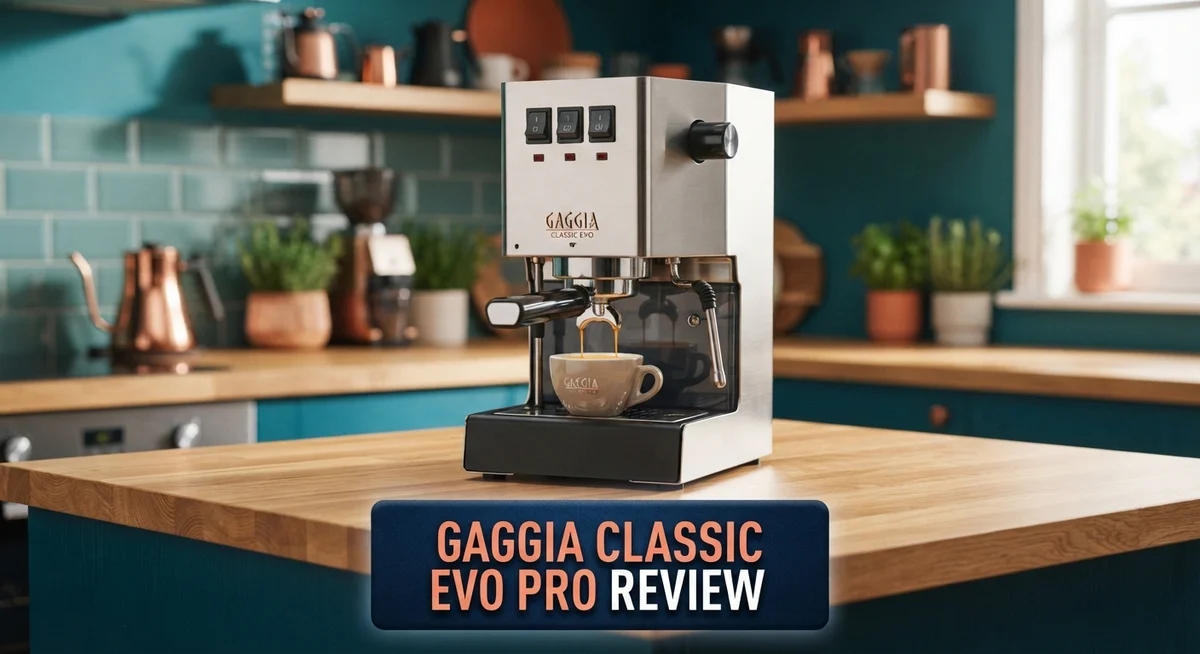
Gaggia Classic Evo Pro Review 2026: Worth the Hype?
The Gaggia Classic Evo Pro has a big reputation among home baristas. It brings a tank-like build and old-school charm to your kitchen counter. But does it still hold up today?
This machine uses a single boiler and a 9-bar pump. It also includes a 3-way solenoid valve for cleaner pucks. These features help you pull consistent shots every time.
We tested its brewing power, steaming ability, and overall durability. We also looked into common complaints, like boiler coating issues some users faced. This review covers everything you need to know.
In a Nutshell
- Built like a tank. The body feels solid and sturdy. It can handle daily use for many years without trouble.
- Repair friendly design. You can find spare parts easily. Most owners can fix small issues at home.
- Great for modding. Many enthusiasts upgrade this machine with custom parts. It welcomes tweaks and personal touches.
- Holds its value. If you decide to sell it later, this machine keeps a strong resale price. That makes it a smart long-term pick.
- Some boiler coating concerns. A few users reported issues nicknamed “boiler gate.” Some units needed replacement, so check reviews before buying.
- Stiff competition exists. The Breville Bambino Plus offers more convenience. The Gaggia Classic Up and older Pro models are also worth comparing.
Build Quality and Materials
The Gaggia Classic Evo Pro stands out for its solid construction and industrial feel. The machine weighs considerably more than modern competitors, which signals durability from the moment you unbox it. The body uses metal components throughout, and the frame resists wobbling even during intense espresso pulls.
The boiler sits at the heart of this machine. It holds 140ml maximum capacity with 105ml operating capacity. Gaggia built it from lead-free brass, a material choice that resists corrosion and heat stress. This brass construction means the boiler can withstand years of daily use without degrading quickly.
One practical advantage emerges when you need repairs. The Gaggia Classic Evo Pro uses standardized parts that you can source easily online. The community has spent decades documenting every component. This means replacement gaskets, seals, and heating elements stay readily available. You won’t face the frustration of owning an orphaned machine with no spare parts.
The mod-friendly design attracts enthusiasts who want to customize their setup. You can upgrade the group head, install a PID temperature controller, or swap the pump without major complications. The accessible layout lets you reach most internal components without special tools or expertise.
However, some users reported coating issues on the boiler surface, a problem the community nicknamed “boiler gate.” A small number of units arrived with defective coating that required replacement under warranty. This concern appears isolated but worth noting if you purchase early production batches.
The machine also holds its value remarkably well. Owners who decide to sell report strong resale prices, which reflects the build quality and community demand. The durability translates directly into long-term ownership satisfaction.
The bottom line: This machine prioritizes longevity over convenience. It feels like equipment built to last, not a disposable appliance. The brass boiler, metal construction, and repair-friendly design combine to create a machine that improves with age rather than deteriorating. For users who value reliability and the ability to maintain their equipment, these materials and construction choices matter significantly.

- Solid Steel Housing, Made in Italy
- 9 Bar Espresso Extractions

Last update on 2026-10-23 / Affiliate links / Images from Amazon Product Advertising API Some of the links on this website are affiliate links, which means that at no additional cost to you, I earn a commission if you click through and make a purchase. I only recommend products and services that I believe will add value to my readers. Thank you for your support!
Brewing Performance and Pressure
The 9-bar pump pressure forms the backbone of this machine’s brewing capability. This pressure level sits right in the sweet spot for espresso extraction. You get enough force to pull shots consistently without over-extraction issues that plague some lower-pressure machines.
What makes this pressure system special? The three-way solenoid valve handles the pressure release intelligently. When you stop pulling a shot, the valve vents excess pressure instead of holding it. This design prevents water from dripping out of the group head after you finish. You stay dry, and your portafilter stays clean.
The 140ml boiler may seem small compared to modern machines. But here’s the practical truth: the operating capacity sits at 105ml, which is plenty for back-to-back shots. You won’t face long wait times between espressos. Heat recovery happens fast because less water needs warming up.
Brewing performance depends heavily on user technique. This machine demands a proper grind, correct tamping pressure, and good timing. Beginners often struggle initially because there’s no automation to hide mistakes. However, once you dial in your routine, five-star shots become absolutely achievable. The pressure consistency rewards good technique with silky microfoam and balanced extraction.
One critical detail: temperature stability matters more on single-boiler machines. You need to pull a flush shot before brewing if you’ve been steaming milk. This temperature surfing process takes practice but becomes second nature quickly. Many users actually prefer this hands-on approach because it connects them to the brewing process.
The brass boiler construction itself contributes to heat retention and thermal stability. Some users reported coating issues on certain units (the community calls this “boiler gate”), but this remains an isolated concern rather than a widespread defect.
Pressure performance remains consistent across the machine’s lifespan. Unlike some budget espresso makers that lose pressure over time, this Gaggia maintains its 9-bar output year after year. That reliability is why enthusiasts keep these machines running for decades. The pressure system simply works.
Boiler Capacity and Heat Management
The boiler sits at the core of the Gaggia Classic Evo Pro. Understanding how it works helps you get better shots. This machine uses a 140ml brass boiler with an operating capacity of 105ml. The lead-free brass construction matters because it retains heat effectively and distributes warmth evenly across the group head.
Single boiler machines like this one require patience. You cannot brew and steam simultaneously without switching modes. The 105ml operating capacity means you work with smaller water volumes than dual-boiler competitors. This design choice affects your workflow and shot consistency.
Heat management on this machine depends on your technique. The brass boiler recovers temperature quickly after pulling a shot, but you must monitor the gauge and wait for pressure stability. Temperature surfing becomes a real skill you develop over time. Users learn to read subtle pressure changes and adjust timing accordingly.
The three-way solenoid valve plays a crucial role here. This component releases pressure intelligently after each shot, which protects the boiler and improves consistency. The valve also helps cool the group head when you need to switch between brewing and steaming modes.
One practical benefit emerges from this simple design. The boiler lacks complex electronics and sensors. This means fewer things break, and repairs stay straightforward. Replacement boilers and internal parts remain easy to source. The brass construction itself resists corrosion and lasts for years with basic maintenance.
However, some users reported coating issues on boiler surfaces. The community nicknamed this problem “boiler gate.” A small number of units required replacement under warranty. Most machines perform reliably, but this concern exists in owner discussions.
The compact boiler size teaches you precision. You cannot waste water or make careless mistakes. Each shot demands attention and proper technique. This limitation actually becomes a strength for users who embrace the learning process and enjoy hands-on control over their brewing experience.
Top 3 Alternatives
Breville Barista Express

- MANUAL HAND-TEXTURED MICROFOAM: The powerful steam wand on this cappuccino maker and latte machine...
- PRECISE DOSE GRINDING: Integrated precision conical burr grinder on bean-to-cup espresso machine...
Last update on 2026-10-23 / Affiliate links / Images from Amazon Product Advertising API Some of the links on this website are affiliate links, which means that at no additional cost to you, I earn a commission if you click through and make a purchase. I only recommend products and services that I believe will add value to my readers. Thank you for your support!
Rancilio Silvia Espresso Machine

- Classic Espresso: The Silvia has been in production for over 20 years-- making it one of the most...
- Single Boiler: The single 12-ounce brass boiler serves both brew and steam temperatures.
Last update on 2026-10-23 / Affiliate links / Images from Amazon Product Advertising API Some of the links on this website are affiliate links, which means that at no additional cost to you, I earn a commission if you click through and make a purchase. I only recommend products and services that I believe will add value to my readers. Thank you for your support!
Lelit Victoria Espresso Machine
- Solid Steel Housing, Made in Italy
- 9 Bar Espresso Extractions
Last update on 2026-10-23 / Affiliate links / Images from Amazon Product Advertising API Some of the links on this website are affiliate links, which means that at no additional cost to you, I earn a commission if you click through and make a purchase. I only recommend products and services that I believe will add value to my readers. Thank you for your support!
Repairability and Customization Potential
The Gaggia Classic Evo Pro opens up a world of repair possibilities that few machines in its class can match. You can access nearly every component without specialized tools or expertise. The straightforward design means replacement parts arrive quickly and fit without complications.
Parts availability stands as one of the biggest advantages here. The community has supported this machine for years, so you find genuine Gaggia components and aftermarket upgrades easily. Gaskets, seals, shower screens, and even the boiler itself can be swapped out by users with basic mechanical skills.
The mod-friendly nature attracts enthusiasts who want to personalize their setup. You can upgrade the steam wand, install a PID temperature controller, or add a rotary pump. Some users replace the standard portafilter with third-party options for better espresso results. These modifications range from simple swaps to more involved electrical work, depending on your comfort level.
The brass boiler construction actually helps with longevity. Brass resists corrosion better than other materials, meaning your machine ages gracefully. When issues do arise, the boiler can be descaled, rebuilt, or replaced without replacing the entire machine.
One practical benefit emerges from this simple, single-boiler design. You understand how every part works together. This knowledge makes troubleshooting easier when something needs attention. The manual operation means fewer electronic components that could fail unexpectedly.
However, some users reported coating issues on boiler surfaces, a problem the community nicknamed “boiler gate.” A small percentage of units needed boiler replacement, though this remains uncommon. Gaggia addressed these concerns in newer production runs.
The resale value holds strong precisely because repairs remain so accessible. Buyers know they can maintain and fix the machine themselves. This confidence in longevity translates to better market value when you eventually upgrade.
Bottom line: The Gaggia Classic Evo Pro rewards hands-on users who enjoy understanding their equipment. Repairs stay affordable and straightforward. Customization options let you shape the machine to match your preferences and skill level.
Learning Curve and Ease of Use
The Gaggia Classic Evo Pro sits at the opposite end of the spectrum from fully automatic machines. This is a manual espresso maker that demands hands-on involvement at every step. You’ll control the group head temperature, manage water flow, and time your shots yourself.
New users often find this approach challenging at first. Unlike modern machines with digital displays and preset buttons, you rely on observation and feel. The learning curve exists, but it’s not insurmountable. Most people pull decent shots within a week or two of regular practice.
What helps the learning process? The machine’s simple mechanical design actually works in your favor. Fewer electronic components mean fewer things to confuse you. You learn cause and effect quickly. Pull the lever too fast, and you see the result immediately. Adjust your grind finer, and you feel the difference in resistance.
Temperature management requires attention on this single boiler machine. You need to understand the heat cycle and plan your workflow accordingly. Some users employ the temperature surfing technique, where you time your shots based on boiler heating patterns. This sounds complicated, but it becomes second nature after practice.
The manual operation teaches you espresso fundamentals that automatic machines hide. You develop a real understanding of pressure, flow rate, and extraction time. This knowledge transfers to any espresso machine you use later.
One practical advantage emerges here: the compact size and straightforward controls mean you can troubleshoot problems yourself. When something feels off, you can identify the issue without consulting a manual constantly. The machine communicates through its behavior.
However, if you prefer convenience and consistency over learning, this machine frustrates rather than delights. Modern alternatives handle temperature stability automatically. They eliminate the guesswork. The Gaggia Classic Evo Pro rewards patience and curiosity, but punishes impatience.
The real question isn’t whether this machine is easy to use. It’s whether you want to develop genuine espresso skills or simply want good coffee quickly. This machine serves the first goal beautifully.
Pros and Cons
Pros
- Durable, tank-like build quality that stands up to daily use and time
- Highly repairable with excellent parts availability, making long-term ownership practical
- Capable of producing five-star shots and microfoam milk once you master the technique
- Mod-friendly design attracts enthusiasts who want to customize their setup
- Strong resale value due to the machine’s longevity and easy repair options
Cons
- Manual, old-school operation requires patience and skill development from users
- Some units experienced boiler coating issues, a problem the community called “boiler gate”
- Not beginner-friendly compared to modern automatic alternatives that offer more convenience
- Single boiler design means you must wait between steaming milk and pulling shots
Who Should Buy It
The Gaggia Classic Evo Pro suits specific types of coffee lovers. You should consider this machine if you enjoy hands-on control over your espresso shots.
Are you someone who wants to understand how espresso actually works? This machine teaches you. Every variable sits in your hands. You control water temperature, pre-infusion timing, and pressure manually. You learn the fundamentals that automatic machines hide from you.
Enthusiasts and modders find real joy here. The single boiler design stays simple enough to modify. Parts availability means you can upgrade components without hunting for obscure replacements. Want to swap the basket? Add a PID controller? Install a new pump? The community supports these upgrades actively.
Do you value long-term ownership? This machine rewards patient owners. The brass boiler construction lasts years with proper care. Repairs stay affordable because the design hasn’t changed much in decades. You won’t feel forced to replace it after a few years.
This machine works best for people who accept manual operation as a feature, not a limitation. If you want to pull shots while half-asleep, look elsewhere. If you enjoy the ritual and precision of manual espresso making, this fits perfectly.
Skip this machine if you prioritize convenience. Modern alternatives handle temperature automatically. They reduce guesswork. They produce consistent results without the learning curve. If your mornings lack time for careful technique, you’ll resent the manual workflow.
The Gaggia Classic Evo Pro also suits people who appreciate durability over flashy features. You get a tank-like build that survives daily use. No touchscreen fails. No complex electronics break down. Just solid mechanical components that work year after year.
Finally, consider this machine if you plan to stay with espresso long-term. The resale value holds strong because others recognize its quality. You can upgrade later without feeling stuck with a machine you can’t sell.
In short: buy this if you want control, enjoy learning, and value repairability over convenience.
Final Verdict
The Gaggia Classic Evo Pro earns its place as a trusted choice for home espresso lovers. It blends old world charm with dependable performance. This machine rewards those who want to grow their skills over time.
Think of it as a long term coffee companion rather than a quick fix gadget. It asks for your attention but gives back rich, satisfying shots. That trade off defines its true character.
Compared to modern rivals like the Breville Bambino Plus, the Evo Pro feels more raw and hands on. It does not hide the process behind buttons and screens. Instead, it invites you to learn by doing.
If you already own a Gaggia Classic Pro or Classic Up, the Evo Pro feels like a natural step up. It keeps the same spirit while polishing small details that matter daily.
This machine fits people who see espresso making as a craft, not a chore. It suits those who enjoy tinkering, adjusting, and perfecting their routine. Every shot becomes a small victory when you get it right.
For beginners who want plug and play simplicity, this might not be the first pick. But for anyone ready to invest time and curiosity, it delivers real rewards. The learning curve becomes part of the charm.
In the end, the Gaggia Classic Evo Pro stands as a reliable, honest machine. It does not try to impress with flashy screens or automated shortcuts. It simply performs, again and again, once you understand its rhythm.
If you want a machine that grows with you and rewards patience, this one deserves serious consideration. It represents a solid step toward mastering the art of espresso at home.
Frequently Asked Questions
Does the Gaggia Classic Evo Pro come with a grinder?
No, this machine does not include a grinder. You need to buy one separately. A quality burr grinder is essential because espresso demands consistent, fine grounds. Many owners pair this machine with a dedicated espresso grinder for best results.
Can I use this machine if I’m completely new to espresso?
You can, but it will be challenging. This machine requires manual skill and patience. You control water temperature, pressure, and timing yourself. Modern alternatives like the Breville Bambino Plus handle these tasks automatically, making them friendlier for beginners. If you’re willing to learn and practice, the Evo Pro teaches you how espresso actually works.
What’s the difference between the Evo Pro and older Gaggia Classic models?
The Evo Pro represents an improvement over the Classic Pro and Classic Up. It features better build consistency and refined components. However, all three share the same manual, single boiler design. The Evo Pro benefits from years of community feedback, resulting in fewer reported issues. If you own an older Classic model, the Evo Pro feels like a natural upgrade.
Is this machine easy to repair and modify?
Yes, absolutely. The Gaggia Classic Evo Pro is famous for being mod-friendly. Parts are widely available online. The community actively shares upgrade guides and modifications. You can replace the group head, add a PID temperature controller, or upgrade the steam wand. This repairability means your machine can evolve with your skills over time.
Will this machine hold its value?
Yes, it holds resale value well. The durable construction and strong community support keep demand high. Owners who take care of their machines report good returns when selling. This longevity makes it a smart choice for long-term espresso enthusiasts.
Hi, I’m Greta Monroe, and I’m passionate about making every kitchen a place of creativity and efficiency. I’ve spent years exploring and testing kitchen gadgets, tools, and devices to help home cooks find exactly what they need. At ChefKit Blog, I share honest Amazon product reviews and practical insights on kitchen essentials that actually make a difference. From must-have basics to innovative new devices, I break down what works and what doesn’t. My mission is simple: to help you build a kitchen that inspires delicious possibilities every single day.