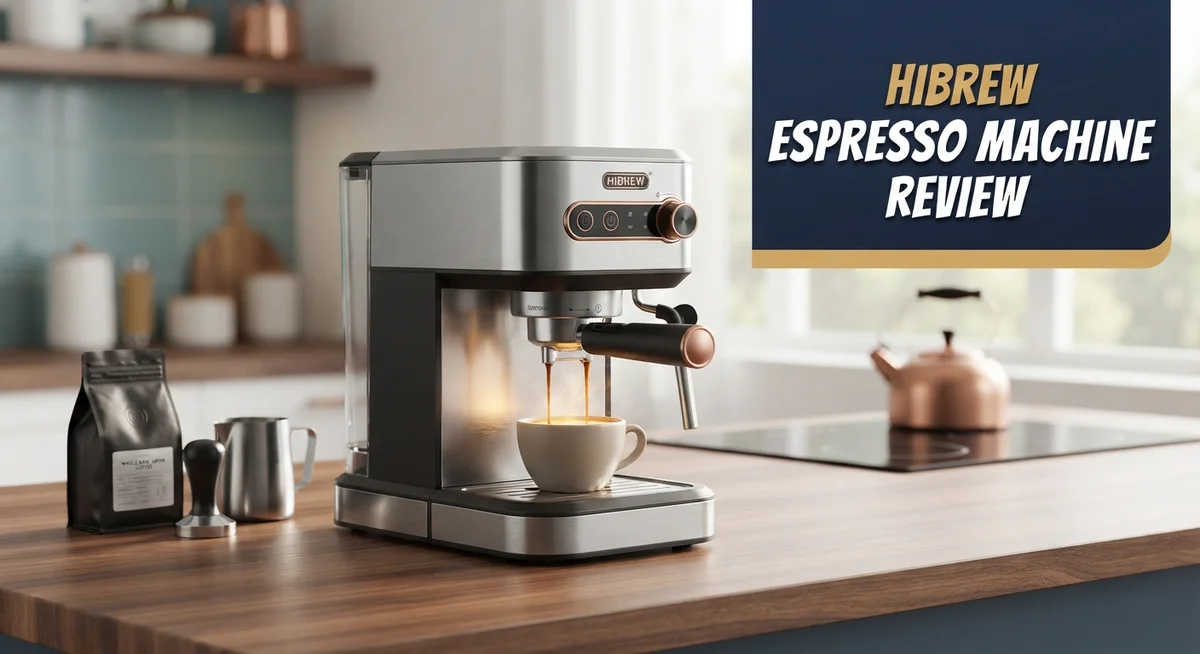
HiBREW Espresso Machine Review 2026: Worth the Splurge?
Want coffee shop quality espresso at home? The HiBREW espresso machine promises exactly that. It brings 20 bar pressure and a 58mm group head into your kitchen.
This machine looks compact. It fits small counters with ease. But it still packs features you find in bigger, professional setups.
We tested the HiBREW H10A to see if it lives up to the hype. This review covers everything you need to know. You will learn about its build quality, brewing performance, and daily usability.
In a Nutshell
- Sturdy build quality: The HiBREW uses solid materials that feel durable in daily use. It does not feel flimsy like other machines in this class.
- Compact design: This machine fits small kitchens easily. Its footprint stays small without sacrificing performance.
- Professional accessory support: You can attach professional-grade accessories to this machine. This gives you room to upgrade your setup later.
- Small drip tray issue: The drip tray fills up fast. You will need to empty it every two or three shots.
- Learning curve exists: Getting the perfect shot takes some practice. New users might feel frustrated at first.
- Cleaning requirements: The group head needs regular attention. Skipping cleaning can affect your coffee’s taste over time.
- Strong performance edge: This machine outperforms basic pressurized-only models. You get more control and better results overall.
Build Quality and Materials
The HiBREW H10A uses materials that stand up well to regular espresso making. The body combines stainless steel and aluminum parts that resist rust and corrosion. These metals feel solid when you hold the machine, giving you confidence it will last.
The group head sits at 58mm, which is a professional standard size. This means you can swap in quality accessories from other brands. The brass components inside the machine handle heat cycles without warping or degrading quickly.
Pressure consistency matters for espresso quality. The 20 bar pump maintains steady pressure throughout extraction. This keeps your shots tasting the same from one day to the next. The pressurized basket option lets beginners pull decent shots even with inconsistent tamping technique.
The removable 1.8L water tank makes refilling simple. The plastic tank resists cracks from thermal stress. You can pop it out and clean it easily without tools. This design choice helps prevent mineral buildup inside the machine.
Temperature stability affects flavor development. The adjustable temperature control lets you dial in heat levels between 93°C and higher settings. Consistent heating means your espresso extracts properly. The steam wand responds quickly to temperature changes for milk frothing.
The machine’s compact footprint comes from smart internal layout. Nothing feels cramped or poorly positioned. All parts sit where you need them for cleaning and maintenance. The 9″ × 11″ × 13″ dimensions fit most kitchen counters without taking up excessive space.
One area needing attention is the drip tray capacity. It fills after just 2 to 3 shots, requiring frequent emptying. This isn’t a material flaw but rather a design choice that affects daily use. The group head benefits from cleaning between shots to prevent coffee oil buildup.
Overall, the build quality supports consistent performance. The materials chosen here match what you find in machines costing much more. Stainless steel and brass don’t cut corners. The engineering allows for professional accessory compatibility, which extends the machine’s usefulness over time.

- 【Stable Uniform Extraction with Pressure Gauge】Upgraded 20-bar pump paired with an NTC...
- 【Space-Saving Stainless Steel Body】Made of food-grade brushed stainless steel, this machine is...

Last update on 2026-10-23 / Affiliate links / Images from Amazon Product Advertising API Some of the links on this website are affiliate links, which means that at no additional cost to you, I earn a commission if you click through and make a purchase. I only recommend products and services that I believe will add value to my readers. Thank you for your support!
Pressure, Temperature, and Brewing Performance
The HiBREW H10A delivers consistent pressure output that matters for espresso extraction. The 20 bar pump generates the force needed to push hot water through ground coffee at the right speed. This pressure level sits in the professional range, meaning you get results similar to café machines.
Temperature control on this machine gives you real flexibility. You can adjust the heat settings to match different coffee beans and your personal taste. Some beans pull better at 93°C while others shine at slightly different temperatures. You have the power to experiment and find what works best for your shots.
The 58mm group head uses a professional standard size. This matters because it means you can swap in quality accessories from established coffee brands. You are not locked into proprietary parts that only this machine accepts. The group head does require regular cleaning to maintain performance, especially after several shots in a row.
Brewing performance stands out when you compare this machine to basic pressurized basket models. The combination of steady pressure and temperature control lets you pull shots with better flavor clarity and crema. You will notice the difference in your cup compared to cheaper alternatives.
One practical note about performance: the small drip tray fills quickly during testing sessions. You need to empty it every 2 to 3 shots to prevent overflow. This is not a pressure or temperature issue, but it affects your workflow during back to back brewing.
Getting optimal results requires some practice. The learning curve exists because you must dial in grind size, tamp pressure, and water temperature together. Once you understand how these elements interact, the machine responds well to your adjustments.
The removable 1.8L water tank keeps refilling simple and fast. You spend less time managing the machine and more time enjoying your espresso. Pressure stability throughout extraction means your shots pull consistently from start to finish, which is what separates quality espresso from mediocre attempts.
Capacity, Size, and Ease of Cleaning
The HiBREW H10A keeps things simple when it comes to water storage. The removable 1.8L tank holds enough for multiple shots before you need a refill. You can take it out easily and fill it at your sink.
This machine measures 9 inches wide, 11 inches deep, and 13 inches tall. It fits nicely on most kitchen counters without taking up excessive space. The compact design works well for apartments or small kitchens where counter room matters.
One practical consideration involves the drip tray. It’s smaller than what you might expect, so you’ll need to empty it every 2 to 3 shots. This isn’t a deal breaker, but it means you can’t just walk away and forget about it during a morning routine.
Cleaning this machine requires regular attention. The 58mm group head collects coffee residue after each use. Backflushing and soaking the group head keeps it functioning properly over time. You should plan for a few minutes of maintenance between shots.
The removable components make cleaning easier than fixed designs. You can detach the group head and basket to rinse them thoroughly. The water tank comes out for cleaning as well, which prevents mineral buildup inside the machine.
Getting optimal results takes practice with this model. The learning curve exists because you have real control over temperature and pressure. Beginners might pull some weak shots while dialing in their technique.
The machine’s materials stand up well to frequent use and cleaning. Stainless steel parts resist corrosion from water and espresso oils. This durability means your cleaning routine won’t wear down the machine quickly.
One thing to know: this machine demands consistency from you. The small drip tray means you can’t brew large batches without attention. But this limitation also keeps you engaged with the brewing process, which many espresso lovers actually prefer.
Overall, the HiBREW balances compact size with practical cleaning needs. You get professional features in a footprint that works for home kitchens.
Top 3 Alternatives
Gaggia Classic Pro

- Solid Steel Housing, Made in Italy
- 9 Bar Espresso Extractions
Last update on 2026-10-23 / Affiliate links / Images from Amazon Product Advertising API Some of the links on this website are affiliate links, which means that at no additional cost to you, I earn a commission if you click through and make a purchase. I only recommend products and services that I believe will add value to my readers. Thank you for your support!
Breville Barista Express

- MANUAL HAND-TEXTURED MICROFOAM: The powerful steam wand on this cappuccino maker and latte machine...
- PRECISE DOSE GRINDING: Integrated precision conical burr grinder on bean-to-cup espresso machine...
Last update on 2026-10-23 / Affiliate links / Images from Amazon Product Advertising API Some of the links on this website are affiliate links, which means that at no additional cost to you, I earn a commission if you click through and make a purchase. I only recommend products and services that I believe will add value to my readers. Thank you for your support!
DeLonghi Dedica Espresso
No products found.
Compatibility with Professional Accessories
The HiBREW H10A uses a 58mm group head, which opens doors to professional-grade accessories. This standard size means you can swap components with confidence.
Portafilter compatibility matters most. The 58mm opening accepts quality portafilters from established brands. You gain access to single spout, double spout, and naked options. This flexibility lets you experiment with different brewing styles without buying a new machine.
Basket selection becomes your next consideration. The machine ships with a 2-cup pressurized basket, but you can use non-pressurized baskets too. Professional baskets from specialty retailers fit perfectly. Single baskets and triple baskets work on this group head. Switching between them takes seconds and costs very little.
Tampers and distribution tools integrate smoothly. Standard 58mm tampers apply even pressure across your coffee grounds. Leveling tools and WDT (Weiss Distribution Technique) needles also work without modification. These accessories help you dial in extraction and reduce channeling.
Steam wand accessories add another layer of capability. You can attach milk frothers, thermometers, or silicone sleeves to the existing wand. Some users upgrade to aftermarket steam tips for better milk texture control.
One important note: compatibility goes both ways. While professional accessories fit, your machine still operates at its core specifications. You cannot transform a home espresso machine into a commercial unit just by adding accessories. The 20 bar pump and heating system remain the limiting factors for performance.
Replacement parts availability matters for long term use. The 58mm standard means group head gaskets, shower screens, and dispersion plates come from multiple suppliers. You won’t face dead ends when something wears out.
The learning curve steepens when you use professional accessories. Pressurized baskets forgive inconsistent tamping. Non-pressurized baskets demand precision. Moving from one to the other requires practice and adjustment.
This compatibility advantage sets the HiBREW apart. You start simple with included components, then gradually upgrade as your skills grow. The professional standard size ensures your investment in accessories carries forward, even if you eventually upgrade machines.
Learning Curve and User Experience
The HiBREW espresso machine presents a moderate learning curve that most home brewers can handle with patience. You’ll need to invest time upfront to understand how pressure, temperature, and grind size work together on this specific machine.
Starting out feels straightforward. The basic controls are intuitive, and the included pressurized basket helps beginners pull decent shots without extensive knowledge. However, reaching consistent, high-quality results requires deliberate practice and attention to detail.
Temperature adjustment represents your first learning point. The machine lets you dial in heat settings, but finding the sweet spot for your beans takes experimentation. Most users report success within their first week of regular use. You’ll quickly learn which temperatures work best for light roasts versus dark roasts.
Tamping technique matters significantly here. The 58mm group head accepts professional tampers, which means you can apply proper pressure. Beginners often tamp inconsistently at first, leading to uneven extraction. Watching instructional videos and practicing your form helps tremendously. After 20 to 30 shots, most people develop solid muscle memory.
The steam wand adds another skill to master. Steaming milk requires practice to achieve proper texture and temperature. The learning curve here is steeper than pulling espresso shots. Give yourself at least two weeks of regular practice before expecting café quality microfoam.
Cleaning between shots becomes routine quickly. The small drip tray means you’ll empty it frequently, which actually reinforces good habits. You’ll learn to backflush the group head and purge the group regularly. These tasks feel tedious initially but become second nature after a few days.
One advantage: the machine’s simplicity prevents overwhelming complexity. You won’t face unnecessary buttons or confusing displays. This straightforward design actually accelerates the learning process compared to machines packed with features.
Most users report feeling comfortable with their HiBREW within two to three weeks of regular use. The key is brewing multiple shots daily and adjusting one variable at a time. Patience and consistency beat rushing through the learning phase.
Pros and Cons
Pros
- Delivers excellent espresso quality that beats pressurized-only competitors
- Compact design fits easily on kitchen counters without taking up much space
- Built with high-quality materials that withstand regular use and cleaning
- 58mm group head accepts professional accessories for future upgrades
- Adjustable temperature and steam control let you dial in your perfect shot
Cons
- Drip tray fills quickly and needs emptying every 2 to 3 shots
- Group head requires frequent cleaning to maintain consistent performance
- Steep learning curve means you’ll need practice to pull optimal shots
- Durability and repair options raise concerns for long-term ownership
Who Should Buy It
The HiBREW espresso machine suits several types of coffee drinkers. If you’re a beginner who wants real espresso, this machine delivers. You get professional results without the overwhelming complexity of manual lever machines. The learning curve exists, but most users feel confident within two to three weeks of regular brewing.
Home baristas seeking upgrade potential will appreciate this machine. The 58mm group head accepts professional accessories from established brands. You start with basic components, then gradually add quality portafilters, tampers, and distribution tools as your skills grow. This flexibility keeps the machine relevant as your coffee knowledge expands.
Compact kitchen spaces benefit greatly from the HiBREW’s design. The 9″ × 11″ × 13″ footprint fits easily on counters without dominating your space. You get full espresso capability without sacrificing kitchen real estate. Apartment dwellers and those with limited counter space find this particularly valuable.
Coffee enthusiasts who want steam control and temperature adjustment will enjoy this machine. You’re not locked into one brewing method. The adjustable temperature lets you experiment with different beans and roast levels. The steam wand capability means you can practice milk frothing alongside espresso pulling.
This machine is not ideal for everyone. If you demand zero maintenance, look elsewhere. The drip tray fills quickly and needs emptying every 2 to 3 shots. The group head requires frequent cleaning for consistent performance. These aren’t dealbreakers, but they require commitment.
Users concerned about long term durability and repair accessibility should research alternatives. Some owners have raised questions about replacement parts availability and repair options. If future serviceability matters to you, contact the manufacturer first.
The HiBREW works best for people willing to invest time in learning proper technique. You’ll pull shots that beat pressurized only competitors. You’ll develop real barista skills. You’ll join a community of home espresso enthusiasts. If this sounds like you, the HiBREW deserves serious consideration.
Final Verdict
The HiBREW espresso machine earns its spot among the better entry level machines on the market today. It gives you real control over your shots. That control comes with responsibility though.
Compared to brands like Casabrews, HiBREW holds its own. Both target similar buyers, but HiBREW’s group head compatibility gives it an edge for future upgrades. This makes it a smarter long term pick for growing baristas.
Think of this machine as a stepping stone. It bridges the gap between basic pod machines and full sized commercial units. You get professional level features without jumping straight into expensive commercial gear.
Who should walk away from this purchase? Anyone wanting a plug and play experience should skip this model. Busy mornings with zero patience for adjustments will only bring frustration here.
Who should buy it today? People who enjoy the process of coffee making will thrive with this machine. If you like experimenting with grind size, tamping pressure, and steam timing, this machine rewards that curiosity.
The build quality reflects effort from the manufacturer. It feels sturdy in daily use, even if long term repairability remains a question mark. Most buyers won’t hit that wall for years anyway.
Overall, the HiBREW machine delivers strong performance for its category. It outperforms basic pressurized machines while staying compact enough for any kitchen. The learning curve is real, but it’s not a dealbreaker for motivated users.
Our final take: this machine suits intentional coffee drinkers over casual sippers. It rewards patience with genuinely good espresso. If you’re ready to learn the craft, HiBREW gives you the tools to succeed.
Choose this machine if you want room to grow. Skip it if convenience matters more than control. Either way, know what you’re signing up for before you buy.
Frequently Asked Questions
Can I use regular coffee beans with the HiBREW?
Yes, you can. The HiBREW works with any espresso compatible beans. For best results, grind them fresh just before brewing. A medium fine grind works well for this machine’s 20 bar pressure system.
How often should I clean the group head?
Clean it after every 2 to 3 shots. A quick backflush with water keeps it performing well. Regular cleaning prevents oil buildup and ensures consistent extraction.
What’s the learning curve like for beginners?
Expect to spend some time dialing in your technique. Temperature adjustment and steam control give you lots of options. This means more variables to master compared to fully automatic machines. Your first few shots may not be perfect, but practice pays off quickly.
Does the drip tray hold enough water?
The tray fills up fast. You’ll empty it every 2 to 3 shots during regular use. Keep a small cup nearby to catch overflow if you’re pulling back to back espressos. It’s a minor inconvenience rather than a deal breaker.
Is this machine easy to repair if something breaks?
Durability and repair accessibility are areas where owners report some concerns. Parts availability and service options vary by region. Before buying, check if local technicians support HiBREW machines in your area. This research helps avoid headaches down the road.

Hi, I’m Greta Monroe, and I’m passionate about making every kitchen a place of creativity and efficiency. I’ve spent years exploring and testing kitchen gadgets, tools, and devices to help home cooks find exactly what they need. At ChefKit Blog, I share honest Amazon product reviews and practical insights on kitchen essentials that actually make a difference. From must-have basics to innovative new devices, I break down what works and what doesn’t. My mission is simple: to help you build a kitchen that inspires delicious possibilities every single day.