Dedica Espresso Machine Review: Worth the Price Tag?
Small kitchens need smart tools. The Dedica Espresso Machine fits this need well. It brings café style brewing into a slim, compact body.
This machine warms up in just 30 seconds. You get quick shots without long waits. That speed makes busy mornings much easier.
The 15 bar pump pressure helps pull rich espresso. It also texture milk for smooth foam. Your lattes and cappuccinos can taste closer to café quality.
In a Nutshell
- Compact design fits anywhere. This machine slides into tight kitchen spaces. It looks sleek on any counter.
- Foam quality impresses. The steam wand creates smooth, creamy milk foam. Your lattes and cappuccinos will taste like café favorites.
- Shot consistency needs work. Some shots taste bold and rich. Others feel thin or watery. You may need practice to get it right every time.
- Learning curve exists. New users often struggle at first. Mastering grind size and tamping takes time and patience.
- Tall cups fit well. The removable drip tray creates extra room. You can brew into travel mugs or larger cups easily.
- Competitors offer alternatives. Machines like the Breville Bambino Plus and Gaggia Classic compete closely. Each has its own strengths and quirks.
Build Quality and Design
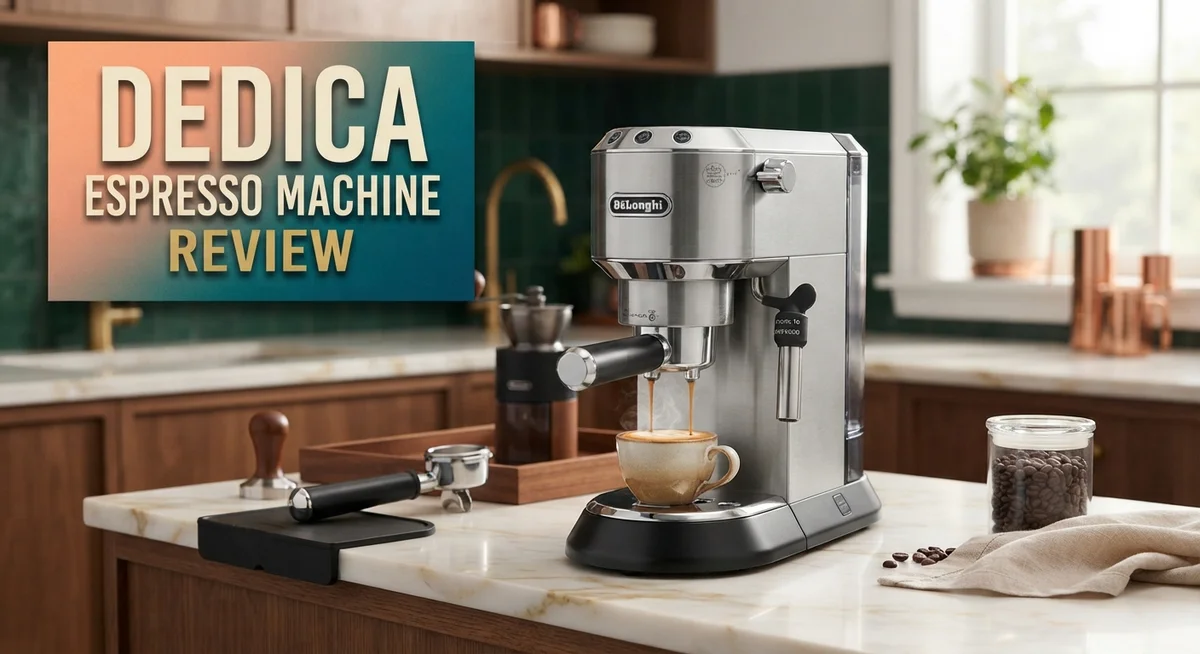
The Dedica espresso machine shows solid construction throughout. De’Longhi built this unit with stainless steel components that resist rust and daily wear. The exterior feels sturdy when you hold it, and the materials don’t feel cheap or flimsy.
The design prioritizes space efficiency. This machine measures small enough to fit on most countertops without taking over your kitchen. The slimline profile lets you tuck it into tight corners or beside other appliances. Many users appreciate how it doesn’t dominate the space like larger espresso machines do.
The water tank sits at the back and holds 34 to 35 ounces. You can refill it easily without removing it completely from the machine. The 18 gram ground coffee basket fits the portafilter snugly. These proportions work well for single or double shots depending on your preference.
The steam wand attaches to the side of the machine. It rotates and moves freely, which helps you position it exactly where you need it. The removable drip tray deserves special mention here. You can take it out to make room for taller cups or mugs. This flexibility matters if you like to use oversized coffee cups.
The control panel keeps things simple. You get a power button and a switch for the steam function. This straightforward layout means you won’t feel overwhelmed by too many options. New users find it easy to navigate the basic controls.
The portafilter and basket feel well made. They attach securely to the group head without wobbling. The volumetric dosing buttons sit on the front panel. These buttons let you program single or double shot volumes automatically.
Build quality remains consistent across all parts. Nothing rattles when you move the machine around. The plastic components feel durable rather than fragile. The metal parts show good finishing with minimal rough edges. Overall, the construction reflects a machine designed for regular home use. It won’t last forever without care, but it’s built to handle daily espresso making.
No products found.
Brewing Performance and Espresso Quality
The Dedica pulls espresso shots with solid consistency when you dial in your technique. The 15 bar pump pressure extracts flavors from ground coffee effectively. Most shots develop a thin to medium crema layer on top. You will notice the espresso tastes smooth and balanced rather than overly bitter or sour.
Milk frothing stands out as a real strength here. The steam wand creates velvety microfoam that pours smoothly into lattes and cappuccinos. The wand heats milk quickly without scorching it. Many users report café quality foam after just a few practice runs.
Shot quality does vary depending on how you prepare your grounds. Tamping pressure matters significantly with this machine. Grind size also plays a huge role in extraction. If you rush the prep work, shots can taste weak or pull too fast. The learning curve is real, but patience pays off with better results over time.
The volumetric dosing feature helps newer users get repeatable shots. You press a button and the machine stops automatically after dispensing a set amount. This removes guesswork from the process. However, manual control gives you more flexibility once you gain experience.
Water quality affects brewing performance noticeably. Hard water deposits build up inside the machine and slow extraction. Regular descaling keeps the pump and group head clean. Most owners descale every 25 to 30 days depending on their water hardness. Neglecting this step causes pressure drops and weaker shots.
Temperature stability influences espresso quality too. The machine reaches optimal brewing heat in 30 seconds. Once ready, it maintains temperature well during back to back shots. You can pull multiple espressos without waiting between pulls.
Overall, this machine delivers respectable espresso for someone starting their home coffee journey. Results depend heavily on your technique and commitment to maintenance. Expect a learning phase before shots taste consistently excellent. The Dedica rewards users who invest time in understanding proper tamping, grinding, and descaling routines.
Ease of Use and Learning Curve
The Dedica espresso machine sits somewhere in the middle when it comes to user friendliness. New users will find some features helpful, but expect a learning curve before you pull consistently good shots.
The machine warms up in just 30 seconds. This quick heat time means you spend less time waiting and more time brewing. The control panel keeps things simple with straightforward buttons and switches. You won’t face overwhelming menus or confusing displays.
The volumetric dosing feature helps beginners tremendously. This function lets you program how long the pump runs, so you get repeatable shot volumes without measuring each time. Once you dial in your settings, the machine does the work for you on subsequent shots.
However, pulling quality espresso still requires practice. The Dedica demands proper grinding consistency, tamping pressure, and technique. If your grounds are too fine or too coarse, your shots suffer. If you tamp unevenly, water channels through the portafilter and ruins the extraction. Most beginners spend weeks learning these skills.
Milk steaming presents another learning phase. The steam wand produces excellent foam, but you must position the pitcher correctly and move it at the right speed. New users often create too many bubbles or too little foam at first. With practice, you master the motion.
Maintenance adds to the learning curve as well. You need to purge the group head before each shot, backflush the portafilter regularly, and run descaling cycles every 25 to 30 minutes of use. These tasks aren’t difficult, but they require consistency and attention.
The removable drip tray makes cleanup easier and lets you fit taller cups underneath. This thoughtful design reduces frustration during the learning phase.
Overall, expect to invest time into understanding how the Dedica works. The machine itself doesn’t hide complexity, but it also doesn’t automate everything away. You become an active participant in your espresso making. This hands on approach appeals to people who enjoy the coffee craft and don’t mind the learning process.
Top 3 Alternatives
Breville Barista Express

- INCLUDED: Razor Dose Trimming Tool, 54mm Stainless Steel Portafilter, 1 & 2 cup Single & Dual Wall...
- CAPACITY & SETTINGS: 1/2 lb Bean Hopper; 67 oz Water Tank; Single or double shots; Adjustable Grind...

Last update on 2026-08-22 / Affiliate links / Images from Amazon Product Advertising API Some of the links on this website are affiliate links, which means that at no additional cost to you, I earn a commission if you click through and make a purchase. I only recommend products and services that I believe will add value to my readers. Thank you for your support!
Gaggia Classic Pro

- Solid Steel Housing, Made in Italy
- 9 Bar Espresso Extractions
Last update on 2026-08-22 / Affiliate links / Images from Amazon Product Advertising API Some of the links on this website are affiliate links, which means that at no additional cost to you, I earn a commission if you click through and make a purchase. I only recommend products and services that I believe will add value to my readers. Thank you for your support!
Roka Espresso Machine

- 【All-in-One Café Experience】 From classic espresso to creamy cappuccinos, velvety lattes...
- 【20-Bar Pressure System for Flavor Extraction】This semi-automatic espresso machine is equipped...
Last update on 2026-08-22 / Affiliate links / Images from Amazon Product Advertising API Some of the links on this website are affiliate links, which means that at no additional cost to you, I earn a commission if you click through and make a purchase. I only recommend products and services that I believe will add value to my readers. Thank you for your support!
Maintenance and Descaling Requirements
The Dedica espresso machine requires regular attention to keep performing well. Descaling cycles take 25 to 30 minutes each time you run them. This is an important part of ownership that new users should expect.
Water quality directly impacts how often you need to descale. Hard water areas require more frequent descaling than soft water areas. You’ll notice mineral buildup inside the machine over time. This buildup affects temperature stability and espresso quality.
The descaling process itself is straightforward. You fill the water tank with descaling solution. Run the solution through the group head and steam wand. Let it sit for a few minutes. Then flush everything with fresh water. Most users complete this task without major issues.
The machine’s compact design makes descaling easier than larger models. You can access all the important parts without removing much. The removable drip tray comes off quickly. The portafilter detaches easily for cleaning underneath.
Between descaling cycles, daily maintenance keeps the Dedica running smoothly. Purge the group head before inserting the portafilter. This removes old coffee grounds and water. Wipe the steam wand after each milk drink. Milk residue hardens quickly and becomes difficult to remove later.
Empty the drip tray regularly. It fills up faster than you might expect. A full tray can overflow onto your countertop. Check it every few days depending on how much you use the machine.
The water tank needs cleaning too. Remove it and rinse it out weekly. Stale water sitting in the tank can develop odors. Fresh water improves your espresso taste.
Backflushing the group head helps extend time between descaling. This means running water through without the basket inserted. It clears out loose grounds and mineral deposits. Do this a few times each week.
New users sometimes skip maintenance steps initially. This leads to faster mineral buildup and performance issues. Stick to the routine from day one. Your espresso quality stays consistent when you maintain the machine properly.
Milk Frothing Capability
The Dedica’s milk frothing capability stands out as one of its best features. The steam wand delivers consistent results once you master the technique. You’ll notice the milk froths quickly and creates a smooth microfoam texture that works well for lattes and cappuccinos.
The steam pressure feels responsive and gives you good control over milk temperature. You can position the wand at different angles to create the vortex pattern you need. This flexibility helps you achieve the milk texture you want without fighting the machine.
One key advantage is the quick heat up time of 30 seconds. You don’t wait long between pulling an espresso shot and steaming milk. This speed matters when you’re making multiple drinks back to back.
The learning curve does exist here. New users often struggle with finding the right steam wand depth and milk pitcher angle at first. With practice, you’ll develop better muscle memory and produce consistently silky microfoam. Most people see improvement within their first week of daily use.
The steam wand itself is relatively easy to clean. You can purge excess milk immediately after steaming, which prevents buildup and keeps the nozzle clear. Regular wiping with a damp cloth takes just seconds.
One thing to note is that the Dedica’s compact design means the steam wand sits close to the drip tray. Taller milk pitchers might feel cramped in this space. You’ll need to angle your pitcher carefully, but it’s manageable once you adjust your technique.
The milk frothing results rival machines at higher price points. The steam power delivers dense, velvety foam that enhances your espresso drinks. If milk based beverages are important to you, the Dedica performs admirably in this area.
Temperature stability during steaming also helps create better results. The machine maintains consistent heat throughout the frothing process. This prevents scorching and gives you more time to work with the milk before it becomes too hot.
Overall, the Dedica’s milk frothing system deserves praise. You get professional quality microfoam without needing an expensive machine or years of experience.
Pros and Cons
Pros
- Quick 30 second warm-up gets you brewing fast
- Volumetric dosing feature helps beginners pull consistent shots
- Compact slimline design fits easily on any countertop
- Removable drip tray lets you use taller cups without spills
- Produces quality milk foam that rivals more expensive machines
Cons
- Shot quality varies depending on your technique and grind settings
- Espresso shots can lack body and depth compared to premium machines
- Descaling cycles take 25 to 30 minutes and need regular attention
- Steep learning curve to master pulling quality shots consistently
Who Should Buy It
The Dedica works best for people who want to learn espresso making without jumping into professional equipment. If you’re new to pulling shots, the volumetric dosing feature makes your first attempts easier. This machine removes some guesswork from the process.
You should buy the Dedica if you live in a small space. The compact slimline design fits on tight countertops where larger machines won’t work. You can even remove the drip tray to fit taller cups underneath.
This machine suits people who drink milk based drinks regularly. The steam pressure gives you real control over frothing, and the results rival machines that cost much more. If cappuccinos and lattes are your daily drinks, the Dedica delivers quality foam consistently.
The Dedica appeals to people who value speed. The 30 second warm up time means you brew coffee faster than most competitors. You don’t wait around before your morning shot pulls.
However, skip this machine if you want perfect espresso shots every time without effort. The learning curve is steep, and shot quality varies based on your grind size and technique. You need to experiment and adjust settings to get results you like.
Avoid the Dedica if you hate regular maintenance. Descaling cycles take 25 to 30 minutes, and you’ll do this often depending on your water quality. Daily upkeep includes emptying the drip tray and cleaning the milk wand.
The Dedica also isn’t ideal if you prefer deep, full bodied espresso. Shots from this machine can taste thin compared to premium machines. The pump pressure of 15 bar is standard, but extraction limits exist.
Consider this machine if you’re willing to practice and improve over time. You’ll get better results as you learn. The Dedica rewards patience and experimentation with increasingly good coffee.
This machine fits people who want authentic espresso experience at home without overwhelming complexity. You get real steam wand frothing and manual control. The learning process becomes part of the enjoyment for many users.
Final Verdict
The Dedica earns its spot as a solid entry level espresso machine. It brings real value to anyone starting their coffee journey at home.
Its small footprint, fast warm up, and volumetric dosing make daily use simple. These features help new users feel confident from the first brew.
That said, the Dedica has limits. Shot consistency depends heavily on your grind and tamping skills, and the flavor can feel thinner than what pricier machines deliver.
Compared to the Breville Bambino Plus or Sage Bambino, the Dedica holds its own on milk frothing and warm up speed. It falls slightly behind on shot depth and overall consistency.
Machines like the Breville Barista Express Impress offer more automation and grind control, but they also ask for more counter space and a bigger learning investment.
If you want espresso that improves as your skills grow, the Dedica rewards patience. Each session teaches you something new about grind size, tamping pressure, and extraction time.
Think of this machine as a training tool rather than a finished product. It hands you the basics and lets you build real barista skills over time.
Busy mornings also benefit from its quick heat up and easy to clean steam wand. You get a fast, functional coffee experience without much fuss.
However, if perfect, cafe style shots without effort matter most to you, look elsewhere. The Dedica asks for involvement, not shortcuts.
Overall, the Dedica fits people who enjoy the process of learning espresso. It suits small kitchens, milk based drink lovers, and anyone ready to practice.
Skip it if you want guesswork free results every single time. Choose it if you want a compact, reliable starting point for your espresso journey.
Frequently Asked Questions
Does the Dedica work well for beginners?
Yes, the Dedica suits people new to espresso. It heats up in 30 seconds, so you start brewing quickly. The volumetric dosing feature removes one guessing game from the process. However, expect a learning curve. Shot quality depends on your grind settings and technique. You’ll need to practice and adjust your approach over time.
How often do you need to descale the machine?
Regular descaling keeps your Dedica running smoothly. Descaling cycles take 25 to 30 minutes and need attention every few months, depending on your water hardness. This maintenance step is not optional if you want consistent performance and longer machine life.
Can you make milk based drinks with this machine?
Absolutely. The Dedica produces quality milk foam that rivals machines costing much more. The steam wand is easy to clean, which helps with daily use. If you drink cappuccinos or lattes regularly, this machine delivers solid results.
What’s the main limitation of the Dedica?
Shot consistency remains the biggest challenge. Espresso quality varies based on your technique and grind size. Shots can lack body and depth compared to premium machines. The machine doesn’t compensate for user error like some automatic models do. Think of it as a training tool that rewards practice rather than a machine that guarantees perfect shots every time.
How does the Dedica compare to other entry level machines?
The Breville Bambino Plus and Sage Bambino offer similar warm up times and milk frothing ability. The Breville Barista Express Impress includes a grinder, which removes one variable. The Dedica holds its own on the basics but lacks the automation features of pricier competitors.
Hi, I’m Greta Monroe, and I’m passionate about making every kitchen a place of creativity and efficiency. I’ve spent years exploring and testing kitchen gadgets, tools, and devices to help home cooks find exactly what they need. At ChefKit Blog, I share honest Amazon product reviews and practical insights on kitchen essentials that actually make a difference. From must-have basics to innovative new devices, I break down what works and what doesn’t. My mission is simple: to help you build a kitchen that inspires delicious possibilities every single day.