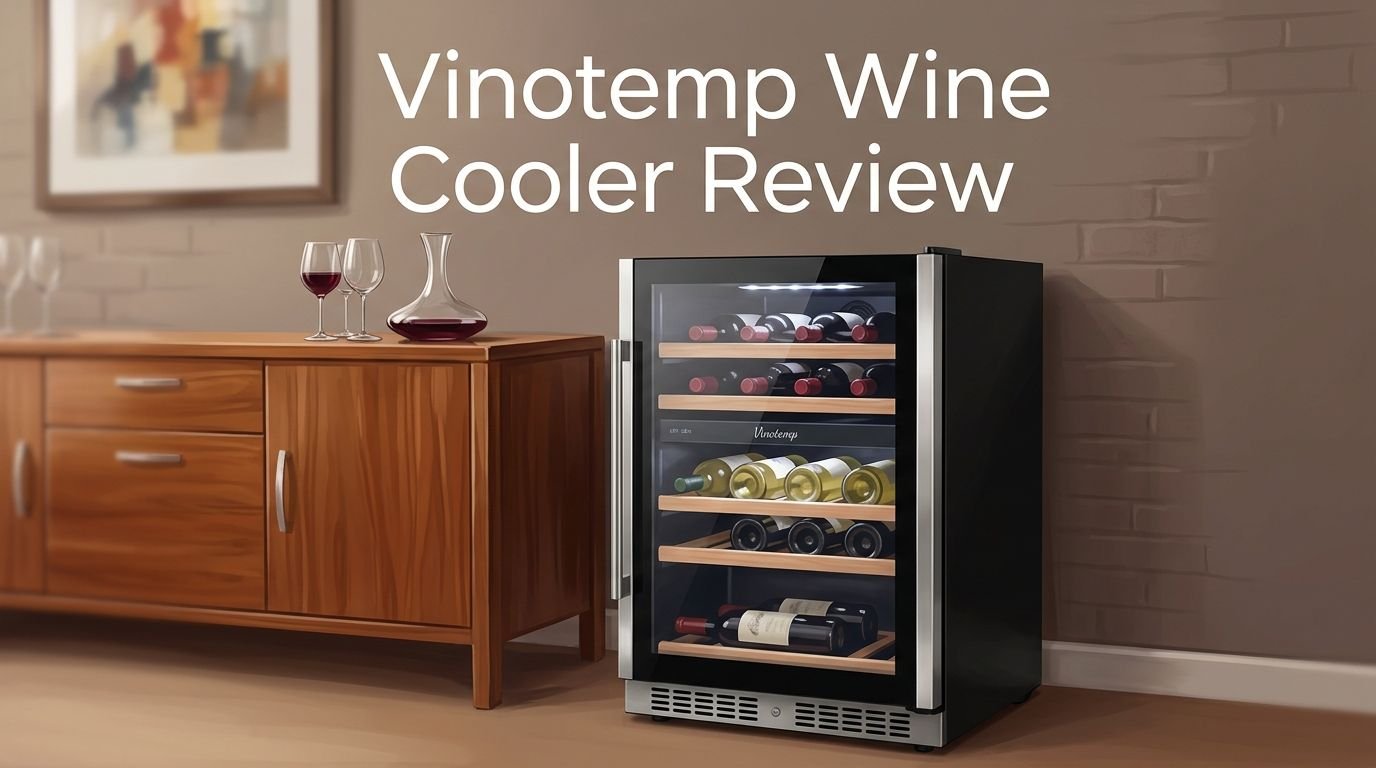
Vinotemp Wine Cooler Review 2026: Is It Worth Buying?
If you love wine, you know storage matters. The wrong temperature can ruin even the finest bottle. That’s where Vinotemp wine coolers step in. Vinotemp has been a trusted name in wine storage for over 30 years. They offer a wide range of coolers for casual drinkers and serious collectors alike.
But are Vinotemp wine coolers still a smart buy in 2026? With so many brands on the market, choosing the right one feels overwhelming. You want something reliable, quiet, and stylish. You also want good value for your money.
This review breaks down everything you need to know. We cover popular models, key features, pros, cons, and real user experiences. By the end of this post, you’ll know exactly whether a Vinotemp cooler belongs in your home. Let’s dive right in.
Key Takeaways:
- Vinotemp offers coolers in many sizes, from compact 7-bottle units to large 300+ bottle cabinets. This makes them a good fit for apartments, kitchens, home bars, and dedicated wine cellars.
- Most Vinotemp models use thermoelectric or compressor cooling. Thermoelectric units run quieter but work best in climate-controlled rooms. Compressor models cool more powerfully and handle warmer environments.
- Dual-zone temperature control is available on many models. This lets you store reds and whites at their ideal temperatures in the same unit. It’s a big advantage for collectors with diverse tastes.
- Build quality is generally solid across the lineup. Stainless steel doors, interior LED lighting, and wooden shelves are common features. These details add a premium look to your space.
- Price points range from budget-friendly to high-end. You can find a basic Vinotemp cooler for under $200 or invest over $2,000 in a large-capacity model. There’s something for almost every budget.
- Customer reviews are mostly positive, with users praising quiet operation and consistent temperatures. Some complaints exist about occasional cooling issues in entry-level thermoelectric models after extended use.

- Black cabinet with black glass door and stainless trim
- Dual-zone
Last update on 2026-07-21 / Affiliate links / Images from Amazon Product Advertising API Some of the links on this website are affiliate links, which means that at no additional cost to you, I earn a commission if you click through and make a purchase. I only recommend products and services that I believe will add value to my readers. Thank you for your support!
What Is Vinotemp and Why Does It Matter?
Vinotemp is a family-owned company founded by Francis Ravel in 1985 in Los Angeles, California. The brand started with wine production. Ravel then shifted focus to wine storage after seeing a gap in the market for quality wine refrigeration.
Over the past four decades, Vinotemp has sold over one million wine coolers across the United States. They manufacture and distribute wine cabinets, racking systems, cooling units, and full wine cellars. Their products serve both residential and light commercial customers.
The brand also operates sub-lines like Element by Vinotemp, which offers more budget-friendly options. This sub-brand targets everyday consumers who want reliable wine storage without a premium price tag. It has gained popularity on Amazon and at retailers like Costco.
Vinotemp’s product lines were acquired by The Legacy Companies, which strengthened their position in the premium consumer appliance market. This acquisition brought additional manufacturing resources and distribution channels. It means Vinotemp now has even more backing for product development and customer support.
What sets Vinotemp apart is their specialization. Many appliance brands make wine coolers as a side product. Vinotemp has focused on wine storage from day one. That single-minded focus shows in their designs, temperature controls, and shelving systems.
Vinotemp 28-Bottle Dual-Zone Wine Cooler Review
The Vinotemp 28-Bottle Dual-Zone Wine Cooler is one of the brand’s most popular mid-range models. It fits nicely in kitchens, dining rooms, or home bars. This unit stores up to 28 standard Bordeaux-style bottles across two independent temperature zones.
The upper zone works well for white wines at lower temperatures. The lower zone keeps reds at slightly warmer settings. You can adjust each zone independently through the easy-to-use touch screen control panel. The digital display shows the exact temperature for each zone.
Build quality is solid. The cooler features a black cabinet with a dual-pane glass door and stainless steel trim. Black wire racking with a modern stainless lip holds bottles securely. Interior LED lighting lets you view your collection without opening the door.
This model works as freestanding or built-in. Front ventilation allows you to slide it under a counter. Dimensions are compact enough for most standard cabinet openings.
Users on Reddit and Amazon report quiet operation and stable temperatures. However, a few buyers note that the actual bottle count can be lower if you store wider Burgundy or Champagne bottles. Plan for about 22 to 25 bottles in real-world use.
Overall, this is a strong choice for someone starting a small to medium wine collection. The dual-zone feature adds flexibility. The price sits in a reasonable mid-range, making it accessible for most households.
Vinotemp 155-Bottle Dual-Zone Wine Cooler Review

- Digital temperature control panel
- Vinotemp’s patented wine racks with black lip
Last update on 2026-07-21 / Affiliate links / Images from Amazon Product Advertising API Some of the links on this website are affiliate links, which means that at no additional cost to you, I earn a commission if you click through and make a purchase. I only recommend products and services that I believe will add value to my readers. Thank you for your support!
The Vinotemp 155-Bottle Dual-Zone Wine Cooler is built for serious collectors. This full-size unit stands about 70 inches tall and 23.5 inches wide. It stores up to 155 standard bottles across two independently controlled temperature zones.
Storage space is generous. The cooler includes 13 full-size shelves and 2 half-size shelves. Each zone holds roughly 77 bottles. The temperature range spans from 40°F to 72°F, which covers optimal storage conditions for virtually every wine type.
Compressor-based cooling delivers consistent, powerful performance. Unlike smaller thermoelectric models, this unit can handle ambient room temperatures that are less than ideal. The compressor runs efficiently and keeps both zones at precise temperatures.
The dual-pane glass door with stainless steel frame adds both insulation and style. A recessed handle or pole handle (depending on the model variant) keeps the profile clean. The unit works as both freestanding and built-in, thanks to front venting.
This model is popular at Costco and Amazon. Reddit users who own the 155-bottle version frequently praise its reliability over years of use. One user on r/wine mentioned running the same unit for years without any problems.
At a retail price often between $1,500 and $3,000, this is a significant investment. But for collectors with 100+ bottles, it replaces the need for an actual cellar. The cost per bottle of storage is actually quite competitive compared to building a dedicated wine room.
Top 3 Alternatives for Vinotemp Wine Cooler
If you want to compare options before buying, here are three strong alternatives to Vinotemp wine coolers.
1. Wine Enthusiast 32-Bottle Dual Zone MAX Compressor Wine Cooler

- Advanced MAX Compressor Cooling: Preserve wine up to 2X longer with efficient and quiet compressor...
- Dual Zone Temperature Control: Store reds in one zone, whites and rosés in the other. Customize...
Last update on 2026-07-21 / Affiliate links / Images from Amazon Product Advertising API Some of the links on this website are affiliate links, which means that at no additional cost to you, I earn a commission if you click through and make a purchase. I only recommend products and services that I believe will add value to my readers. Thank you for your support!
2. NewAir 15″ 29-Bottle Dual Zone Wine Fridge

- OPTIMAL TEMPERATURE FOR DIVERSE COLLECTIONS - Designed for collectors who enjoy both reds and...
- PRECISE DUAL-ZONE COOLING WITH LOW VIBRATION - The advanced compressor cooling system delivers...

Last update on 2026-07-21 / Affiliate links / Images from Amazon Product Advertising API Some of the links on this website are affiliate links, which means that at no additional cost to you, I earn a commission if you click through and make a purchase. I only recommend products and services that I believe will add value to my readers. Thank you for your support!
3. Kalamera 24-Inch 37-Bottle Dual Zone Wine Cooler

- ECO-FRIENDLY WOODEN FRAME:This wine cooler adopts a sturdy wooden frame, which can reduce the...
- TEMPERATURE MEMORY FUNCTION: These small wine & beverage coolers restore the set temperature in the...
Last update on 2026-07-21 / Affiliate links / Images from Amazon Product Advertising API Some of the links on this website are affiliate links, which means that at no additional cost to you, I earn a commission if you click through and make a purchase. I only recommend products and services that I believe will add value to my readers. Thank you for your support!
These three brands consistently rank among the top wine cooler choices on Amazon. Each one offers dual-zone cooling, solid build quality, and competitive pricing. They serve as excellent alternatives if a Vinotemp model doesn’t match your exact needs.
Vinotemp 7-Bottle Compact Wine Cooler Review
The Vinotemp 7-Bottle Wine Cooler (VT-7BMSL-FE) is the brand’s smallest offering. It’s designed for people with limited space who still want proper wine storage. This slim unit measures just 5.8 inches wide, making it one of the thinnest wine coolers available.

- 7 BOTTLE STORAGE: This wine cooler comfortably houses up to 7 bottles of your favorite wines...
- PRECISE TEMPERATURE SETTINGS: Enjoy the convenience of the digital temperature control display...
Last update on 2026-07-21 / Affiliate links / Images from Amazon Product Advertising API Some of the links on this website are affiliate links, which means that at no additional cost to you, I earn a commission if you click through and make a purchase. I only recommend products and services that I believe will add value to my readers. Thank you for your support!
It holds up to 7 bottles on individual wire shelves. The cooler features a dual-pane glass window and a sleek black cabinet. It runs on thermoelectric cooling, which means near-silent operation. You won’t hear it humming in your kitchen or bedroom.
The temperature range is limited compared to larger models. Thermoelectric cooling works best in rooms that stay below 77°F. If your room runs warm, the cooler may struggle to reach its lowest settings.
This unit is ideal for apartments, small kitchens, or as a secondary cooler in a home bar. It keeps a few bottles at the right temperature for everyday drinking. Don’t expect it to replace a full wine cellar, though. It’s a convenience product for casual wine drinkers.
Buyers appreciate its compact design and quiet operation. The price is usually under $200, making it one of the most affordable Vinotemp options. For the money, it delivers solid basic performance.
Compressor vs. Thermoelectric: Which Vinotemp Cooling System Is Better?
Vinotemp uses two main cooling technologies across their product line. Understanding the difference helps you pick the right model. Each system has clear strengths and weaknesses.
Compressor cooling works like a standard refrigerator. A compressor circulates refrigerant to cool the interior. This method is powerful and reliable. It can reach lower temperatures and maintain them even in warm rooms. Compressor models handle ambient temperatures up to 95°F or higher.
Thermoelectric cooling uses an electric current passing through two different materials to transfer heat. This process is simpler and has fewer moving parts. The result is quieter operation and less vibration. Wine purists often prefer this because vibration can disturb sediment in aging wines.
However, thermoelectric coolers have limitations. They can only cool about 20 to 25 degrees below room temperature. In a hot garage or unconditioned space, they may fail to keep wines cool enough. They work best in rooms kept at 75°F or lower.
For most home users, compressor models offer the best balance of performance and reliability. Vinotemp’s larger units (50+ bottles) almost exclusively use compressor technology. Their smaller units (under 30 bottles) often use thermoelectric systems.
If you plan to place your cooler in a temperature-controlled room, thermoelectric is a fine choice. For garages, outdoor spaces, or warm climates, stick with a compressor model. The extra noise is minimal and well worth the consistent cooling power.
Vinotemp Dual-Zone vs. Single-Zone: What Should You Pick?
This is one of the most common questions new wine cooler buyers ask. The answer depends on what types of wine you drink and how you plan to store them.
Single-zone coolers have one temperature setting for the entire unit. Every bottle inside sits at the same temperature. This works well if you only drink red wine or only drink white wine. It also works if you plan to store wine long-term at a single cellar temperature of around 55°F.
Dual-zone coolers split the interior into two sections. Each section has its own temperature control. The upper zone typically runs cooler for whites (45°F to 50°F). The lower zone runs warmer for reds (55°F to 65°F). This setup gives you maximum flexibility.
Vinotemp offers both options across their lineup. Their 28-bottle, 110-bottle, and 155-bottle models all come in dual-zone versions. Single-zone versions are available in select sizes and tend to cost a bit less.
If you enjoy both reds and whites, a dual-zone cooler is the clear winner. You can serve each wine at its perfect drinking temperature. You won’t need to take a bottle out early to warm up or cool down.
For dedicated collectors who plan to age wine for years, a single-zone set at 55°F works perfectly. This universal cellar temperature suits both reds and whites during long-term storage. The wine will be close to serving temperature when you’re ready to enjoy it.
Build Quality and Design Features
Vinotemp puts noticeable effort into design and materials. Even their budget-friendly Element line looks more polished than many competitors at the same price. This matters because a wine cooler often sits in a visible spot like your kitchen or dining area.
Most Vinotemp coolers feature dual-pane glass doors. This provides better insulation than single-pane glass. It reduces energy use and keeps temperatures stable. The glass also blocks some UV light, which can damage wine over time.
Shelving varies by model. Higher-end units use wooden shelves with chrome or stainless trim. These reduce vibration and look elegant. Budget models use black wire racks. Both types slide out smoothly for easy bottle access.
Interior LED lighting is standard across most models. The soft glow lets you browse your collection without generating heat. Traditional incandescent bulbs in older coolers used to warm the interior slightly. LEDs solve that problem completely.
Many Vinotemp units include a security lock. This is a small but useful feature. It prevents children from opening the door. It also protects your collection from curious guests at parties.
The overall fit and finish rivals brands costing significantly more. Stainless steel trim pieces are well-aligned. Door seals are tight. Hinges feel sturdy. These small details add up to a cooler that looks and feels premium in your home.
Noise Level and Energy Efficiency
Nobody wants a wine cooler that sounds like a jet engine in their kitchen. Noise level is a top concern for most buyers. Vinotemp performs well in this area, especially with their thermoelectric models.
Thermoelectric Vinotemp coolers run at roughly 25 to 35 decibels. That’s quieter than a whisper. You can place one in a bedroom or living room without any disturbance. The absence of a compressor means no periodic cycling noise.
Compressor models are louder but still reasonable. Most Vinotemp compressor coolers produce about 38 to 45 decibels. That’s comparable to a quiet library or a soft hum. The compressor does cycle on and off, which creates brief periods of slightly higher noise.
Energy efficiency is solid across the lineup. Smaller thermoelectric models use about 70 to 100 watts. Larger compressor models use more power but include features like auto-defrost and efficient insulation to reduce energy waste. Most users report no noticeable impact on their electricity bills.
Vinotemp does not currently carry Energy Star certification on most models. This is worth noting if energy ratings matter to you. However, real-world power consumption is still reasonable for an appliance that runs 24/7.
For the quietest experience, choose a thermoelectric model in the 7 to 28-bottle range. For larger collections, the compressor models are your only option, but they remain quieter than many kitchen appliances.
Vinotemp Customer Service and Warranty
A wine cooler is a long-term investment. Warranty and support matter just as much as features and design. Vinotemp offers a limited 2-year warranty on most of their coolers. This covers manufacturing defects and component failures under normal use.
The warranty typically includes parts and labor for the first year. The second year may cover parts only, depending on the model. Always check the specific warranty terms for the unit you’re buying. Terms can vary between the Vinotemp and Element by Vinotemp lines.
Customer service reviews are mixed. Some buyers report helpful and responsive support. Others have had difficulty reaching the team or getting timely replacements. Trustpilot reviews show a range of experiences. Positive reviews praise quick resolutions. Negative reviews cite slow communication.
One important tip: buy from an authorized retailer. Purchasing from Amazon, Costco, Best Buy, or Lowe’s ensures your warranty stays valid. Third-party sellers on marketplace platforms may void your coverage. Always keep your receipt and register your product.
Vinotemp does sell replacement parts through their website and authorized dealers. Shelves, door seals, fans, and control boards are available. This is a plus for long-term ownership. If something breaks after the warranty period, you can often fix it yourself for a small cost.
How to Set Up Your Vinotemp Wine Cooler
Setting up a Vinotemp cooler is straightforward. Most models arrive fully assembled. You just need to position the unit, plug it in, and set your desired temperature. But a few tips will help you get the best performance.
Choose the right location. Keep the cooler away from direct sunlight and heat sources like ovens or radiators. Heat forces the cooling system to work harder. A cool, shaded spot extends the life of the unit and improves efficiency.
Allow clearance for ventilation. Freestanding models need space around the back and sides. Built-in models vent from the front, so they don’t need rear clearance. Check your model’s manual for exact spacing requirements.
Let the cooler stabilize before loading bottles. After plugging it in, wait 24 hours before adding wine. This gives the cooling system time to reach and stabilize at your set temperature. Loading bottles too early can cause temperature fluctuations.
Level the unit. Most Vinotemp coolers have adjustable feet. Use a bubble level to ensure the cooler sits flat. An uneven cooler can cause vibration, poor door sealing, and uneven cooling across shelves.
Once set up, avoid opening the door frequently. Each opening lets warm air in and forces the system to work harder. If you like to browse your collection, use the interior LED lighting through the glass door instead.
Common Problems and How to Fix Them
Every appliance has potential issues. Vinotemp coolers are reliable, but some problems do pop up based on user feedback. Here are the most common complaints and their solutions.
Temperature fluctuations are the most reported issue. This often happens with thermoelectric models in warm rooms. The fix is simple: move the cooler to a room below 75°F. If the ambient temperature is too high, the cooling system cannot keep up.
Condensation on the glass door can occur in humid environments. This is normal for any glass-door cooler. A dehumidifier in the room helps. Some Vinotemp models have anti-condensation features, but heavy humidity can still cause moisture buildup.
Unusual noise from compressor models sometimes appears after a few years. This may indicate a failing fan or loose component. Check that the cooler is level and that nothing is touching the back panel. If the noise persists, contact Vinotemp support for a diagnosis.
LED lights burning out is a minor but annoying issue. Replacement LED strips are available from Vinotemp’s parts department. Installation is usually simple and requires only basic tools.
Most problems have easy fixes. Regular maintenance like cleaning the condenser coils (on compressor models) and wiping down door seals keeps your cooler running smoothly for years. A little preventive care goes a long way.
Who Should Buy a Vinotemp Wine Cooler?
Vinotemp coolers suit a wide range of wine lovers. But they’re not the perfect fit for everyone. Here’s a quick breakdown of who benefits most from this brand.
Casual wine drinkers who keep 6 to 30 bottles at home will find the smaller models ideal. The 7-bottle and 28-bottle coolers offer proper storage without taking up much space. They look great in a kitchen or dining room and keep your everyday wines ready to serve.
Growing collectors with 50 to 150 bottles should look at the mid-range compressor models. The 110-bottle and 155-bottle units provide serious storage capacity. Dual-zone options let you organize reds and whites separately. These models replace the need for a basement cellar.
Home entertainers benefit from Vinotemp’s sleek designs. If you host dinner parties or have a home bar, a Vinotemp cooler becomes both a functional appliance and a conversation piece. The glass doors and LED lighting create an attractive display.
Budget-conscious buyers should explore the Element by Vinotemp line. These models offer core features at lower prices. You sacrifice some premium finishes but keep the essential cooling performance.
Vinotemp may not be the best choice for commercial use or extreme environments. If you need a cooler for a restaurant, bar, or garage without climate control, consider a brand with more industrial-grade options. Vinotemp shines in residential and light commercial settings.
Final Verdict: Is the Vinotemp Wine Cooler Worth It in 2026?
After looking at models, features, user feedback, and pricing, Vinotemp remains a solid choice in 2026. The brand’s 40-year track record speaks for itself. They know wine storage, and it shows across their product lineup.
The 28-bottle dual-zone model is the sweet spot for most buyers. It balances capacity, features, and price beautifully. The 155-bottle model is hard to beat for serious collectors who want professional-grade storage at home.
Areas for improvement do exist. The 2-year warranty is shorter than some competitors. Customer service can be inconsistent. And thermoelectric models struggle in warm environments. These are valid concerns to weigh.
But the strengths outweigh the weaknesses. Quality materials, quiet operation, dual-zone flexibility, and attractive designs make Vinotemp a brand you can trust. The wide range of sizes means there’s a model for every home and every budget.
If you value specialization, style, and proven reliability, a Vinotemp wine cooler deserves a spot on your shortlist. Compare it to the alternatives listed above, read current Amazon reviews, and pick the size that fits your collection. Your wine will thank you.
Frequently Asked Questions
How long do Vinotemp wine coolers last?
Most Vinotemp wine coolers last between 5 and 10 years with proper care. Compressor models tend to last longer than thermoelectric units. Regular maintenance like cleaning coils and door seals extends the lifespan. Some users on Reddit report using their Vinotemp coolers for 7+ years without major issues.
Are Vinotemp wine coolers noisy?
Vinotemp coolers are generally quiet appliances. Thermoelectric models produce about 25 to 35 decibels, which is barely noticeable. Compressor models run at 38 to 45 decibels, similar to a quiet conversation. Neither type should disrupt daily life in your home.
Can I use a Vinotemp wine cooler in my garage?
It depends on the model. Compressor models can handle wider temperature ranges and may work in a garage. Thermoelectric models are not recommended for garages, especially if temperatures exceed 75°F. Always check the model’s operating temperature range before placing it in an unconditioned space.
Does Vinotemp offer built-in wine coolers?
Yes. Many Vinotemp models work as both freestanding and built-in units. Front ventilation on these models allows safe installation under countertops or inside cabinetry. Check the product specifications to confirm built-in compatibility for the model you’re considering.
Where can I buy Vinotemp wine coolers?
You can buy Vinotemp coolers from Amazon, Costco, Best Buy, Lowe’s, Home Depot, and the official Vinotemp website. Buying from authorized retailers ensures your warranty stays valid. Amazon often has the widest selection and competitive pricing with user reviews to help guide your purchase.
Is Element by Vinotemp the same as Vinotemp?
Element by Vinotemp is a sub-brand under the Vinotemp umbrella. It offers more affordable wine coolers and beverage refrigerators. The quality is slightly below the main Vinotemp line, but the core cooling technology is similar. It’s a great option for budget-conscious buyers.

Hi, I’m Greta Monroe, and I’m passionate about making every kitchen a place of creativity and efficiency. I’ve spent years exploring and testing kitchen gadgets, tools, and devices to help home cooks find exactly what they need. At ChefKit Blog, I share honest Amazon product reviews and practical insights on kitchen essentials that actually make a difference. From must-have basics to innovative new devices, I break down what works and what doesn’t. My mission is simple: to help you build a kitchen that inspires delicious possibilities every single day.