Global Knives 8″ Chef’s Knife Review 2026: Worth Buying?
Global Knives: If you have spent any time looking at quality kitchen knives, you have probably seen the Global G-2 8″ Chef’s Knife. This sleek, all stainless steel blade has been a kitchen icon since the 1980s.
It brought Japanese cutlery into Western homes. Chefs like the late Anthony Bourdain praised it in his famous book Kitchen Confidential.
But does it still hold up in 2026? With so many new options from brands like Tojiro, Miyabi, and Shun, you might wonder if the Global G-2 deserves a spot on your counter. I put this knife through real kitchen tests to give you an honest answer.
Key Takeaways
- The Global G-2 uses CROMOVA 18 stainless steel hardened to 56 to 58 HRc. This is softer than many Japanese knives but tougher and more chip resistant. It sits in a unique middle ground between Japanese and German knife styles.
- The knife weighs only about 7.84 ounces, making it one of the lightest 8 inch chef’s knives you can buy. The hollow, sand filled handle creates a comfortable balance point that reduces hand fatigue during long prep sessions.
- The convex edge grind is a standout feature. Unlike flat grinds found on most knives, the convex grind glides through food smoothly without wedging. However, it makes sharpening harder than average.
- The stainless steel handle is polarizing. Some cooks love the clean look and pinch grip comfort. Others find it slippery during wet prep work and uncomfortable during extended use.
- Edge retention is moderate at best. Plan to strop the blade monthly and sharpen it about once a year for regular home cooking. Professional cooks may need to sharpen more often.
- At its current price point, the Global G-2 faces stiff competition from knives like the Tojiro DP and Victorinox Fibrox Pro. It remains a solid choice, but it is no longer the only game in town for quality Japanese cutlery at a mid range price.

- Lightweight, precisely balanced 8-inch or 20cm chef's knife
- Blade made of high-tech molybdenum/vanadium stainless steel
Last update on 2026-07-08 / Affiliate links / Images from Amazon Product Advertising API Some of the links on this website are affiliate links, which means that at no additional cost to you, I earn a commission if you click through and make a purchase. I only recommend products and services that I believe will add value to my readers. Thank you for your support!
Global G-2 8″ Chef’s Knife: Product Overview
The Global G-2 is an 8 inch (20cm) chef’s knife made by Yoshikin, a Japanese manufacturer based in Niigata, Japan. The company launched this knife in 1985. It quickly became one of the most recognized kitchen knives worldwide.
The blade uses CROMOVA 18 stainless steel, a proprietary blend of chromium, molybdenum, and vanadium. This steel resists rust, stains, and corrosion. The blade receives an ice tempering treatment that helps it maintain a sharp edge longer than typical stainless steel.
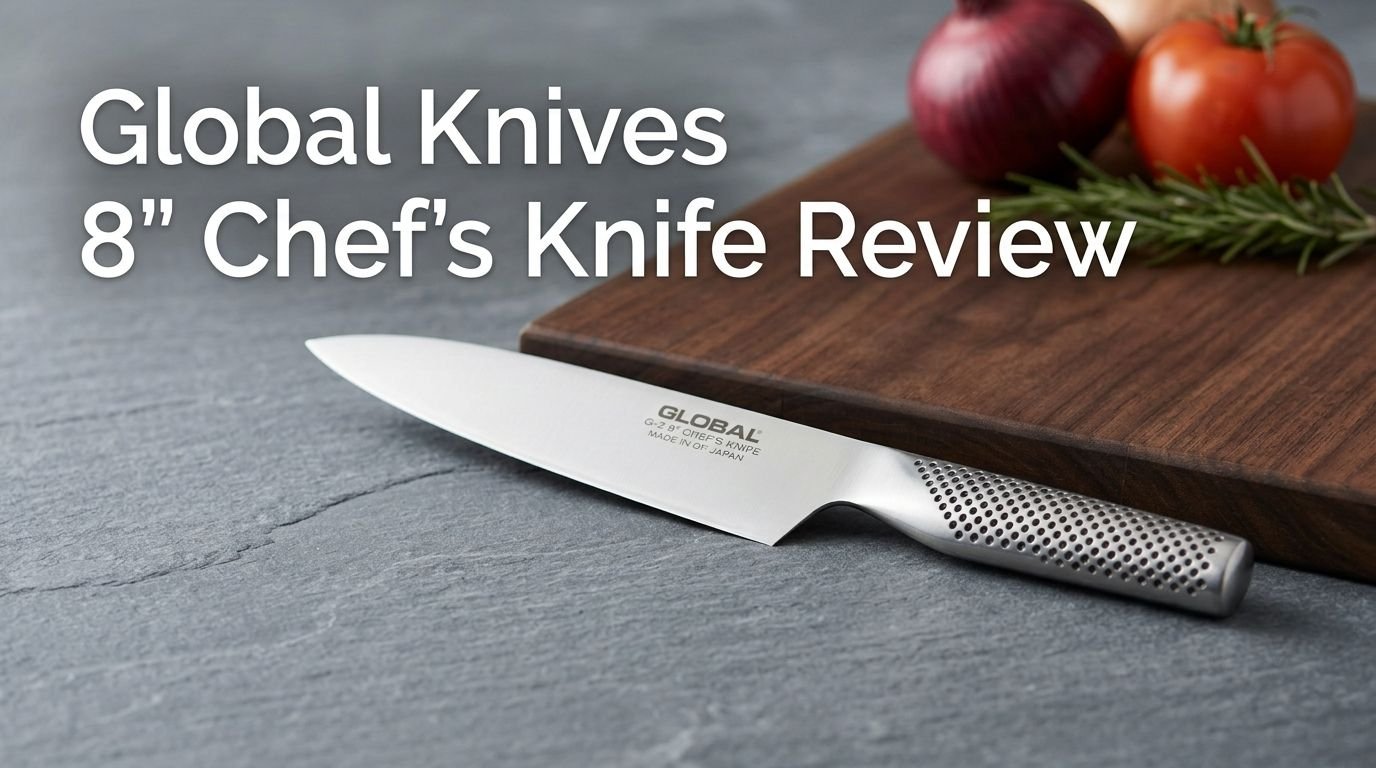
The knife features a one piece construction design with a seamless look. However, the blade, handle, and end cap are actually three separate welded pieces. The handle is hollow and filled with sand to create proper weight distribution. This gives the knife a balanced, lightweight feel that many cooks appreciate.
The dimpled handle pattern provides grip and has become a signature design element. The overall weight sits at roughly 7.84 ounces, far lighter than most Western chef’s knives.
CROMOVA 18 Steel: What Makes It Special?
The heart of any good knife is its steel. CROMOVA 18 stands for Chromium, Molybdenum, and Vanadium with 18% chromium content. This composition delivers strong corrosion resistance. You will not see rust spots appear overnight like some carbon steel knives.
Global hardens this steel to 56 to 58 on the Rockwell hardness scale. This is softer than many popular Japanese knives, which often reach 60 to 62 HRc. The lower hardness makes the edge less brittle. You are far less likely to chip the blade if you accidentally hit a bone or a hard surface.
The trade off is edge retention. Harder steels hold their edge longer. The G-2 will dull faster than a knife made with VG10 or AUS10 steel. For a home cook, though, the difference may not be noticeable for weeks or even months.
One thing that stands out is the convex grind applied to the blade. Most production knives use a flat grind with microbevels. Global grinds each blade to a convex profile by hand. This creates a smooth, flowing cut through food without the wedging effect you sometimes get with flat grinds.
Blade Performance and Cutting Experience
The Global G-2 delivers a smooth, controlled cutting experience. The convex grind gives the blade a gentle bite into food. It does not slam through a tomato the way an ultra thin Japanese gyuto might. Instead, it slices with a soft, almost gliding motion.
This quality makes the knife great for root vegetables like carrots and potatoes. The blade separates pieces gently without cracking or splitting them. Onion dicing feels effortless. The thin profile creates minimal drag as you rock through herbs and leafy greens.
The 8 inch blade length hits a sweet spot. It is long enough to handle large cabbages and watermelon slices. Yet it is short enough for detailed work like mincing garlic or shallots. Most home cooks will find this size handles 90% of daily kitchen tasks comfortably.
The blade sits at roughly 2mm thick at the spine, which is fairly thin for a knife in this price range. This thinness helps the knife feel agile and fast. You can make quick, precise cuts without much effort. The flat profile near the heel also provides good contact with the cutting board for a rocking cut motion.
Top 3 Alternatives for Global G-2 8″ Chef’s Knife
Victorinox Fibrox Pro 8 Inch Chef’s Knife

- For home chefs & professionals. This Fibro Pro chef's knife has been the top choice of both home...
- Fit for all tasks. Designed to handle kitchen tasks both big and small, This durable knife's razor...
Last update on 2026-07-21 / Affiliate links / Images from Amazon Product Advertising API Some of the links on this website are affiliate links, which means that at no additional cost to you, I earn a commission if you click through and make a purchase. I only recommend products and services that I believe will add value to my readers. Thank you for your support!
Tojiro DP Gyuto 8.2 Inch Chef’s Knife

- Professional Chef Knife
- Made in Japan
Last update on 2026-07-21 / Affiliate links / Images from Amazon Product Advertising API Some of the links on this website are affiliate links, which means that at no additional cost to you, I earn a commission if you click through and make a purchase. I only recommend products and services that I believe will add value to my readers. Thank you for your support!
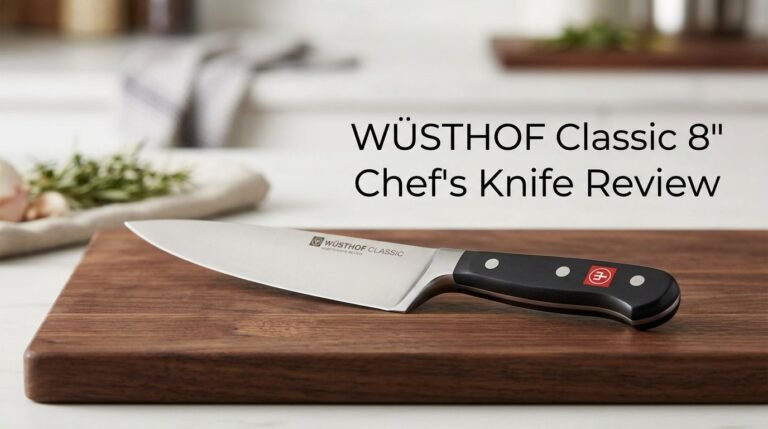
Wüsthof Classic 8 Inch Chef’s Knife

- KITCHEN WORKHORSE – The WÜSTHOF 8” Classic Chef’s Knife is essential for preparing any meal...
- WÜSTHOF CLASSIC SERIES – The full Tang, Triple Riveted handles of the classic line offer the...
Last update on 2026-07-21 / Affiliate links / Images from Amazon Product Advertising API Some of the links on this website are affiliate links, which means that at no additional cost to you, I earn a commission if you click through and make a purchase. I only recommend products and services that I believe will add value to my readers. Thank you for your support!
The Iconic Stainless Steel Handle
The Global G-2 handle is one of the most debated features in kitchen cutlery. It is 100% stainless steel with a hollow interior filled with sand. The exterior features rows of small dimples that add texture and grip.
For many cooks, the handle feels fantastic in a pinch grip. The slim profile lets your thumb and forefinger rest comfortably on the blade spine. The dimples prevent your fingers from sliding forward during fast cuts. The overall shape fills the back of your palm just enough to feel secure.
The sand filling is a clever engineering choice. It lets Global fine tune the balance point of each knife. The G-2 feels slightly handle heavy, which many cooks prefer because it reduces wrist strain during long cutting sessions.
However, the metal handle has some drawbacks. During wet prep work, the stainless surface can become slippery. Water tends to collect in the small dimples. This forces you to grip the knife harder, which can cause hand cramps over time. Some professional cooks report blisters after full day use. People with larger hands may find the slim handle uncomfortable during extended sessions.
Weight and Balance: A Featherlight Chef’s Knife
At roughly 7.84 ounces, the Global G-2 is significantly lighter than most 8 inch chef’s knives. A typical Wüsthof Classic weighs over 8.5 ounces. A Henckels Pro can weigh close to 9 ounces. This weight difference is immediately noticeable the moment you pick up the G-2.
The sand filled handle shifts the balance point slightly toward the handle end. This creates a comfortable feel where the knife does not dive forward during cuts. You maintain control without fighting the blade’s momentum. It feels like an extension of your hand rather than a heavy tool.
This lightweight design reduces hand and wrist fatigue over long prep sessions. If you prepare meals daily or cook for gatherings, you will appreciate how little effort it takes to use this knife for 30 minutes or more. Cooks transitioning from heavy German knives often describe the feeling as liberating.
The lightness does have a minor downside. Heavy handed cuts through dense squash or thick meat may require a bit more effort compared to a heavier knife that uses its own weight to power through food. But for most fruits, vegetables, and boneless proteins, the G-2 handles everything with ease.
Edge Retention: How Long Does It Stay Sharp?
Edge retention is where the Global G-2 shows its age. The CROMOVA 18 steel at 56 to 58 HRc does not hold an edge as long as harder Japanese steels. You will notice a gradual decline in sharpness over several weeks of regular home use.
For a typical home cook who preps meals a few times per week, the knife should stay serviceable for one to two months before needing a strop. A proper sharpening on a whetstone should happen roughly once a year. This schedule keeps the edge performing well for most kitchen tasks.
Professional cooks will need to sharpen more often. Heavy daily use can dull the edge within a week or two. Small rolls and imperfections may appear along the cutting edge. A leather strop can fix minor issues, but a full sharpening session will be needed every few months in a commercial kitchen.
The good news is that the softer steel is more forgiving. You are unlikely to see chips or micro fractures along the edge. The blade absorbs impact better than harder, more brittle Japanese knives. This makes the G-2 a practical choice for cooks who are not ready to baby their knives.
Sharpening the Global G-2: What You Need to Know
Here is where things get tricky. Sharpening the Global G-2 is harder than sharpening most chef’s knives. The convex grind requires a different technique than the flat bevels found on standard knives.
With a flat grind knife, you lay the bevel flat on a whetstone and move the blade back and forth. With a convex grind, you need to roll the edge slightly as you sharpen. This takes practice. Beginners may struggle to maintain the correct angle and could accidentally flatten the convex profile.
Global recommends using their MinoSharp ceramic water sharpener for maintenance. This tool works well for quick touch ups. However, for a full restoration of the edge, a 1000/3000 grit combination whetstone produces the best results. Just be prepared to spend extra time learning the right motion.
Some users opt for professional sharpening services to avoid the hassle. This is a smart choice if you are not comfortable with whetstones. The cost is usually between $5 and $15 per knife, and a skilled sharpener can restore the convex edge perfectly.
The 10 to 15 degree double bevel edge on each side gives you a total included angle of about 20 to 30 degrees. This is sharper than most Western knives but slightly wider than typical Japanese gyutos. It strikes a practical balance between sharpness and durability.
Build Quality and Durability
The Global G-2 is built to last for years. The welded construction between blade, handle, and end cap creates a strong, seamless unit. There are no rivets to loosen. There is no wood or plastic to crack, warp, or harbor bacteria.
The entire knife is stainless steel, which makes cleaning simple. A quick wash with warm soapy water and a towel dry is all you need. The knife is not dishwasher safe according to Global, and I strongly recommend hand washing. Dishwasher detergents can dull the edge and damage the blade finish over time.
The dimpled handle surface stays clean easily. Food particles do not get trapped in the small dots the way they might in a textured polymer handle. A sponge wipe cleans it in seconds. This hygienic design is one reason professional kitchens appreciate Global knives.
The ice tempered blade resists rust and corrosion effectively. I have not seen any discoloration or staining during testing, even after cutting acidic foods like lemons and tomatoes. However, you should still dry the knife promptly after washing. Prolonged moisture exposure can cause issues with any stainless steel.
Comfort During Extended Use
Comfort is highly subjective with the Global G-2. Many home cooks rate it as one of the most comfortable knives they have ever held. The slim handle sits naturally in a pinch grip. The light weight prevents fatigue during routine meal prep.
However, comfort can decrease during longer, wetter cooking sessions. The smooth stainless steel becomes slippery as your hands sweat or as you rinse the knife repeatedly. The dimples help, but they cannot fully compensate for a very wet grip.
People with smaller to medium sized hands tend to have the best experience. The handle diameter fits smaller palms well and provides enough surface area for a secure hold. People with larger hands may find the handle too thin. They might need to grip harder, which leads to cramping.
If you cook for more than an hour at a stretch regularly, consider wrapping the handle with a thin grip tape. Some cooks use athletic tape for extra texture. This is not a perfect solution, but it does address the slipperiness issue without changing the knife’s balance or weight.
For short to moderate cooking sessions of 30 minutes or less, the G-2 ranks among the most comfortable 8 inch chef’s knives available. The issues only appear during prolonged, intensive use.
Who Should Buy the Global G-2?
The Global G-2 is an excellent choice for home cooks who want a step up from basic kitchen knives. It delivers a genuine Japanese knife experience without the fragility of harder, thinner blades. If you currently use a heavy German knife and want something lighter and sharper, the G-2 is a perfect transition blade.
Culinary students will also appreciate this knife. It teaches you to work with a lighter, thinner blade while being forgiving enough to survive common beginner mistakes. You can learn proper knife skills without worrying about chips or cracks.
This knife may not suit everyone, though. Professional chefs who already own high end Japanese gyutos may find the edge retention disappointing. The CROMOVA 18 steel simply cannot compete with VG10, SG2, or R2 powdered steels at higher hardness levels.
Cooks with large hands or sweaty palms should test the handle before committing. The slim stainless steel design is comfortable for many people but problematic for others. If possible, visit a kitchen store to hold the knife before you buy.
Budget conscious shoppers should also compare the G-2 to the Tojiro DP and Victorinox Fibrox Pro. Both offer excellent cutting performance at a lower price. The Global G-2 has a premium feel and iconic design, but the actual cutting difference is smaller than you might expect.
Global G-2 vs. Other Popular 8″ Chef’s Knives
- Lightweight, precisely balanced 8-inch or 20cm chef's knife
- Blade made of high-tech molybdenum/vanadium stainless steel
Last update on 2026-07-08 / Affiliate links / Images from Amazon Product Advertising API Some of the links on this website are affiliate links, which means that at no additional cost to you, I earn a commission if you click through and make a purchase. I only recommend products and services that I believe will add value to my readers. Thank you for your support!
How does the Global G-2 compare to its biggest competitors? Let me break it down.
Against the Victorinox Fibrox Pro, the G-2 feels more premium in hand. The Victorinox has a polymer handle that offers a more secure grip during wet work. The Victorinox blade is softer and easier to sharpen. The Global cuts cleaner thanks to its thinner blade and convex grind. At roughly half the price, the Victorinox is a better value. But the Global delivers a noticeably more refined cutting experience.
Against the Tojiro DP, the competition gets closer. The Tojiro uses a VG10 core steel at 60 HRc. It holds an edge longer than the Global. The Tojiro has a composite wood handle that feels more traditional and secure. The Global is lighter and has a more unique feel. The Tojiro offers better raw performance per dollar.
Against the Wüsthof Classic, the knives represent different philosophies. The Wüsthof is heavier, thicker, and more forgiving. It handles heavy tasks like breaking down chicken with more confidence. The Global slices with more precision and less effort. The Wüsthof is easier to sharpen and has a more comfortable handle for long use.
Each knife has clear strengths. The Global G-2 occupies a unique position as a lightweight hybrid that bridges Japanese precision and Western durability.
Maintenance Tips for Your Global G-2
Keeping your Global G-2 in top shape requires some simple habits. Hand wash the knife immediately after each use. Use warm water, mild dish soap, and a soft sponge. Dry it with a clean towel right away. Never let the knife sit wet in a sink.
Store the knife properly to protect the edge. A magnetic knife strip, a blade guard, or a knife block all work well. Avoid tossing it loose in a drawer where the edge can bump against other utensils and get damaged.
Use a leather strop every two to four weeks. A few passes on each side realigns micro rolls along the edge. This keeps the knife feeling sharp between full sharpening sessions. Stropping takes less than a minute and makes a noticeable difference.
When the knife starts to feel truly dull, sharpen it on a 1000 grit whetstone followed by a 3000 grit stone. Remember to use a slight rolling motion to maintain the convex grind. Work slowly and check your progress often. A few sessions of practice will make you comfortable with the technique.
Avoid cutting on glass, ceramic, or marble surfaces. Always use a wood or plastic cutting board. Hard surfaces destroy knife edges faster than anything else. This applies to every knife you own, not just the Global.
Pros and Cons Summary
The Global G-2 has clear strengths. The lightweight design at just 7.84 ounces makes it easy to use for extended periods. The convex grind delivers a smooth, wedge free cutting experience. The all stainless steel construction looks sleek and stays hygienic. The balanced feel reduces wrist and hand fatigue.
The knife also has real weaknesses. The CROMOVA 18 steel does not hold an edge as well as harder Japanese steels. The convex grind makes sharpening more difficult than standard bevels. The stainless handle can become slippery during wet prep work. Larger hands may find the handle uncomfortable.
Price is another consideration. The G-2 sits in the mid range category. At this price, you have access to knives with harder steel, better edge retention, and more comfortable handles. The Global G-2 wins on aesthetics, weight, and unique cutting feel. But it does not dominate any single performance metric.
Overall, the Global G-2 remains a well respected kitchen knife that delivers a distinctive experience. It is not perfect, but it is genuinely good. The knife has earned its reputation over four decades and continues to perform well for home cooks.
Final Verdict: Should You Buy the Global G-2 in 2026?
Yes, but with realistic expectations. The Global G-2 8″ Chef’s Knife is still a quality blade that performs well for home cooking. Its lightweight feel, smooth cutting action, and iconic design make it a joy to use in the kitchen.
The knife is best for home cooks who prepare meals a few times per week. It handles vegetables, fruits, herbs, and boneless proteins beautifully. It offers a great introduction to Japanese style knives without the fragility of harder, thinner blades.
If you demand the longest possible edge retention or plan to use the knife professionally for hours each day, consider alternatives like the Tojiro DP or a mid range gyuto from Miyabi. These knives offer harder steel and better edge life at similar or lower prices.
But if you value lightness, balance, design, and a smooth cutting feel, the Global G-2 remains hard to beat. It is a classic for good reason. Four decades of praise from professional chefs and home cooks speak volumes.
The Global G-2 is not the best knife at everything. But it is a great knife at most things. That is exactly what a good 8 inch chef’s knife should be.
Frequently Asked Questions
Is the Global G-2 dishwasher safe?
No. Global recommends hand washing all their knives. Dishwasher detergents contain harsh chemicals that can dull the blade edge and damage the steel finish. The high heat and water pressure inside a dishwasher can also cause the knife to bang against other items. Always hand wash with warm soapy water and dry immediately with a towel.
How often should I sharpen the Global G-2?
For regular home cooking, strop the blade every two to four weeks and perform a full sharpening on a whetstone once or twice a year. Professional cooks who use the knife daily should sharpen every two to three months. The CROMOVA 18 steel at 56 to 58 HRc dulls faster than harder Japanese steels, so regular maintenance is important.
Can the Global G-2 handle cutting through bones?
No. The Global G-2 is not designed for cutting through bones. The thin blade and relatively soft steel can be damaged by hard impacts. Use a cleaver or heavy duty butcher knife for bones. The G-2 excels at slicing, dicing, and mincing vegetables, fruits, herbs, and boneless meats.
Is the Global G-2 a good first Japanese knife?
Absolutely. Many knife experts recommend the G-2 as a perfect entry point into Japanese cutlery. It is thinner and lighter than Western knives but not as fragile as harder Japanese blades. The softer steel is more forgiving of beginner mistakes. You get the Japanese knife experience without the steep learning curve.
Why is the Global G-2 handle filled with sand?
Global fills the hollow stainless steel handle with sand to adjust the knife’s weight and balance. This process lets them fine tune the center of gravity for each knife model. The result is a balanced feel that reduces hand fatigue. The sand also adds just enough weight to keep the knife from feeling too light or flimsy.
Where is the Global G-2 manufactured?
The Global G-2 is made in Niigata, Japan by Yoshikin. The company has manufactured Global knives since 1985. Each knife goes through multiple stages of hand grinding and sharpening. Yoshikin uses quality control processes to ensure consistent blade performance across every unit.

Hi, I’m Greta Monroe, and I’m passionate about making every kitchen a place of creativity and efficiency. I’ve spent years exploring and testing kitchen gadgets, tools, and devices to help home cooks find exactly what they need. At ChefKit Blog, I share honest Amazon product reviews and practical insights on kitchen essentials that actually make a difference. From must-have basics to innovative new devices, I break down what works and what doesn’t. My mission is simple: to help you build a kitchen that inspires delicious possibilities every single day.